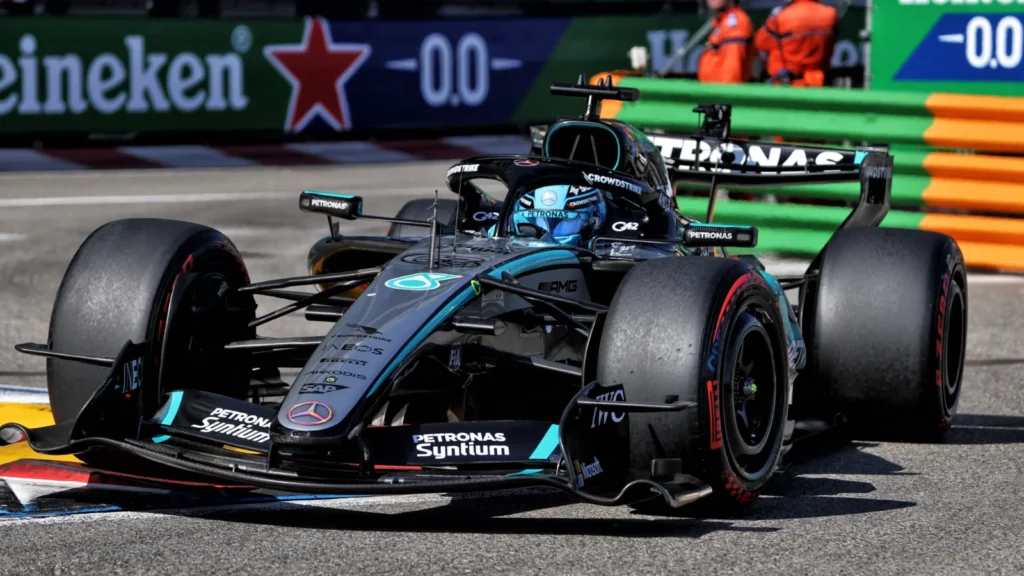
George Russell did not hold back when assessing his recent Formula 1 performances following a disappointing qualifying session at the Monaco Grand Prix. After securing only sixth place on the grid while Mercedes teammate Andrea Kimi Antonelli stormed to a sensational pole position, the British driver delivered one of the most brutally honest evaluations of his own form seen this season.
For much of 2026, Russell had been viewed as one of the leading contenders for the world championship. His commanding performances at the start of the campaign, particularly his victory in Australia, appeared to signal that he had taken another major step forward as Mercedes’ team leader. However, Monaco provided further evidence that something has changed dramatically in recent races.
While Antonelli extracted every ounce of performance from the Mercedes W17 around the tight and unforgiving streets of Monte Carlo, Russell struggled to find the same rhythm. When the crucial moments arrived in Q3, the gap between the two teammates became impossible to ignore. Antonelli delivered a stunning lap to claim pole position, while Russell could manage only sixth, ending the session nearly four tenths of a second slower than the young Italian.
For a driver of Russell’s caliber, the deficit was alarming.
The contrast was particularly striking because Monaco is a circuit where confidence and precision are everything. Drivers often speak about the importance of feeling completely connected to the car, especially when barriers are only centimeters away. Antonelli appeared perfectly synchronized with the W17 throughout the weekend, while Russell looked uncomfortable and uncertain.
Speaking to reporters after qualifying, Russell admitted he was struggling to understand exactly what was causing his sudden drop in competitiveness.
“I honestly don’t know what’s happening right now,” he explained. “There is clearly something in my driving style that isn’t helping the car perform the way it should. The strange thing is that this isn’t entirely new. Looking back at the start of the season, there were already signs of it, but somehow I was still able to maximize the results.”
The Mercedes driver reflected on how different the situation had been just a few months earlier.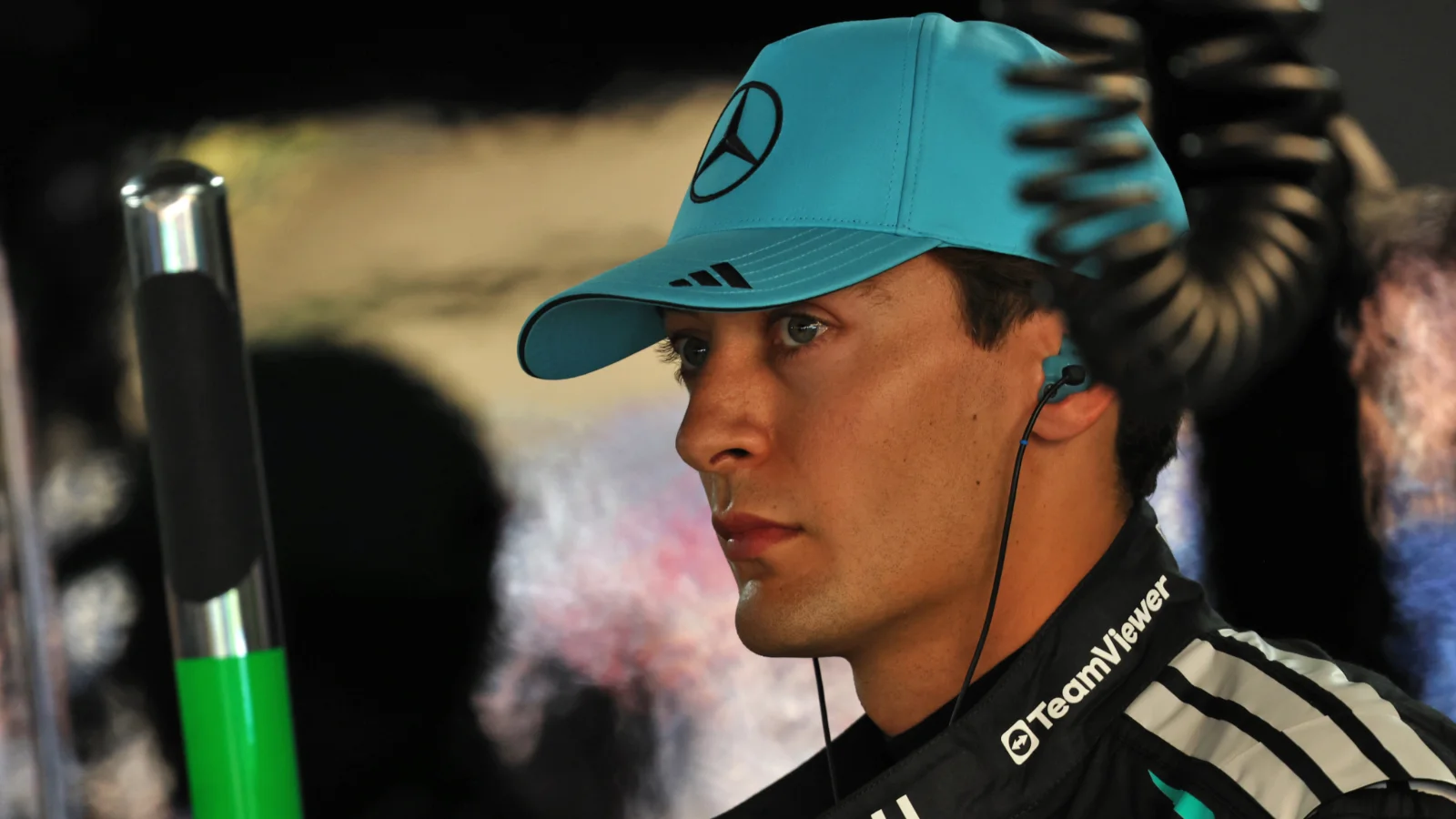
During the opening rounds of the season, Russell frequently topped practice sessions and regularly found himself among the fastest drivers on track. In Melbourne and Shanghai, he looked every bit like a championship favorite. His confidence was high, the car suited his driving style, and results followed naturally.
Now, however, that momentum has disappeared.
“The last three race weekends have been incredibly difficult,” Russell admitted. “Even in Canada, where people looked at the final result and thought everything was fine, I wasn’t comfortable. I struggled for most of the weekend and only managed to put together a competitive lap right at the end of qualifying.”
That revelation surprised many observers, as Russell had appeared highly competitive during portions of the Canadian Grand Prix weekend. Yet from his perspective, the underlying problems had never truly gone away.
The frustration in his voice was evident as he tried to explain the inconsistency.
“When I went out during final practice here in Monaco, my very first lap felt fantastic. I was significantly ahead of everyone else on the timing screens. For a moment, it felt like everything was working again. Then things simply returned to normal, and from that point onward, the pace disappeared.”
Russell repeatedly emphasized that he does not yet have a complete explanation for the issues.
That uncertainty may be the most concerning aspect of the situation.
Formula 1 drivers are accustomed to identifying problems and finding solutions. Whether it’s setup changes, tire management, braking technique, or balance adjustments, elite drivers usually have a clear understanding of where performance is being lost. In Russell’s case, however, the problem appears more complicated.
“As things stand, I don’t have the answers,” he admitted. “Until I can find a way to adapt or make the necessary adjustments, I think these struggles are going to continue.”
The emergence of Antonelli has only magnified the issue.
Just one year ago, the roles within Mercedes were very different. Russell was the experienced leader extracting respectable results from the difficult W16, while Antonelli was still learning the complexities of Formula 1. The young Italian frequently struggled to match Russell’s consistency and racecraft.
Now the situation has completely reversed.
Antonelli has become the benchmark inside the team, and Russell openly acknowledged the shift.
“It’s obvious that Kimi is doing something better than me at the moment,” Russell said. “But that still doesn’t explain why I was so competitive at the beginning of the year and why I’m struggling now. That’s what we need to understand.”
Mercedes engineers have already identified one key area where the two drivers differ.
According to Russell, data analysis points toward tire management and the way each driver extracts performance over a lap. While Antonelli appears capable of bringing the tires into their optimal operating window with relative ease, Russell is finding it much harder to achieve the same balance.
“The data clearly shows that the way we’re driving the car has a huge impact on tire behavior,” Russell revealed. “Kimi is getting the tires into a much better operating range. That gives him a more stable balance throughout the lap, and as a result, the speed comes naturally.”
For Russell, the situation is particularly frustrating because the problem is not necessarily a lack of raw pace.
Instead, it seems to be a mismatch between his established driving style and the characteristics of the current generation of cars and tires.
The Briton believes he may already have some clues regarding the root cause of the issue, but turning those theories into solutions will take time.
“I have a few ideas about what’s happening,” he explained. “The challenge is that I’ve been driving in a certain way throughout my entire career, and that approach has worked. Suddenly, with this car, it’s no longer producing the same results.”
His comments offered a fascinating insight into how dramatically Formula 1 machinery can influence performance. Even the world’s best drivers often require specific conditions to maximize their abilities.
Russell pointed to last season as evidence.
“Last year, Kimi was trying to drive more like me because that was what the car seemed to require. It wasn’t working for him then, just like my approach isn’t working now.”
Importantly, Russell refused to use the situation as an excuse.
Instead, he accepted responsibility and acknowledged that adaptation would be necessary if he hopes to regain his form.
“It’s not an excuse. It’s simply reality,” he said. “I need to work with the team to modify my driving style and better suit these cars and tires. Alternatively, we need to find a setup direction that allows me to drive more naturally.”
The honesty of Russell’s assessment highlighted both his frustration and determination.
Rather than blaming the team, the car, or external circumstances, he placed the spotlight firmly on himself. Such accountability is rare in Formula 1, where drivers often prefer to shield themselves from criticism.
Yet despite his openness, one final remark perhaps summarized the situation better than anything else.
At the end of the interview, Russell paused before delivering a simple but powerful conclusion.
“Right now, it’s just not clicking.”
For Mercedes, the challenge is clear. With Antonelli rapidly establishing himself as one of the sport’s brightest stars and already holding a significant advantage in the championship standings, the team must help Russell rediscover the form that made him a title contender only a few months ago.
Whether the solution lies in setup changes, driving adaptations, or a deeper understanding of the W17’s characteristics remains to be seen. What is certain is that Russell finds himself at a critical point in the season.
The pace is still there somewhere. The confidence has not disappeared completely. But until driver and machine reconnect, one of Formula 1’s most talented competitors will continue searching for answers while his teammate races further into the spotlight.