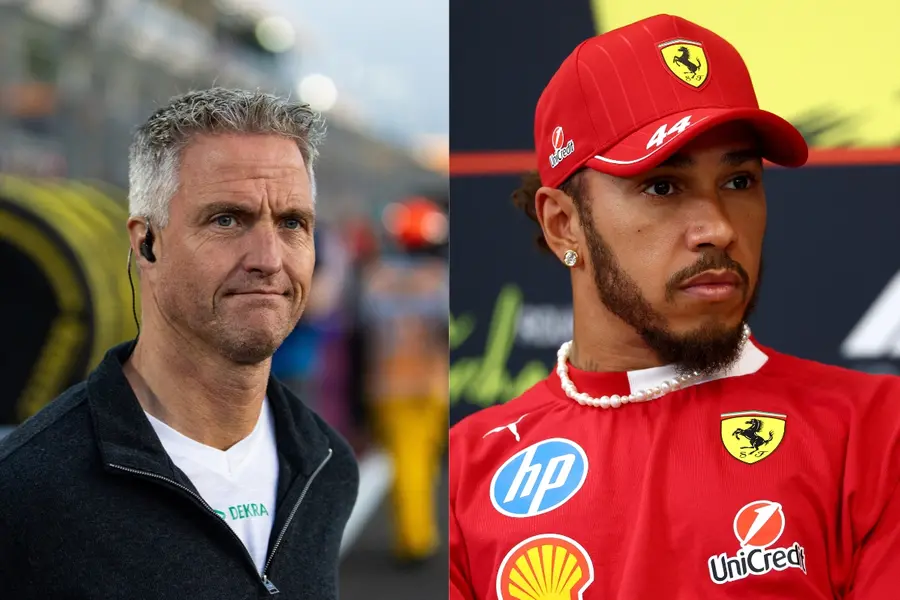
“Lewis Hamilton’s success this year might not be as pure as people think.” With that pointed remark, Ralf Schumacher has reignited debate around one of the sport’s most dominant figures, Lewis Hamilton, and his resurgence in the 2026 Formula 1 season. While Hamilton’s performances have drawn widespread praise, Schumacher’s comments suggest there may be more at play than raw speed and driving excellence alone.
Speaking on the Backstage Boxengasse Podcast, Schumacher stopped short of making any direct accusations. Instead, he carefully framed his argument as an observation—one that points toward the often overlooked influence of contractual dynamics in elite motorsport. According to him, Hamilton’s strong form this season could be closely tied to the leverage he holds within Scuderia Ferrari, particularly following his high-profile move to the Italian team.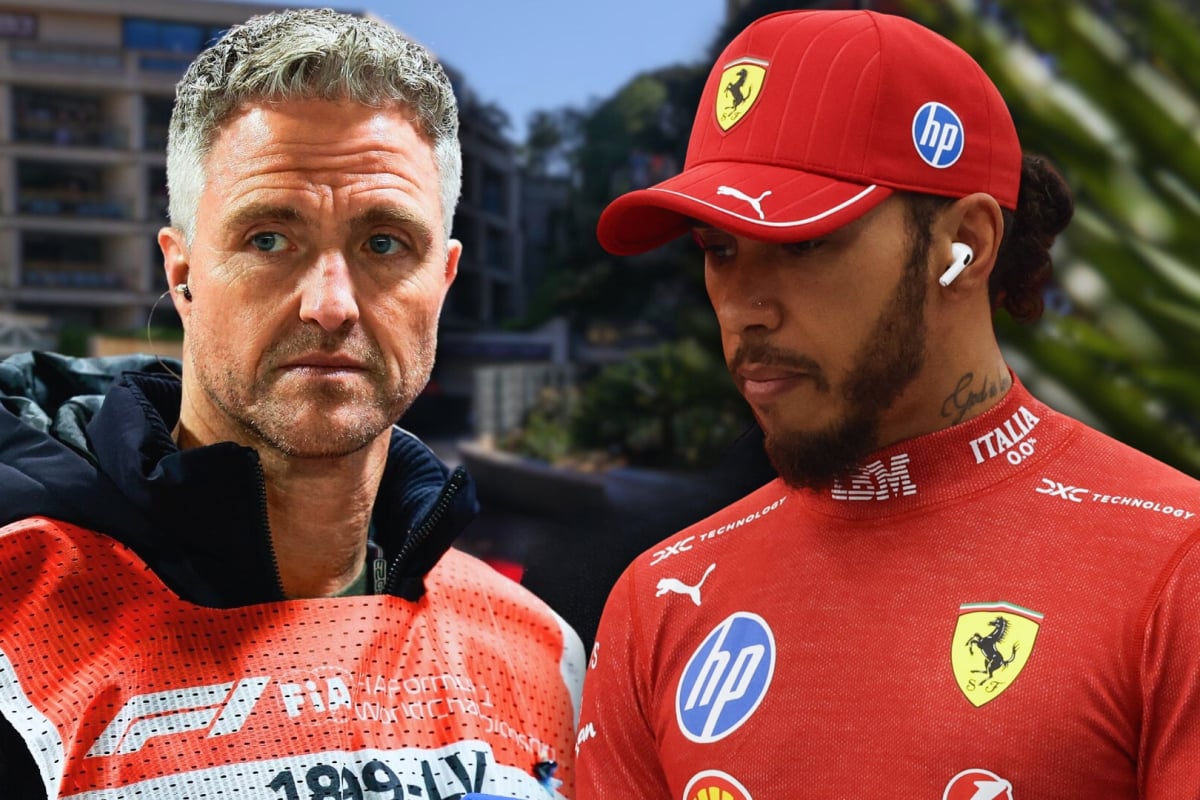
Schumacher implied that Hamilton’s contract might grant him a level of authority and autonomy that goes beyond what most drivers enjoy. In a sport where team structure and hierarchy are crucial, such influence can subtly—but significantly—shape outcomes. It’s not necessarily about unfair advantages, but about the ripple effects that power and status can create within a team environment.
He elaborated further by suggesting that even team principal Frédéric Vasseur may have limited room to challenge Hamilton’s decisions. “I could imagine that even if Fred wanted to, he wouldn’t be able to say anything,” Schumacher noted, hinting at a dynamic where Hamilton operates with a degree of independence rarely seen in Formula 1. The implication is clear: Hamilton may not just be driving the car—he may also be shaping the broader direction of the team.
This perspective feeds into a larger claim that Hamilton effectively holds a “number one” status within Ferrari. While teams often designate a lead driver, Schumacher suggests that in this case, the hierarchy may be reinforced not just by performance, but by contractual terms. Such a position could influence everything from race strategy to internal decision-making, potentially giving Hamilton an edge that isn’t immediately visible on track.
Importantly, Schumacher emphasized that this isn’t something unusual or inherently wrong. Instead, he framed it as a reality of modern Formula 1—one where top drivers negotiate terms that reflect their value and experience. However, he warned against underestimating how significant these factors can be. “It comes down to the contractual side of things,” he said, adding that this aspect is often overlooked when analyzing a driver’s success.
Naturally, these comments have sparked a strong reaction. Fans have been quick to defend Hamilton, pointing to his long track record of success across multiple teams and eras. To them, suggesting that his current form is anything less than deserved feels like an attempt to undermine his achievements. Others, however, see Schumacher’s remarks as a valid insight into the complexities of the sport—an acknowledgment that performance in Formula 1 is never solely about what happens behind the wheel.
The silence from Hamilton’s camp has only intensified the discussion. In many cases, such claims would be met with a swift response or clarification. But here, the absence of a rebuttal leaves room for interpretation. Is it a strategic decision to avoid fueling controversy, or simply a reflection of confidence that his results speak for themselves? Either way, the lack of comment has allowed the narrative to grow.
Adding another layer to the conversation, former Ferrari driver Eddie Irvine offered a more measured perspective in an interview with La Gazzetta dello Sport. While acknowledging Hamilton’s achievements, Irvine cautioned against overstating his resurgence. He pointed out that although Hamilton secured his first podium for Ferrari in China—a circuit where he has historically performed well—he was outpaced by teammate Charles Leclerc during the Suzuka weekend.
.jpg)
Irvine’s comments shift the focus back to performance metrics, suggesting that the picture may be more nuanced than either extreme narrative implies. Yes, Hamilton is performing strongly, but he is also operating within a competitive team environment where comparisons with his teammate remain unavoidable. This dynamic underscores the complexity of assessing success in Formula 1, where individual brilliance and team context are deeply intertwined.
At the same time, Ferrari’s overall trajectory in 2026 adds important context. The team has shown clear signs of progress, emerging as one of the closest challengers to Mercedes-AMG Petronas Formula One Team after a disappointing previous season. This upward trend suggests that Hamilton’s results are not occurring in isolation, but as part of a broader improvement within the team.
However, as Irvine noted, Ferrari’s challenges remain. Operating outside Formula 1’s traditional UK-based hub presents logistical and organizational hurdles that the team continues to navigate. Despite these obstacles, there is cautious optimism that Ferrari could secure at least one victory this season—an outcome that would further validate their progress.
All of this feeds into a larger question: how much of a driver’s success can be attributed to talent alone? In a sport as complex as Formula 1, the answer is rarely straightforward. Technical performance, team strategy, internal dynamics, and yes, contractual agreements all play a role. Schumacher’s comments, controversial as they may be, highlight this reality.

What makes this situation particularly compelling is the way it blurs the line between perception and reality. To fans watching from the outside, a strong performance is often seen as a direct reflection of a driver’s ability. But within the paddock, the picture is far more intricate. Power structures, negotiations, and relationships all contribute to shaping outcomes in ways that aren’t always visible.
Schumacher’s remarks don’t definitively explain Hamilton’s success, nor do they diminish his achievements. Instead, they introduce an additional lens through which to view them. They suggest that behind every lap time, every podium, and every victory, there may be factors at play that extend beyond the driver’s control—or, in this case, within his influence.
Ultimately, the debate sparked by these comments speaks to the enduring fascination with Hamilton’s career. Even after years at the top of the sport, his performance continues to invite scrutiny, analysis, and discussion. Whether one agrees with Schumacher or not, his words have succeeded in shifting the conversation, prompting fans and insiders alike to reconsider what success in Formula 1 truly means.
And as long as Hamilton continues to deliver results on track, that conversation is unlikely to fade anytime soon.