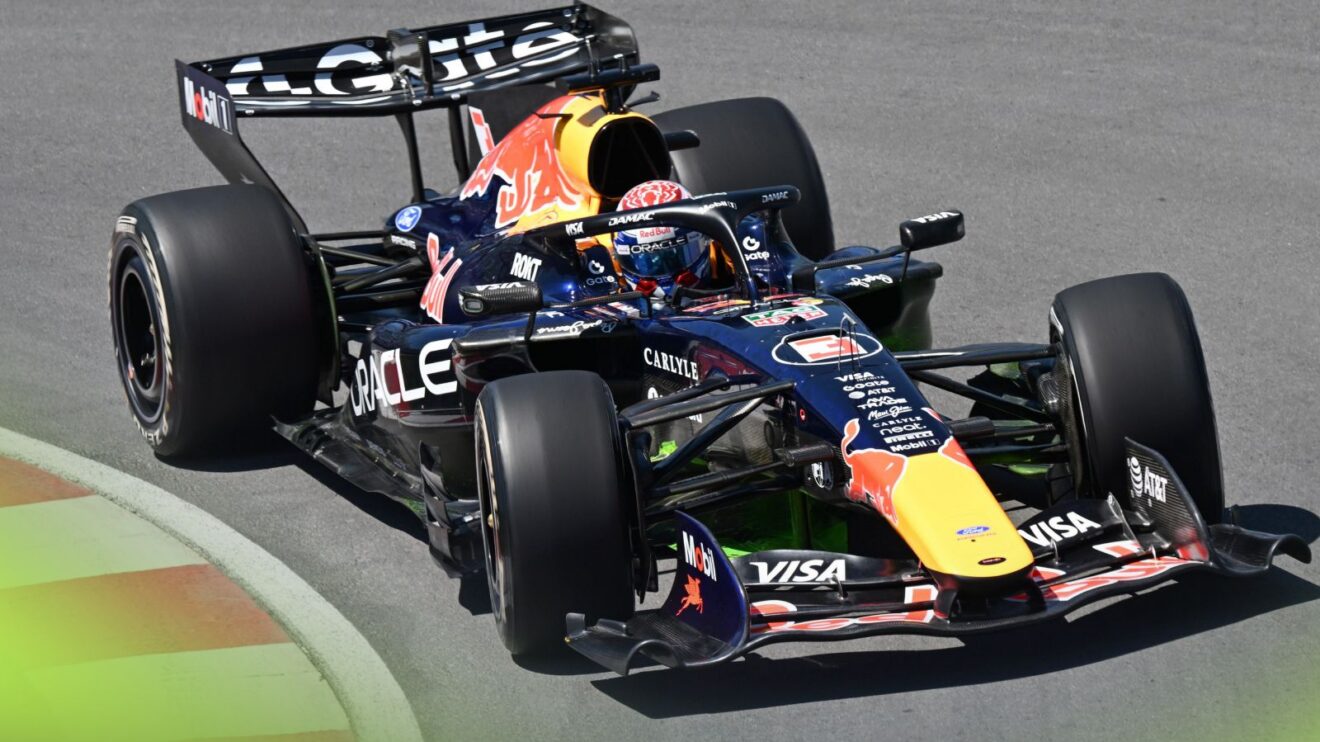
A new theory has emerged regarding Max Verstappen’s difficulties adapting to Formula 1’s latest generation of cars, with former team boss Franz Tost suggesting that one of the Dutch driver’s greatest competitive strengths has effectively been neutralized by the sport’s new technical regulations.
According to Tost, the changes introduced under Formula 1’s latest power unit formula have fundamentally altered the way drivers approach corners and braking zones. While the regulations were designed to improve racing and create a more sustainable future for the sport, they may have unintentionally reduced the impact of certain driving skills that previously separated elite competitors from the rest of the field.
Verstappen, who established himself as the dominant force of Formula 1 during the ground-effect era, has not hidden his frustration with the new regulations. Although he has repeatedly clarified that his concerns are not primarily related to the chassis or aerodynamic concepts, he has been highly critical of the revised power unit package and the driving style it requires.
For several years, Verstappen was virtually unstoppable. Driving for Red Bull, he captured three world championships during the ground-effect era and produced some of the most dominant performances in Formula 1 history. His 2023 campaign was particularly remarkable, with the Dutchman winning 19 of the season’s 22 Grands Prix and rewriting numerous records along the way.
During that period, Verstappen’s combination of speed, racecraft, tire management, and precision made him the benchmark for the entire grid. Rivals struggled to match both his consistency and his ability to maximize performance under pressure.
However, Formula 1 is a sport that evolves constantly, and the transition to a new regulatory era has significantly changed the competitive landscape.
The final season of the previous rules package saw McLaren emerge as Red Bull’s strongest challenger. As the campaign progressed, McLaren steadily improved its car and eventually overtook Red Bull in terms of outright performance. Lando Norris became Verstappen’s closest rival, and by the end of the season, the balance of power had shifted considerably.
The arrival of Formula 1’s newest generation of cars has made the challenge even greater for Verstappen. Seven race weekends into the current season, he finds himself a long way behind championship leader Kimi Antonelli. While Antonelli has accumulated 156 points, Verstappen sits on just 55 points, leaving him with a substantial deficit to overcome if he hopes to reclaim the title.
Although Red Bull’s competitiveness has been questioned, Verstappen believes the driving characteristics of the new power units are also playing a major role in his dissatisfaction.
Under the latest engine regulations, power delivery is split evenly between internal combustion and electrical energy. The 50-50 balance represents one of the most significant changes Formula 1 has introduced in recent years and requires teams to manage energy deployment more aggressively than before.
To make the system work efficiently, drivers must engage in extensive battery harvesting. This process recovers energy during certain phases of a lap and stores it for later use. However, the increased reliance on electrical power has introduced a phenomenon known as “super clipping,” where available electrical energy becomes depleted before the end of a straight.
When this happens, drivers lose acceleration and top speed as they approach braking zones. Rather than attacking corners at full power and braking at the absolute last moment, they are often forced to lift off the throttle earlier in order to manage energy recovery and recharge the battery.
For drivers who built their success on aggressive braking techniques, this represents a significant disadvantage.
Tost believes this is the primary reason Verstappen has become one of the most outspoken critics of the current regulations.
The former Toro Rosso and Racing Bulls team principal argues that Verstappen’s ability to brake later than his rivals has long been one of the defining strengths of his driving style. According to Tost, few drivers in Formula 1 history have matched Verstappen’s confidence and precision when entering corners under heavy braking.
He also pointed out that drivers such as Lando Norris and Fernando Alonso possess similar qualities. These competitors are known for carrying tremendous speed into braking zones and extracting lap time through their ability to delay braking without compromising corner entry.
In previous eras, that skill could provide a meaningful advantage over competitors. However, the energy-management requirements of the new regulations force drivers to alter their approach long before reaching the actual braking point.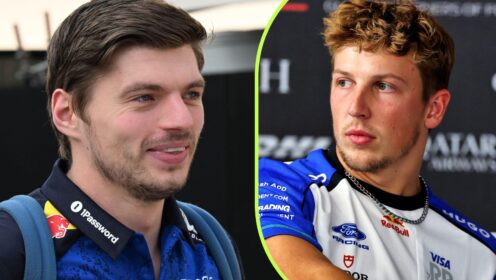
As a result, Tost believes that one of Verstappen’s greatest weapons has effectively been removed.
Speaking about the situation, Tost explained that drivers can no longer fully exploit their natural strengths because they are required to lift off the throttle earlier to recharge their batteries. If a driver must reduce speed 10 or 20 meters before the traditional braking zone, the opportunity to gain an advantage through superior braking technique disappears.
In Tost’s view, this change helps explain why some of Formula 1’s most talented drivers have expressed frustration with the current package.
Verstappen himself has used colorful language to describe his experience behind the wheel. On several occasions, he has compared the cars to “Mario Kart” and referred to them as “Formula E on steroids,” highlighting what he sees as an excessive dependence on energy management rather than pure racing performance.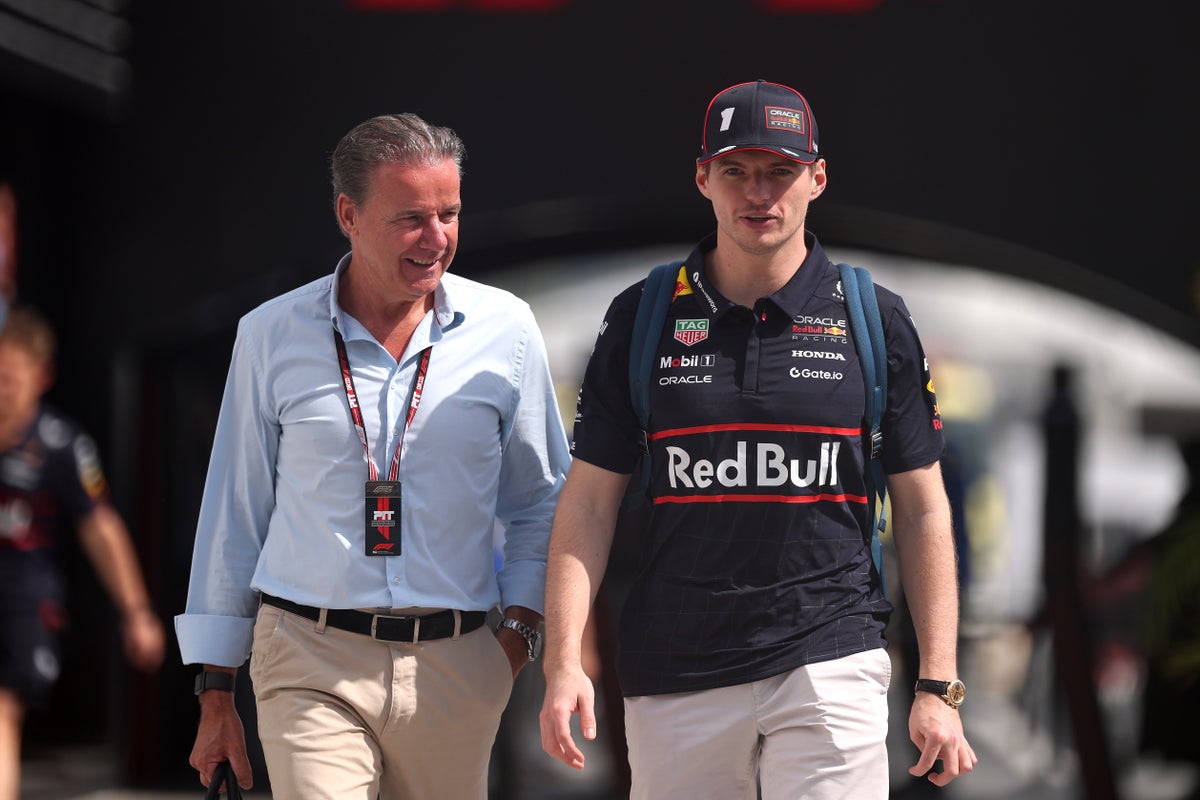
The reigning champion has repeatedly emphasized that he simply does not find the new cars enjoyable to drive. While he remains committed to competing at the highest level, his comments suggest that the current generation of machinery does not reward the aspects of driving he values most.
Despite these criticisms, Tost remains optimistic about the overall direction of Formula 1.
From a spectator’s perspective, he believes the racing has become increasingly entertaining. He argues that the current season has delivered numerous exciting battles and overtaking opportunities, creating a more engaging product for fans.
According to Tost, viewers are primarily interested in wheel-to-wheel action rather than the technical details of battery management. Most fans, he suggests, care more about seeing overtakes and strategic battles than understanding whether a driver’s battery is fully charged or temporarily depleted.
Recent decisions by Formula 1’s governing body indicate that adjustments are already being made to address some of the concerns raised by drivers and teams.
The FIA’s World Motor Sport Council recently approved modifications to the power unit regulations for the 2027 and 2028 seasons. Following discussions with manufacturers, officials agreed to gradually increase the contribution of internal combustion power while reducing reliance on electrical energy.
Beginning in 2027, the power split will move from the current 50-50 arrangement to a 58-42 ratio in favor of the internal combustion engine. One year later, the balance will shift further to 60-40.
These changes are expected to increase engine output while reducing the impact of super clipping. Internal combustion power will rise by approximately 20 kilowatts, while electrical deployment from the Energy Recovery System will be reduced. At the same time, greater harvesting capacity will allow batteries to recharge more efficiently throughout each lap.
The 2028 package will continue that trend, with fuel flow rates increasing significantly and overall combustion power reaching around 450 kilowatts, equivalent to roughly 600 horsepower. Additional harvesting improvements are also expected to help maintain energy levels and minimize the dramatic power losses drivers currently experience at the end of long straights.
For Verstappen and other drivers who have criticized the present regulations, those adjustments could restore some of the driving characteristics they feel have been lost.
Whether the changes will be enough to satisfy Formula 1’s biggest stars remains uncertain. What is clear, however, is that the debate surrounding the sport’s future direction is far from over. As Formula 1 balances sustainability, technological innovation, and driver satisfaction, the challenge will be finding a formula that rewards both engineering excellence and the exceptional skills that have defined the sport for generations.