BUNGEE JUMP STAFF BREAK SILENCE AFTER FATAL FALL OF 21-YEAR-OLD WOMAN IN BRAZIL AS COURT HEARS SHOCKING TESTIMONY
New details have emerged in the tragic death of a young woman who fell more than 130 feet during a bungee jumping excursion in Brazil, as employees working at the scene spoke publicly for the first time following their arrest.
The fatal incident, which occurred on June 13 near the city of Limeira in São Paulo state, has sparked national outrage and raised serious questions about safety procedures within the adventure tourism industry.
The victim, 21-year-old Maria Eduarda Rodrigues de Freitas, lost her life after reportedly being launched from a bridge without a critical safety rope properly attached. Authorities allege that a catastrophic failure in the company’s safety checks may have directly led to the tragedy.
As investigations continue, three employees connected to the operation appeared before a court and provided their version of events, revealing inconsistencies and memory gaps that have only intensified scrutiny of the case.
According to investigators, Maria Eduarda had arrived at the popular jumping site with friends and family members expecting to participate in what should have been a carefully supervised recreational activity. Witnesses described her as excited but understandably nervous before the jump.
Several people at the location reportedly watched as staff prepared participants one by one, attaching harnesses and conducting what appeared to be routine safety procedures.
However, prosecutors now believe something went terribly wrong during the final stages of preparation.
Authorities allege that while the victim was fitted with equipment, the main safety connection required for the jump may never have been properly secured.
Moments later, she was reportedly pushed from the platform and fell approximately 131 feet without the protection designed to stop her descent.
Horrified spectators immediately realized something was wrong.
Witnesses described screams erupting from those gathered on the bridge as staff members rushed toward the edge. Some bystanders attempted to call emergency services while others tried to understand how such a devastating mistake could have occurred.
Videos circulating online allegedly captured portions of the incident and have become central pieces of evidence in the ongoing investigation.
Law enforcement officials responded quickly to the scene, launching an immediate inquiry into the circumstances surrounding the fatal fall.
Lead investigator Andrea Dantas Levy stated that preliminary findings suggested a critical breakdown in supervision and safety verification procedures.
According to authorities, the incident appears to have been preventable.
Investigators believe that mandatory safety checks either failed to take place or were conducted inadequately before the jump was authorized.
The case quickly escalated into a criminal investigation.
Six individuals were eventually detained in connection with the incident, while three employees who were directly involved in the jump operation became the primary focus of prosecutors.
Those employees were identified as Luis Felipe Feliciano Egoroff, 32, Vitor de Freitas Gonçalves, 27, and Maicon Fernandes Cintra, 42.
All three men are facing allegations related to homicide with implied malice, a legal concept under Brazilian law that can apply when individuals are considered to have knowingly accepted a substantial risk that could lead to death.
One of the most controversial aspects of the case concerns what happened immediately after the accident.
Authorities allege that several staff members left the immediate area before emergency responders completed their work.
Investigators initially interpreted those actions as an attempt to avoid responsibility.
During Sunday’s court proceedings, however, the accused employees strongly disputed those claims.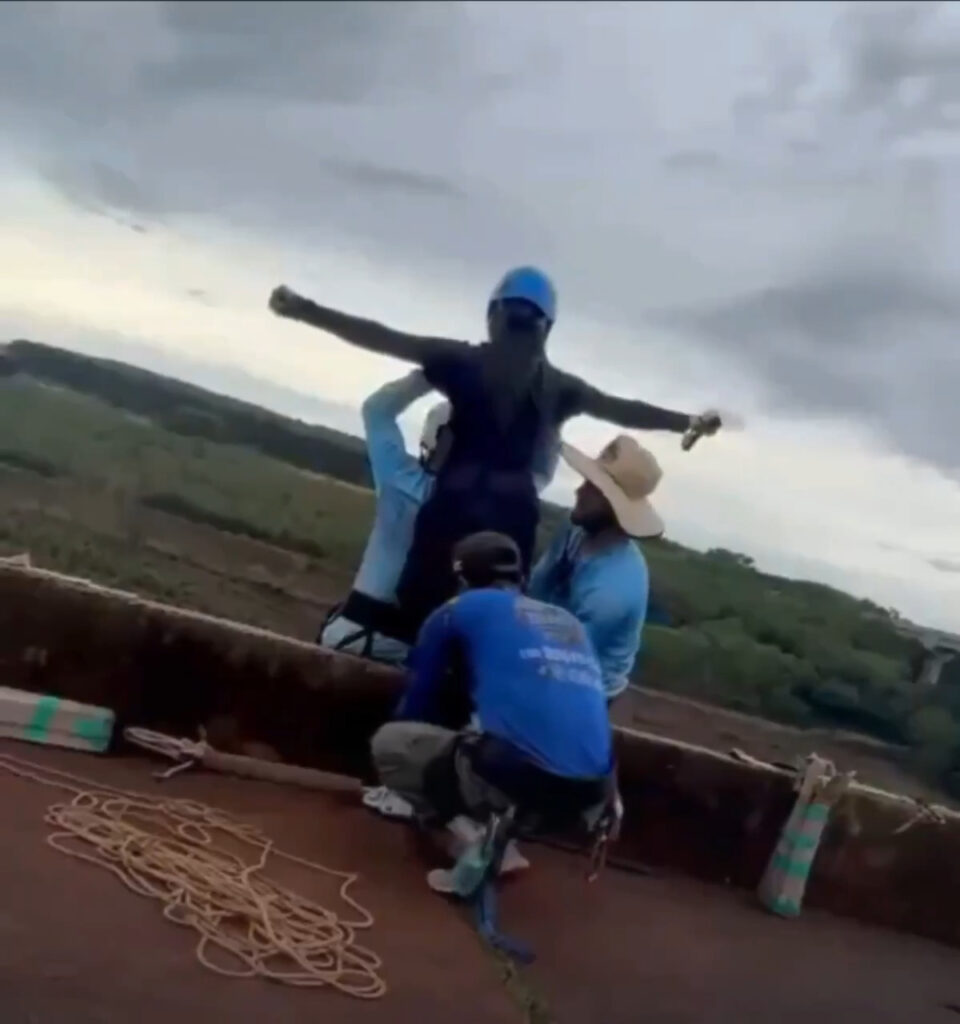
Egoroff denied fleeing the scene and insisted he remained nearby throughout the emergency response.
According to his testimony, he changed his clothing only because it had become dirty and wet during rescue efforts.
“My shirt was soaked and covered in dirt,” he reportedly told the court. “I went to the vehicle to change into clean clothes.”
He explained that after changing, he returned toward the bridge and remained in the vicinity until police arrived.
Egoroff claimed that nobody attempted to escape and that all key personnel stayed close to the location following the incident.
“We were there,” he said. “Nobody ran away.”
Despite those assertions, investigators continue examining surveillance footage, witness statements, and phone records to establish a precise timeline of events following the tragedy.
Perhaps the most startling testimony came from fellow employee Maicon Fernandes Cintra.
When questioned about the safety procedures performed before the jump, Cintra acknowledged that Egoroff typically handled one of the most critical responsibilities: attaching and verifying the safety rope.
According to Cintra, that process occurred correctly in the vast majority of cases.
Yet when asked whether he specifically remembered checking Maria Eduarda’s equipment, he struggled to provide a clear answer.
“Usually it’s him who attaches the rope,” Cintra reportedly testified.
He explained that he generally assisted with inspections, verified helmets, and helped coordinate operations. However, when asked whether the final safety verification occurred in this case, he repeatedly stated that he could not remember.
“I don’t remember,” he said. “I really don’t remember.”
That admission has become one of the most discussed elements of the hearing.
Legal experts observing the proceedings noted that an inability to confirm whether critical safety checks were completed could significantly influence the outcome of the investigation.
For prosecutors, the testimony appears to support concerns that established protocols may not have been followed consistently.
The judge overseeing the case delivered a particularly strong assessment when deciding whether the three defendants should remain in custody.
Judge Paulo Henrique Stahlberg Natal ordered that the employees continue to be held while investigations proceed.
In his ruling, the judge described the death as potentially avoidable and cited what he characterized as serious negligence involving a high-risk commercial activity.
According to court documents, the ruling emphasized that bungee jumping operators carry an extraordinary responsibility because participants place their lives in the hands of trained professionals.
The judge argued that customers reasonably expect strict adherence to safety standards before being exposed to potentially dangerous activities.
Maria Eduarda, he noted, trusted organizers to ensure every precaution had been taken before authorizing the jump.
Court records further suggest that investigators are examining whether the company maintained adequate risk management procedures, employee training programs, and operational oversight.
Authorities are also reviewing company documentation, equipment maintenance records, and internal safety policies.
Investigators hope those materials will help determine whether the incident resulted from a single human error or deeper systemic failures within the organization.
Meanwhile, the tragedy has deeply affected the local community.
Friends and relatives have paid tribute to Maria Eduarda, describing her as a vibrant young woman with ambitious plans for the future. Messages of grief and support have flooded social media platforms as people across Brazil react to the shocking circumstances of her death.
Safety experts have also weighed in on the case, noting that modern bungee jumping operations typically rely on multiple layers of verification specifically designed to prevent exactly this type of accident.
In many professional systems, several independent checks are required before a participant is permitted to jump.
As investigators continue gathering evidence, many questions remain unanswered.
How could such a fundamental safety step allegedly be overlooked?
Were proper procedures ignored?
Did communication failures contribute to the tragedy?
Or were broader operational problems already present before the fatal incident occurred?
For now, those answers remain the focus of an ongoing investigation that has attracted attention throughout Brazil.
As legal proceedings continue, authorities say they are committed to establishing exactly what happened on the bridge that day and determining who, if anyone, should ultimately be held criminally responsible for the devastating loss of a young life.