First Responders Describe Chaotic Rescue Efforts During Third Day of Lindsay Clancy Murder Trial
The third day of testimony in the murder trial of Lindsay Clancy centered on the emergency response that unfolded at the family’s Duxbury, Massachusetts, home on the evening of January 24, 2023. Police officers, firefighters, paramedics, and emergency medical technicians took the witness stand to describe the frantic efforts to save the lives of Clancy’s three young children after arriving at the residence.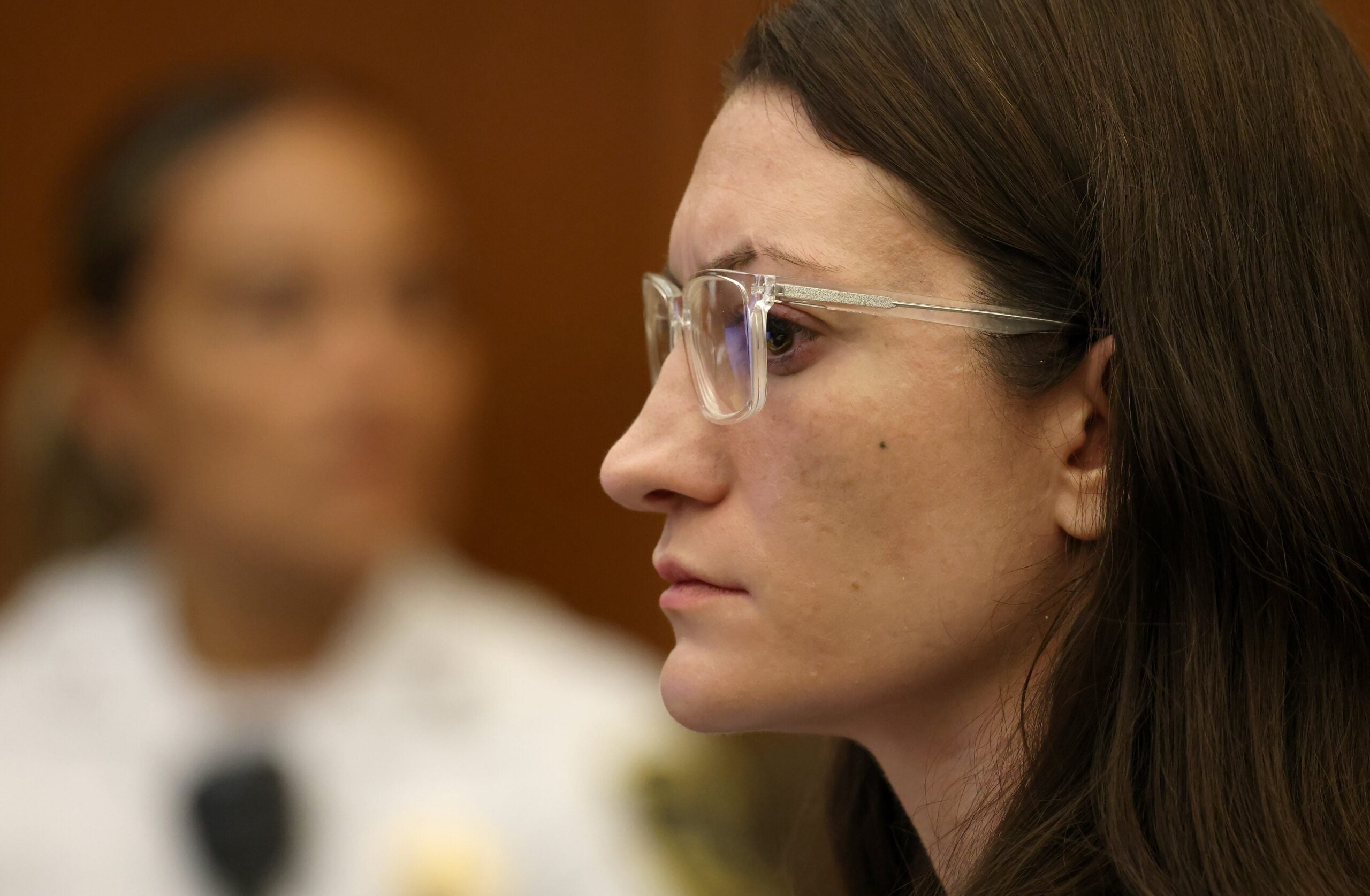
Their testimony painted a detailed picture of a rapidly evolving emergency that responders said became chaotic almost immediately after they reached the scene.
Lindsay Clancy, 35, is charged with the deaths of her children—five-year-old Cora, three-year-old Dawson, and eight-month-old Callan. She has pleaded not guilty. While she acknowledges causing the children’s deaths, her defense argues that she was experiencing severe postpartum mental illness, including postpartum psychosis, and therefore should not be held criminally responsible under Massachusetts law.
Prosecutors, meanwhile, contend that the killings were intentional and carefully planned.
Thursday’s testimony focused primarily on what first responders encountered inside and outside the Clancy home as they attempted to rescue both the children and Lindsay herself.
The court session concluded shortly after noon, with Judge William Sullivan dismissing jurors after indicating that several legal matters needed to be addressed outside their presence. Jurors are expected to visit locations connected to the case, including the Clancy family’s former home, before testimony resumes.
Among the first witnesses called was Duxbury Fire Captain PJ Hussey.
Hussey told jurors that the situation escalated almost immediately after firefighters arrived at the Summer Street residence.
According to his testimony, police officers were already at the scene when fire crews reached the property.
Hussey explained that he initially moved toward the backyard, where Lindsay Clancy was lying on the ground with injuries.
While providing assistance, he suddenly heard someone scream from inside the house.
Looking through a basement window, he testified that he saw Patrick Clancy attempting to remove an object from around the head of one of the children.
Using his hands to demonstrate for jurors, Hussey mimed unwrapping something from around the child’s neck.
He later learned the child was three-year-old Dawson.
Another witness, retired Duxbury firefighter and emergency medical technician Loring “Chuck” Nudd, also described the frantic rescue operation.
Nudd testified that he was preparing a stretcher from an ambulance parked outside when a police officer rushed out of the home carrying Dawson.
Medical personnel immediately placed the child on the stretcher and began performing cardiopulmonary resuscitation.
Duxbury firefighter and paramedic Keith Nette was off duty that evening but was called in because of the seriousness of the emergency.
Driving to the scene in his personal vehicle, Nette joined the medical team working to revive Dawson inside the ambulance.
Despite their efforts, he testified that the child never regained a pulse while being transported to Beth Israel Deaconess Hospital in Plymouth.
Police officer Vincent Cahill also recounted the moments after he entered the home.
According to Cahill, Patrick Clancy was in the basement, screaming in distress.
Patrick reportedly directed officers toward two children lying motionless on the floor.
Cahill testified that he checked each child for signs of life but was unable to detect a pulse.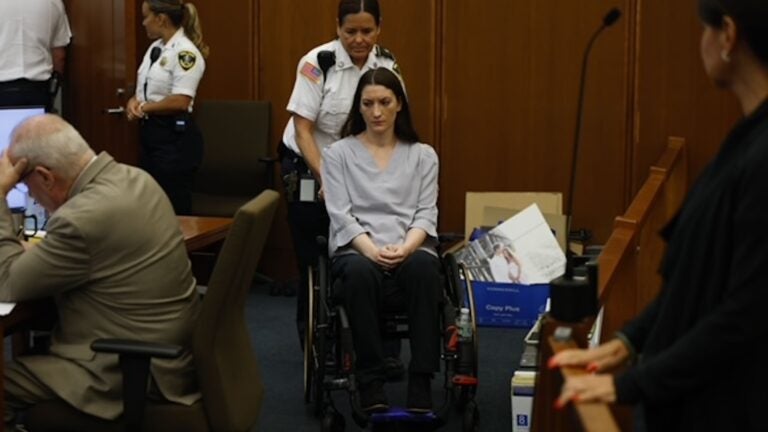
He then moved furniture to provide additional space for emergency personnel before assisting paramedics attempting to resuscitate Cora.
Firefighter and paramedic Patrick Dwyer similarly described finding two children in the basement while Patrick remained nearby.
Dwyer testified that he immediately began life-saving measures on Cora before continuing treatment during transport to the hospital.
Despite extensive efforts by emergency personnel, Cora also could not be revived.
Jennifer Stratton, another Duxbury firefighter and paramedic, testified alongside Dwyer regarding the basement scene.
She explained that she focused her attention on eight-month-old Callan while Dwyer treated Cora.
Stratton told jurors that she picked up the infant and carried him to a waiting ambulance before continuing emergency medical treatment.
Like the other children, Callan did not regain a pulse during transport.
Daniel Dougherty, another firefighter and paramedic, described treating Lindsay Clancy in the backyard.
According to his testimony, Lindsay was breathing independently but responded only intermittently to those around her.
He observed cuts on both of her wrists as well as a wound on her neck.
Dougherty told jurors that the neck injury appeared relatively superficial because he did not observe active bleeding.
After Lindsay had been transported from the scene, Dougherty joined other medical personnel who were continuing efforts to revive Dawson.
Mutual aid crews from neighboring communities also participated in the emergency response.
Pembroke firefighter and paramedic Robert Costanzo testified that he found Lindsay lying on a backboard with a cervical collar already in place around her neck.
He likewise observed injuries to her wrists and superficial cuts on her neck.
Like previous witnesses, Costanzo stated that he did not observe active bleeding.
During Lindsay’s transport to South Shore Hospital, Costanzo evaluated her medical condition.
He testified that he noticed her pupils appeared constricted, leading him to consider the possibility of an opioid overdose.
As a precaution, he administered Narcan, a medication commonly used to reverse opioid overdoses.
According to Costanzo, Lindsay became somewhat more physically active after receiving the medication, moving her arms, but she did not regain full consciousness or begin speaking.
Defense attorney Kevin Reddington questioned Costanzo briefly, confirming that Lindsay’s response could also have been consistent with a traumatic head injury rather than solely an opioid-related condition.
Earlier in the morning, jurors also heard testimony from two of the first police officers who arrived at the residence.
Officer Stephen Hall described finding Lindsay injured in the backyard while Patrick remained beside her.
Hall testified that Lindsay appeared to drift in and out of consciousness.
Although she had visible cuts to her wrists and neck, he stated that neither injury appeared to be actively bleeding.
According to Hall, Patrick briefly left Lindsay to check on the children inside the house.
Moments later, Hall heard an urgent radio transmission followed by a scream from inside the home.
Dispatch informed responding officers that Patrick was unable to wake the children.
Hall and fellow officer Brian Josephine immediately ran into the residence and headed toward the basement.
While recalling those moments in court, Hall became visibly emotional.
He testified that Patrick repeatedly cried out that he could not wake the children.
Inside one basement room, Hall said he discovered Dawson lying near an exercise band.
Officer Brian Josephine then described his own arrival in the basement.
According to Josephine, Patrick approached the responding officers shouting that Lindsay had killed the children.
Josephine testified that he immediately picked up Dawson and carried him upstairs to waiting paramedics before returning downstairs to assist with the other victims.
He found Cora and Callan lying motionless while emergency medical personnel continued attempting to save them.
Josephine later took over chest compressions on Cora before the children were transported to the hospital.
After the ambulances departed, Josephine returned upstairs and found Patrick still in the kitchen.
The officer described him as frantic, emotionally overwhelmed, and appearing to be in profound shock.
Because of Patrick’s condition, first responders requested medical evaluation for him as well.
Defense attorney Kevin Reddington declined to cross-examine either police officer, instead thanking them for their service.
He later renewed a previous request asking the judge to limit the number of emergency responders called to testify, arguing that multiple witnesses were describing many of the same events.
Judge Sullivan addressed the issue outside the presence of the jury.
Thursday’s testimony followed an emotional second day of trial during which Patrick Clancy recounted the events leading up to the deaths and jurors listened to the 911 call he placed after discovering the children unresponsive.
Patrick testified that although Lindsay had struggled with significant mental health issues in the months before the tragedy, no healthcare provider instructed him that she should never be left alone with the children.
He also told jurors that Lindsay never informed him she intended to harm them.
During cross-examination, the defense emphasized Patrick’s testimony that Lindsay consistently followed medical instructions and took her prescribed psychiatric medications.
Attorneys also highlighted several earlier occasions when she had been alone with the children without incident.
Patrick described Lindsay as an exceptionally devoted mother who loved reading to the children, inventing songs, and creating special traditions with them, including making green eggs and ham after their daughter’s favorite storybook.
As the trial continues, jurors will hear additional testimony from investigators, medical professionals, and mental health experts before deciding whether Lindsay Clancy should be held criminally responsible for the deaths of her children or whether her psychiatric condition at the time legally absolves her of criminal responsibility under Massachusetts law.