Investigators say the deadly attack at the Islamic Center of San Diego was driven by a disturbing combination of online radicalization, shared extremist messaging, and hate-filled writings that reflected escalating hostility toward multiple groups. According to the FBI, two teenagers responsible for the shooting—both of whom died by suicide after the incident—had met online and gradually developed a mutual worldview marked by broad resentment and violent rhetoric.
Authorities confirmed that the pair, aged 17 and 18, were connected through digital platforms where they initially formed contact before discovering they lived in the same San Diego area. What began as online communication later developed into in-person coordination, which investigators now believe played a central role in the planning and execution of the attack. Officials described their exchanges as reinforcing each other’s beliefs, ultimately creating what they called a “shared mindset” that preceded the violence./greater-kashmir/media/media_files/2026/05/20/san-diego-mosque-2026-05-20-09-18-22.png)
During a press briefing, FBI Special Agent in Charge Mark Remily stated that investigators had recovered written materials attributed to both suspects. These writings reportedly expressed anger, hostility, and generalized hatred toward multiple religious and racial groups. While officials did not publicly disclose specific ideological labels, they emphasized that the content reflected consistent extremist themes across both individuals.
The FBI also revealed that the investigation led to the seizure of a significant cache of weapons and tactical equipment. Authorities recovered more than 30 firearms, along with a crossbow, ammunition, and other materials from two residences linked to the suspects. Investigators are still working to determine whether the teenagers had planned additional acts of violence beyond the mosque attack or whether the incident represented the culmination of their preparations.
Law enforcement officials said the timeline of events suggests the situation escalated rapidly in the hours before the shooting. San Diego Police Chief Scott Wahl explained that the initial report received by authorities was not about terrorism or planned violence, but rather a missing juvenile case. The mother of one suspect contacted police after her son ran away from home, expressing concern that he was suicidal and noting that firearms and a vehicle were missing from the residence.

That urgent call, officials said, triggered a citywide search for the teenager. However, just hours after the report was filed, the attack at the Islamic Center began, transforming what had been treated as a mental health and missing-person emergency into a mass-casualty investigation.
Authorities later confirmed that the suspects used firearms belonging to a parent, although the exact circumstances under which they gained access to the weapons remain under review. Investigators are examining whether proper storage procedures were followed and how the teens were able to transport the weapons without intervention.
The Islamic Center of San Diego, one of the largest mosques in the region, became the site of the attack during what was described as a peaceful gathering that also included educational activities for children. Three adult men were killed during the incident. Community leaders later identified the victims and described them as deeply respected members of the mosque who played essential roles in daily operations and community support.
Among those killed was a security guard who authorities say acted quickly to prevent the attackers from moving deeper into the building. His intervention is believed to have stopped the violence from reaching classrooms and other populated areas within the mosque complex. Other victims also reportedly attempted to distract or confront the attackers, contributing to efforts that potentially saved additional lives.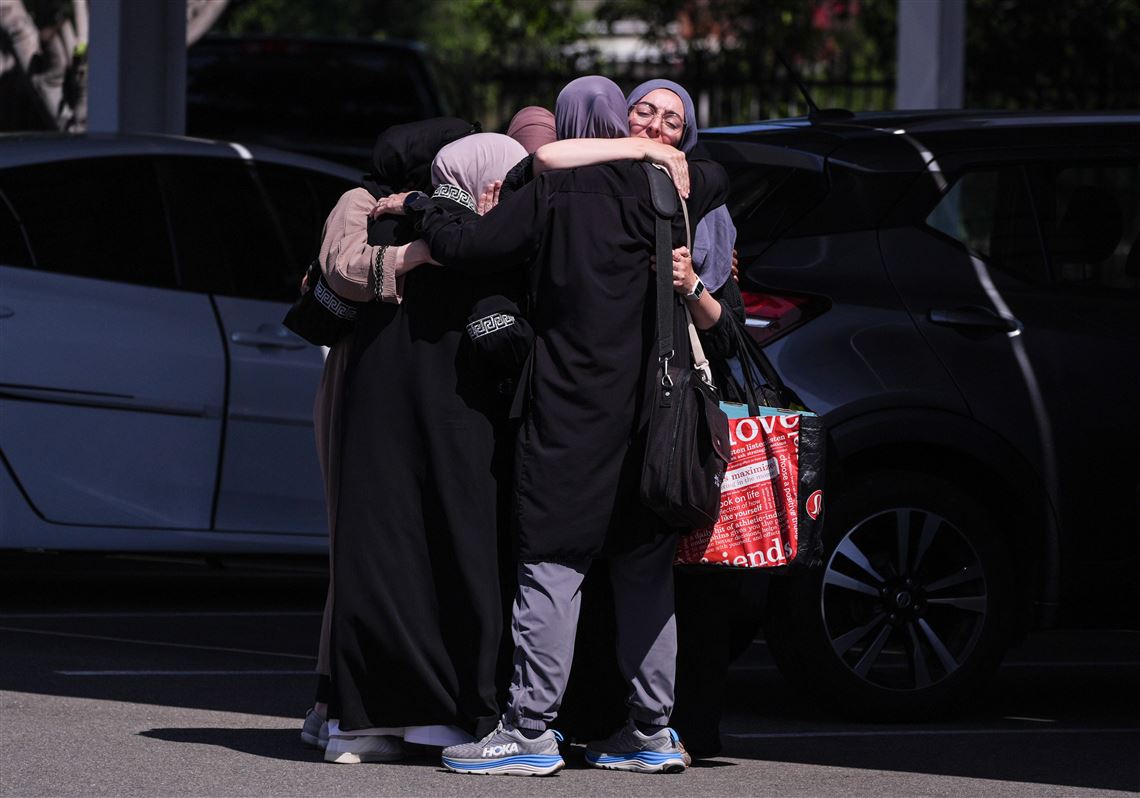
Imam Taha Hassane described the victims as pillars of the community, emphasizing their dedication to service. One of them was remembered as a caretaker, cook, and handyman who devoted himself to maintaining the mosque. Community members said their loss has left a deep emotional and practical void within the center.
As the investigation continued, Muslim advocacy organizations across the United States responded with concern, pointing to what they described as a growing climate of anti-Muslim rhetoric. Leaders from groups such as Emgage Action stressed that language promoting hatred can have real-world consequences. One representative stated that “words have consequences,” warning that rhetoric targeting religious communities can contribute to escalation and violence.
Authorities also noted that while there was no specific, publicly identified threat against the mosque prior to the attack, the suspects had been found to engage in what police described as generalized hate rhetoric. Chief Wahl explained that this type of communication, while not always tied to a direct plan, can still indicate developing extremist tendencies when combined with other warning signs.
Investigators continue to analyze the recovered writings, digital communications, and physical evidence in an effort to understand how the two teenagers developed their beliefs and how those beliefs evolved into coordinated violence. The FBI emphasized that the case remains open, with ongoing efforts to map the full extent of the suspects’ online activity, potential influences, and possible broader intentions.
The shooting has intensified national discussions about the risks of online radicalization among young people, especially when combined with access to firearms and vulnerable mental health conditions. Officials say the convergence of these factors in the San Diego case created a rapid and dangerous progression from online interaction to real-world violence.
As the community mourns the victims and investigators continue their work, the case stands as a stark example of how digital connections, extremist messaging, and unaddressed warning signs can converge with devastating consequences.





