There is no public evidence that Broadmoor “demanded” special or extraordinary conditions as a “price” for accepting Axel Rudakubana, or that the hospital negotiated unique terms beyond standard high-security clinical and security protocols.**
The transfer from HMP Belmarsh occurred after an independent clinical assessment under the Mental Health Act. Clinicians concluded he could no longer be safely managed in a prison environment. This followed his alleged attack on a prison officer with boiling water (using a kettle in his cell) in May 2025, among other factors. Under the Act, once independent clinicians recommend such a move for a prisoner with a mental disorder that cannot be adequately managed in prison, the Ministry of Justice has limited discretion and typically must approve it after security checks. The transfer is not a hospital order converting his sentence; he remains under a life sentence with a 52-year minimum term and must return to prison when clinicians assess that hospital treatment is no longer required.
Risk assessment and daily management
Upon arrival, Rudakubana was expected to undergo a detailed assessment to determine housing and treatment. Experts and former staff indicate he could initially be placed in seclusion (highly restricted isolation), with constant or very frequent monitoring of movements, behaviour, and contact with others. Formal checks can occur as often as every 15 minutes around the clock in such regimes.
A consistent theme from reporting and specialist commentary is that **everything depends on ongoing risk assessment** — specifically risk to staff, other patients, and himself. Privileges, movement, association with others, and access to facilities are tightly controlled and can be withheld or granted only after repeated assessments. A former senior staff member described highly restricted regimes as stripping the day “to the absolute minimum” for as long as the assessed danger remains high. Only if he responds to treatment and risk is judged to reduce would gradual access to broader structured activities (education, workshops such as woodwork/metalwork/cookery, exercise, supervised leisure) become possible. Even then, these are supervised and contingent.
High-security features remain in place: locked wards, multiple internal security layers, continuous CCTV, staff carrying personal alarms and keys, strict control of items that could be used as weapons, and enhanced entry checks comparable to (or stricter than) prison security. Patients do not move freely. Broadmoor is one of only three high-security psychiatric hospitals in England (with Ashworth and Rampton) and specialises in men who pose extreme risks.
Treatment environment versus prison

Patients are treated as patients rather than prisoners, with a focus on assessment, therapy, rehabilitation programmes, and (where clinically indicated) medication, which can include compulsory treatment under the Mental Health Act in ways not always available in prison. Facilities after modernisation include more modern rooms (sometimes compared to university-style accommodation with desks/wardrobes), potential access to a gym, café/shop, workshops, gardens, multi-faith space, and better food options than typical prison catering. These are not automatic entitlements; high-profile or high-risk individuals often face prolonged restrictions, possible seclusion, and close observation. Consultant psychiatrist Dr Bradley Hillier (with experience of such settings) has stated the transfer is **not** a “holiday,” “easy ride,” or light touch. It can involve increased restrictions, greater scrutiny, and the ability to remove rights in the service of risk management and treatment — sometimes more tightly than in prison.
He is also a high-profile patient due to the nature of his crimes, which introduces additional risks (including potential targeting by other patients), managed through established hospital procedures. Cost of a secure hospital placement is substantially higher (reports cite figures around £270,000–£300,000+ per year versus roughly £60,000–£100,000 for a prison place).
Context and ongoing debate
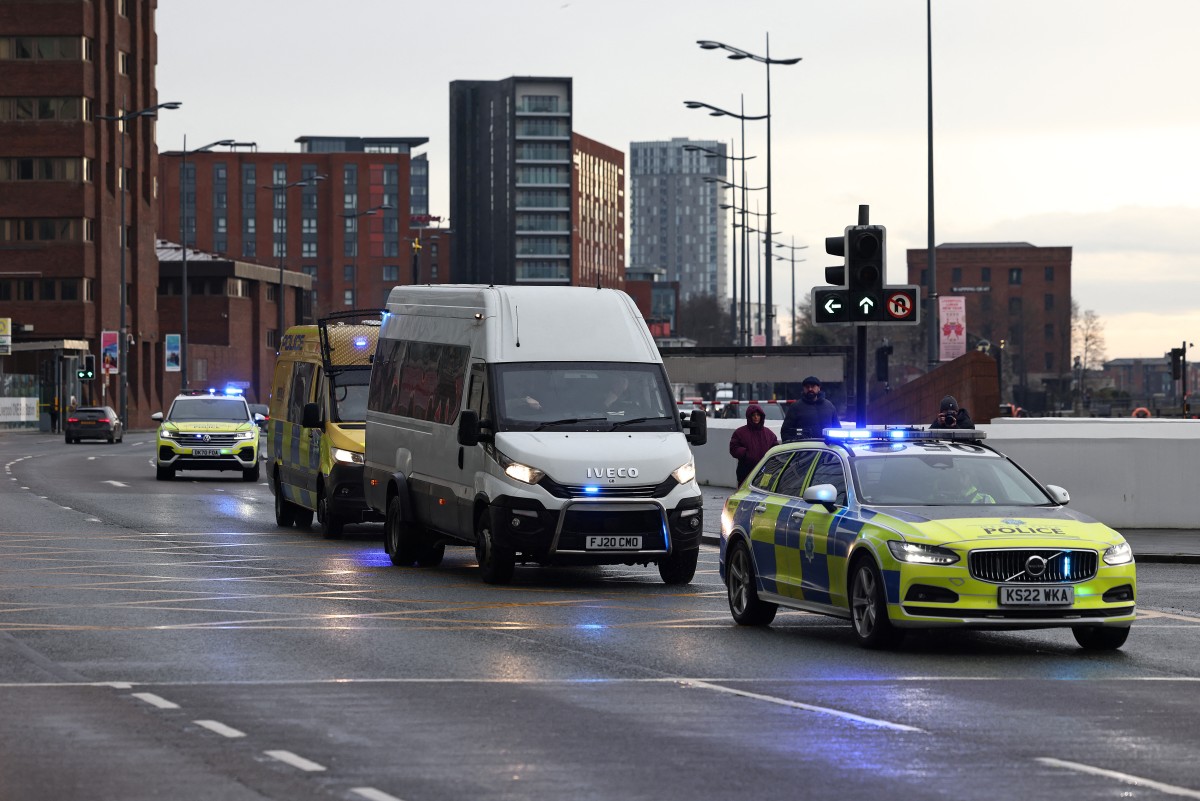
Families of the victims (via solicitor Chris Walker) and others have described the move as possible system manipulation, noting the lack of evidence of psychosis explaining the original crimes, his fitness to plead/stand trial, the timing near the second anniversary, and limited information provided to them. Prison staff representatives have voiced safety and privilege concerns. Official statements emphasise that high-secure hospitals are not places of freedom, he remains under constant supervision, and he will return to prison as soon as clinically appropriate.
In short: the process was driven by clinical assessment of unmanageability in prison rather than hospital “demands” or bargaining. Daily (and more frequent) risk assessments governing virtually all aspects of his regime are standard for high-risk patients in this setting. Initial conditions are expected to be highly restrictive; any later easing depends entirely on clinical judgment of reduced risk. Detailed clinical reasons and exact current regime details have not been publicly released beyond the MoJ’s high-level confirmations.