**Luke Mitchell was temporarily released under escort to attend his mother Corinne Mitchell’s funeral following her death in July 2026. This was not a permanent release, parole decision, or extraordinary concession, but a standard form of compassionate leave granted in the Scottish prison system for the funeral of a close relative.**
Corinne Mitchell, aged 66, died on 9 July 2026. For more than two decades she had been the most visible and determined campaigner for her son, insisting that Luke did not kill 14-year-old Jodi Jones in woods near Dalkeith, Midlothian, in 2003. Campaigners announced her death publicly on 30 July and confirmed that a private funeral service had taken place. Luke Mitchell, now in his late thirties and still serving a life sentence, was permitted leave from custody to attend. Prison officers escorted him throughout the period outside the prison walls. He was returned to custody afterwards.
In the Scottish prison system, temporary escorted leave for a parent’s funeral is a recognised category of compassionate release. Decisions are discretionary and subject to risk assessment. Conditions typically include continuous escort, strict time limits, and immediate return to the establishment. Such leave does not affect the underlying sentence, does not equate to parole, and carries no implication that the prisoner’s risk status has changed. Reports of Mitchell’s attendance describe precisely this arrangement: leave granted for the funeral, escorted by officers, and temporary in nature. There is no evidence of any broader or ongoing special treatment beyond that single authorised absence.

Mitchell was 14 when Jodi Jones was murdered. The pair had been in a relationship for several months. He was convicted of her murder at the High Court in Edinburgh in 2005 and sentenced to detention for life with a minimum term of 20 years. He has always maintained his innocence. The case has generated persistent controversy, with supporters pointing to what they regard as investigative shortcomings, untested or unexplained forensic material, and questions about the original police inquiry. Mitchell has lost successive appeals. He became eligible for parole after serving the minimum term but has been refused release. Parole Board decisions have cited difficulties in assessing risk, including reports that characterised him as presenting a sexual risk to women—assessments his campaign disputes. A judicial review of one parole decision was unsuccessful. He remains in custody, currently associated with HMP Shotts in recent reporting, and continues to deny the crime.
Corinne Mitchell’s campaign spanned the entire period of her son’s imprisonment. She appeared in documentaries, gave interviews, wrote letters, and worked with supporters to raise funds for legal challenges. In the year before her death she and the campaign had been active in fundraising, securing new legal representation, and organising case papers for further review. Supporters raised more than £20,000 to pursue fresh legal work. Campaign statements issued after her death described her as a devoted mother who remained determined despite her own health difficulties, and they pledged to continue seeking what they call the truth in her memory. Luke himself has written from prison thanking supporters for their efforts.
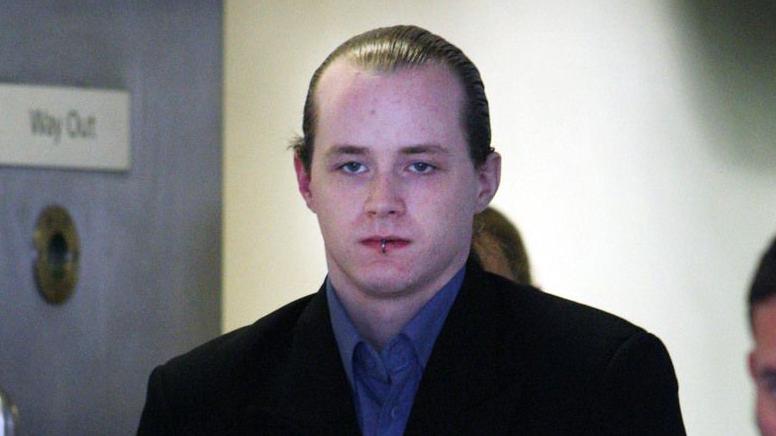
The timing of the funeral leave, so soon after the second anniversary of another high-profile case and amid ongoing public interest in miscarriage-of-justice claims, prompted speculation in some quarters that the absence from prison was somehow irregular or linked to wider issues. Available reporting does not support that interpretation. Compassionate leave for a parent’s funeral is a long-established, if tightly controlled, feature of prison management. It is granted in other cases under comparable circumstances and does not require the prisoner to have been granted parole or to have demonstrated reduced risk in the way required for open conditions or release on licence. Mitchell’s attendance was publicised by campaign sources and covered by Scottish media as leave for the funeral, with the escort detail explicitly noted.

Mitchell’s conviction remains in force. The Parole Board has not directed his release. Legal efforts to reopen or challenge aspects of the original case continue through campaign-funded work, but no court has overturned the guilty verdict. His mother’s death removes the person who had been the most consistent public face of the innocence campaign for over twenty years. Campaigners have stated they will continue the effort. Whether that work produces any change in his legal position remains to be determined by the courts and the relevant review bodies.
The episode illustrates the human dimension that persists even in the most contested criminal cases. A mother who spent the greater part of two decades fighting for her son’s freedom has died. Her son was allowed, under escort, to attend her funeral and then returned to prison to continue serving the sentence imposed after his conviction. That arrangement is consistent with ordinary compassionate leave practice. It does not alter the facts of the conviction, the parole history, or the ongoing dispute over whether the original investigation and trial delivered a just outcome. Those questions remain matters for the legal process and for public scrutiny of the evidence, not for interpretation of a single authorised absence from custody.