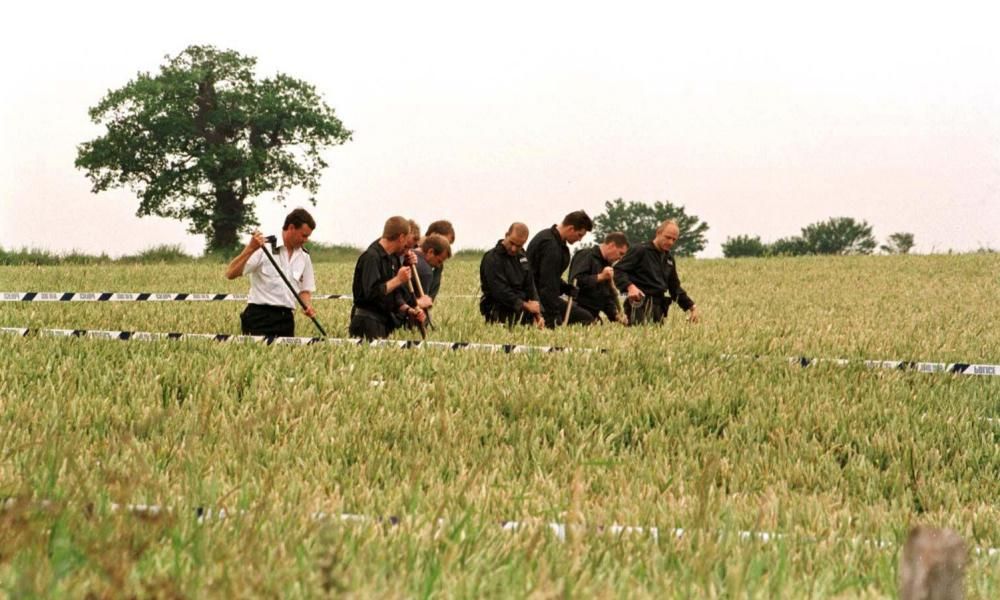
The brutal hammer murders of Lin Russell and her six-year-old daughter Megan, along with the near-fatal attack on Megan’s nine-year-old sister Josie, sent shockwaves across Britain. Occurring on a quiet country lane in Chillenden, Kent, on July 9, 1996, the crime baffled investigators and tore at the nation’s sense of security.
For nearly three decades, Michael Stone has sat behind bars, convicted largely on the controversial testimony of a jailhouse informant named Damien Daley, despite lacking any physical or forensic link to the scene. Throughout his prolonged incarceration, Stone has maintained his absolute innocence. Now, a profound shift is underway. Propelled by modern scientific advancements and startling disclosures from the family of a deceased alternative suspect, Stone’s legal team believes the long-standing narrative of the case is on the verge of collapsing.

The Weight of a Decades-Old Conviction
To understand the magnitude of the current legal maneuvers, one must look back at how the original prosecution was built. Convicted at trials in 1998 and 2003, Stone was painted as a dangerous drifter whose alleged confession to fellow inmate Damien Daley served as a cornerstone for the Crown’s case. Critics, legal experts, and defense advocates have long argued that relying on prison informant testimony—often motivated by deals, reductions in sentence, or personal gain—inherently breeds miscarriages of justice.
Without a shred of DNA, fingerprints, or physical evidence tying Stone to the bloody scene in Chillenden, his life sentence has remained a subject of intense controversy. For 25 years, Stone has lived under the shadow of a conviction that his solicitor, Karen Todner, argues was fundamentally flawed. But legal horizons change when time unlocks hidden secrets and technology eclipses the crude investigative tools of the late 1990s.
A Seismic Shift: The Raymond Buck Revelation
The tectonic plates of the Chillenden case shifted dramatically when relatives of a new, deceased suspect came forward to the Criminal Cases Review Commission (CCRC). The individual at the center of this fresh scrutiny is Raymond Buck, a carpenter with a known history of violence who tragically died by suicide at Beachy Head in 2000 at the age of 46.
The veil of silence shrouding Buck began to tear open when family members stepped forward with chilling recollections. Among them is Ross Shields, who was a child when the murders occurred. Shields recounted to investigators that he vividly overheard Buck make an explicit, spine-chilling confession to a family member on the very day of the murders, stating: “I’ve done something unforgivable. I’ve killed three people.”
Adding staggering weight to these oral accounts, contemporaneous documents from the summer of 1996—including personal notes and psychiatric reports—have been presented to substantiate Buck’s volatile state and movements during that exact timeframe. Furthermore, in a twist that has electrified legal observers, one of Buck’s own sons broke a 26-year silence to voluntarily submit a DNA sample to the CCRC.
Modern Forensics Meets the Past
While human testimony provides a compelling narrative direction, the ultimate arbiter in this renewed investigation is modern forensic science. The CCRC, executing its fourth review into Stone’s conviction, formally collected a fresh DNA sample from Stone himself.
Because genetic profiling has evolved exponentially since the 1990s, scientists are now capable of analyzing microscopic traces of foreign male DNA recovered from critical items at the crime scene—such as the shoelaces used to bind the victims—that previously yielded inconclusive results. By comparing these degraded or minute genetic markers against the newly provided DNA sample from Buck’s family member, investigators have a genuine opportunity to achieve what was impossible decades ago: objective, biological truth.
Karen Todner has expressed unprecedented optimism regarding these developments, noting that if the DNA analysis isolates a profile matching anyone other than Michael Stone, the path to the Court of Appeal will be wide open.
A Defining Moment for British Justice
As the CCRC sifts through the complex web of fresh witness statements, historical documents, and advanced DNA profiles, the psychological and legal framework surrounding Michael Stone’s imprisonment is being severely tested. For a man who has spent the majority of his adult life protesting his innocence against a backdrop of disputed confessions and informant whispers, the coming months represent a critical junction.
If the new evidence dismantles the foundation of the 1998 verdict, it will expose one of the most glaring miscarriages of justice in modern legal history. As science catches up with the shadows of 1996, the truth behind the Chillenden tragedy may finally step out into the light.