SIMON LEVY’S BAIL DECISIONS ARE BEING RE-EXAMINED: THE TIMELINE RAISING DISTURBING QUESTIONS ABOUT MISSED OPPORTUNITIES
The conviction of Simon Levy for the murders of two women has triggered an uncomfortable examination of what happened long before he finally entered the Old Bailey dock—and one issue is attracting particular scrutiny: why was a known sexual offender repeatedly able to remain in the community as allegations against him accumulated?
Levy, 40, was convicted of murdering Carmenza Valencia-Trujillo and Sheryl Wilkins, alongside rape and other serious violent offences.
But as details of his history are examined, public attention is shifting from the crimes themselves toward the decisions made while Levy was already known to police, prosecutors and the courts.
The emerging timeline is deeply troubling.
Levy was not an offender who suddenly appeared without warning.
He had previous convictions for sexual offences and had spent time in prison. After his release, further allegations emerged involving women on London’s transport network.
Yet at critical points, Levy remained free.
That fact has prompted questions about bail, charging decisions, information sharing and whether authorities properly understood the risk he posed.
The most important thing is to separate the different decisions involved.
“Bail” can sound like a single action taken by one institution. In reality, decisions about whether a suspect remains free can involve police, prosecutors and courts at different stages.
Each decision depends on the evidence and information available at that particular moment.
That distinction matters because the scrutiny surrounding Levy is not necessarily about one extraordinary decision.
It is about the cumulative effect of several moments when the system might have intervened.
One particularly disturbing part of the timeline concerns a woman Levy attacked in Tottenham in January 2025.
She survived a horrific assault.
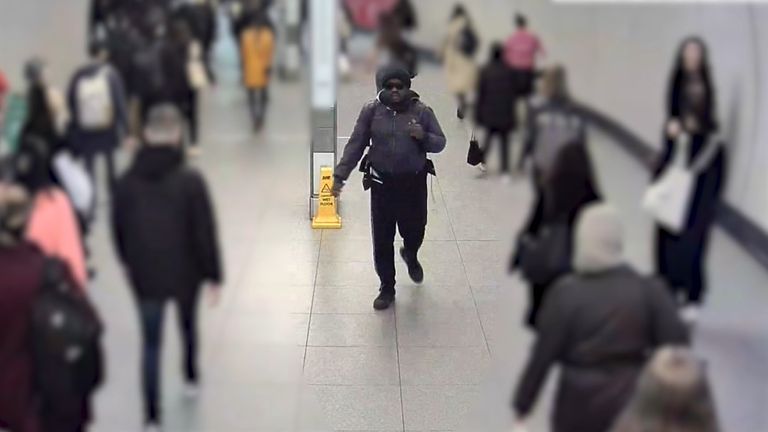
Evidence presented in the case showed that Levy raped and suffocated her, and she suffered a broken collarbone during the attack.
The woman survived and was able to provide investigators with crucial information.
This was no minor allegation.
It was an exceptionally serious act of sexual and physical violence.
Yet Levy was not permanently removed from the streets at that point.
Then came the event that dramatically changed the stakes.
In March 2025, Carmenza Valencia-Trujillo was killed.
Levy was subsequently connected to the investigation and arrested.
For anyone examining the case retrospectively, this is one of the most difficult moments to comprehend.
A man with a history of sexual offending was now under scrutiny following the death of a woman.
But Levy was ultimately released on bail while inquiries continued.
Five months later, another woman was dead.
Sheryl Wilkins was murdered in August 2025.
The violence inflicted upon her was extraordinary. Evidence heard in connection with the case described dozens of injuries.
Only after investigators connected the accumulating evidence did the complete scale of Levy’s offending become apparent.
This sequence is why previous bail decisions are now receiving so much attention.
The question being asked is not simply, “Why was he released?”
It is whether every agency involved possessed the complete picture when those decisions were made.
Did police understand the significance of his previous sexual offending?
Were prosecutors provided with all relevant information?
Were courts given a sufficiently detailed assessment of his risk?
Were separate allegations being examined as isolated incidents rather than signs of escalating behavior?
Those are fundamentally different questions from claiming that someone deliberately allowed a dangerous man to walk free.
There is no evidence that officials wanted Levy released so he could offend again.
The concern is whether failures in communication, procedure or judgment combined to produce catastrophic consequences.
That possibility is far more unsettling than a single obvious mistake.
Modern criminal justice systems depend upon multiple agencies operating together.
Police investigate.
Prosecutors assess evidence and make charging decisions.
Courts determine bail.
Probation and other services can become involved in managing offenders.
When the system functions properly, those layers provide safeguards.
But when crucial information fails to move between them quickly enough, those same layers can create gaps.
Levy appears to have moved through those gaps repeatedly.
His earlier behavior on London’s transport system is another critical part of the story.
He had sexually assaulted women and was already known as a sexual offender.
After his release from prison, further allegations were being investigated.
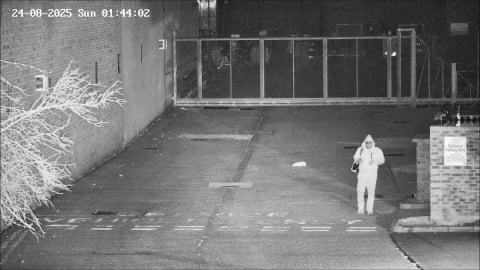
A repeat offender targeting women in public should have presented authorities with an increasingly concerning pattern.
But patterns only become visible when information is assembled.
One allegation can appear isolated.
A missed court appearance can become another administrative problem.
A new investigation can remain with a different police team.
A bail decision can be made based only on the material immediately available.
Put everything together, however, and the picture can look completely different.
That is precisely why the Levy case has caused such anger.
Authorities have themselves acknowledged serious shortcomings.
The Metropolitan Police has spoken about failures surrounding the case, while the Crown Prosecution Service has also faced scrutiny over how Levy was handled.
British Transport Police has been questioned because of Levy’s history of sexual offending on the transport network.
Investigations and misconduct proceedings are intended to establish precisely what went wrong.
It would therefore be premature to describe the entire sequence as the result of a specific “loophole.”
The reality may be more complicated.
There could have been several failures rather than one.
Information sharing.
Risk assessment.
Charging decisions.
Bail applications.
Missed hearings.
Delays.
Individually, none necessarily explains what eventually happened.
Collectively, they may have allowed a dangerous offender to remain free during periods when authorities had opportunities to intervene.
There is also an important legal reality surrounding bail.
A person accused of an offence is not automatically imprisoned until trial.
Courts must consider legal tests, evidence, risks and the circumstances of the case.
Hindsight makes later events appear obvious in ways they may not have appeared at the time.
That principle must be acknowledged.
But hindsight cannot become an excuse to avoid examining genuine failures.
If relevant information existed and was not supplied to decision-makers, that must be explained.
If Levy breached conditions or failed to appear and consequences did not follow quickly enough, authorities must establish why.
If separate police forces held different pieces of information about the same offender, investigators must determine whether those records were properly connected.
Most importantly, authorities must ask whether the surviving women who reported Levy’s violence were taken seriously enough, quickly enough.
The deaths of Valencia-Trujillo and Wilkins make those questions impossible to dismiss as administrative technicalities.
Two women were killed.
Other women survived sexual violence.
A convicted sexual offender was repeatedly coming into contact with the justice system.

That is the sequence now under examination.
And perhaps the most shocking aspect is that there may be no single dramatic loophole capable of explaining everything.
The truth could be more disturbing.
A series of ordinary procedural failures—each appearing manageable when viewed separately—may have combined into something catastrophic.
That is why reviewing Levy’s bail history matters beyond this individual case.
The purpose cannot simply be identifying someone to blame after two murders.
It must establish whether the system was receiving warning signs but failing to connect them.
Because if that is what happened, the most important question is not merely why Simon Levy remained free.
It is whether another dangerous offender could still slip through exactly the same gaps tomorrow.