A “HOT MIC” MOMENT WHILE LINDSAY CLANCY SOBBED HAS TURNED HER COURTROOM INTO A BATTLEFIELD
A few indistinct words captured by a courtroom microphone have created an explosive new controversy in the murder trial of Lindsay Clancy, the Massachusetts mother accused of killing her three young children.
The moment occurred during some of the trial’s most emotionally difficult testimony. Graphic autopsy evidence concerning Clancy’s children was being presented when Clancy began crying. Then a microphone apparently captured a comment from somewhere inside the courtroom.
What exactly was said has now become fiercely disputed.
Clancy’s defense attorney, Kevin Reddington, told Judge William Sullivan that a member of the prosecution had been picked up on a “hot mic” saying, “Shut her up.”
Prosecutors deny that interpretation.
According to the Plymouth County District Attorney’s Office, the words were actually “shut it off” — an instruction concerning the graphic autopsy images being displayed on a large courtroom screen.

That difference of only a few syllables has transformed an emotional courtroom moment into a controversy about professionalism, perception and the extraordinary tension surrounding one of America’s most closely watched murder trials.
“SHUT HER UP” OR “SHUT IT OFF”?
The dispute erupted after Clancy became visibly emotional during testimony concerning the autopsy of her youngest child.
Clancy is accused of killing her three children — five-year-old Cora, three-year-old Dawson and eight-month-old Callan — at the family’s Duxbury, Massachusetts, home in January 2023.
Her defense does not dispute that Clancy caused the children’s deaths. Instead, her attorneys argue that severe mental illness, including what they describe as postpartum psychosis, meant she was not criminally responsible for her actions.
That makes Clancy’s mental condition central to the trial.
Against that background, Reddington reacted furiously to what he believed had been captured by the courtroom microphone.
He told the judge that during the presentation of the autopsy evidence, someone from the prosecution had been recorded saying “shut her up” as Clancy cried.
Reddington reportedly invoked The Handmaid’s Tale while objecting to what he regarded as an unacceptable remark.
But the District Attorney’s Office quickly pushed back.
Spokesperson Beth Stone said officials reviewed the video and maintained that the defense had misheard the comment. According to Stone, the person actually said “shut it off.”
The office also disputed the suggestion that the comment came from the prosecution team.

Its explanation was straightforward: the words referred to removing the autopsy photographs from the courtroom’s large display screen as the camera moved away.
If that explanation is correct, the remark had nothing to do with silencing Clancy.
If Reddington’s interpretation were correct, however, the implications would obviously be very different.
For now, there has been no definitive public finding establishing that a prosecutor told Clancy to “shut up.”
That uncertainty is precisely why the incident has become so controversial.
THE JUDGE ISSUES A WARNING
Judge William Sullivan subsequently addressed courtroom behavior directly.
He made clear that inappropriate or disruptive comments would not be tolerated inside his courtroom and warned that anyone making such remarks could be removed and barred.
The warning did not resolve what had actually been said on the recording.
Instead, it emphasized something increasingly obvious as the trial progresses: emotions inside and outside the courtroom are extraordinarily high.
That is hardly surprising.
Jurors are being asked to consider horrific evidence involving the deaths of three very young children while simultaneously confronting complicated questions about psychiatric illness, medication and criminal responsibility.
Clancy herself now uses a wheelchair following injuries sustained when she jumped from a window in what authorities have described as a suicide attempt after the children were killed.
Images from the courtroom have repeatedly shown her reacting emotionally to testimony.
But those reactions do not determine the verdict.
The jury ultimately must decide the case from the evidence and the legal instructions provided by the judge.
WHY CLANCY’S MENTAL HEALTH MATTERS SO MUCH
At the center of the trial is not simply the question of whether Clancy killed Cora, Dawson and Callan.
The crucial legal battle concerns her mental state.
Prosecutors contend that the killings were intentional. They have argued that Clancy sent her then-husband, Patrick Clancy, away from the home on errands before the children died.
The defense presents a radically different interpretation.
Clancy’s attorneys say she had suffered a severe deterioration in her mental health following Callan’s birth. They have highlighted her insomnia, anxiety, suicidal thoughts and treatment by mental-health professionals.
Her defense has also pointed to the numerous medications she had been prescribed while seeking help.
Those circumstances are being presented to support the argument that Clancy was suffering from a psychiatric condition severe enough to affect her criminal responsibility.
Prosecutors, meanwhile, are attempting to convince jurors that the evidence demonstrates planning, awareness and intentional conduct.
That clash explains why virtually every emotional moment in the courtroom receives intense scrutiny.
Even a few barely audible words can become significant.
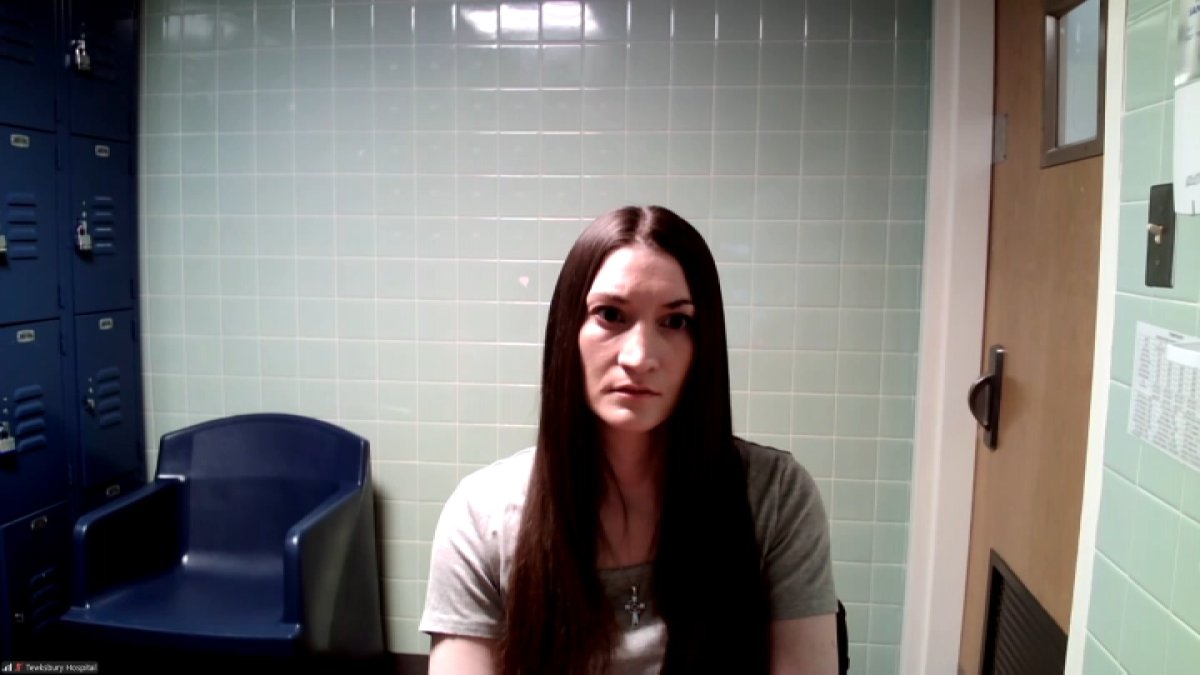
PUBLIC REACTION EXPLODES
The “hot mic” dispute has inevitably spread beyond the courtroom.
Some observers interpreted the alleged “shut her up” remark as evidence of callousness toward a visibly distressed defendant.
Others have emphasized that the District Attorney’s Office has explicitly denied that those words were spoken and provided a plausible alternative explanation.
And that distinction matters.
An ambiguous recording can easily sound different depending on what listeners expect to hear. Once two competing phrases have been suggested, people can listen to identical audio and sincerely believe they hear completely different words.
That phenomenon makes the controversy especially difficult to resolve through social-media debate.
It also illustrates the danger of allowing an allegation to become accepted as fact before it has actually been established.
The defense says “shut her up.”
The prosecution says “shut it off.”
The judge has warned everyone about inappropriate courtroom comments.
But none of that changes the fundamental question before the jury.
THE REAL BATTLE IS STILL AHEAD
The controversy surrounding the microphone may eventually become little more than a dramatic footnote in a much larger trial.
The jury must evaluate psychiatric testimony, medical records, Clancy’s behavior before the killings, evidence from inside the home and the prosecution’s argument that her actions demonstrated deliberate planning.
They must then confront an extraordinarily difficult legal question: what was happening in Lindsay Clancy’s mind when her three children died?
The hot-mic controversy cannot answer that.
Nor can images of Clancy crying in court.
Those moments can produce sympathy, anger and intense public debate, but a criminal verdict demands something different.
It demands evidence.
For now, therefore, the most sensational question surrounding the incident remains unresolved.
Did somebody coldly say “shut her up” while Lindsay Clancy sobbed?
Or did someone simply say “shut it off,” referring to disturbing autopsy photographs that needed to be removed from a courtroom screen?
Two interpretations. Two dramatically different meanings.
And until clearer evidence establishes precisely what was said, presenting either version as unquestionable fact would go further than the evidence currently allows.