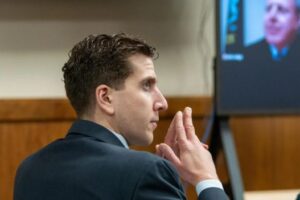
**ACCOUNTS FROM BRYAN KOHBERGER’S FORMER CLASSMATES ARE RAISING CONTROVERSIAL QUESTIONS ABOUT HIS TRUE PERSONA**
Following the shocking case that came to light, several of Bryan Kohberger’s former classmates shared their impressions and memories of their time together. These accounts quickly became a topic of widespread interest, especially when placed alongside the events of the case.
According to published sources and analyses, many are beginning to wonder whether Kohberger’s particular interest in criminology stemmed solely from his academic pursuits, or if there were other, previously undisclosed aspects to his character. Do the classmates’ accounts merely reflect their personal perspectives after the crime occurred, or will they help piece together a missing fragment of Bryan Kohberger’s story?

Bryan Kohberger pleaded guilty in 2025 to the November 2022 murders of four University of Idaho students and is serving four life sentences. He has never explained his motive. In the absence of that explanation, the recollections of people who studied alongside him have taken on added weight. From high school through his doctoral program in criminology at Washington State University, a consistent set of observations emerges: intelligence paired with social detachment, an intense focus on criminal behavior, and interpersonal patterns that left some peers uneasy.
In high school in Pennsylvania, classmates described a bright but awkward teenager who struggled with his weight and was frequently bullied. Some remembered him as quiet and shy; others recalled a later shift after significant weight loss, when he became more aggressive and, in the view of former friends, began bullying others. One classmate spoke of an “intense stare.” Another said he pointed out peers’ flaws and insecurities. These early impressions paint a young man who was academically capable yet socially isolated, already showing an interest in how the mind works.
At DeSales University, where he earned degrees in psychology and criminal justice, the portrait sharpened. Fellow students called him “The Ghost” because he arrived just before class with coffee and left immediately afterward. He was remembered as intelligent and well-spoken but emotionally detached, with little visible affect and an imposing presence. One classmate who worked with him on a group project described a “leveled” demeanor and careful speech. Outside the classroom, accounts from local bars suggested a different side: lingering, staring, and making women uncomfortable enough that staff asked him to leave.
It was at Washington State University, where Kohberger began a PhD in criminology in the fall of 2022, that the most detailed contemporary observations were recorded. Classmates said he was highly engaged in discussions of forensic psychology and criminal theory, often speaking in every session and seeking the most complex explanations. He positioned himself as intellectually superior, especially in exchanges with female students. Multiple peers later told investigators he spoke down to women, arrived late to classes taught by female professors, and stared with an intensity that several found intimidating. One student kept a tally of encounters. Another described being “verbally kidnapped” into a lengthy conversation. Formal complaints—thirteen in total—accumulated within months, covering offensive comments and behavior that left some women in the program feeling unsafe.
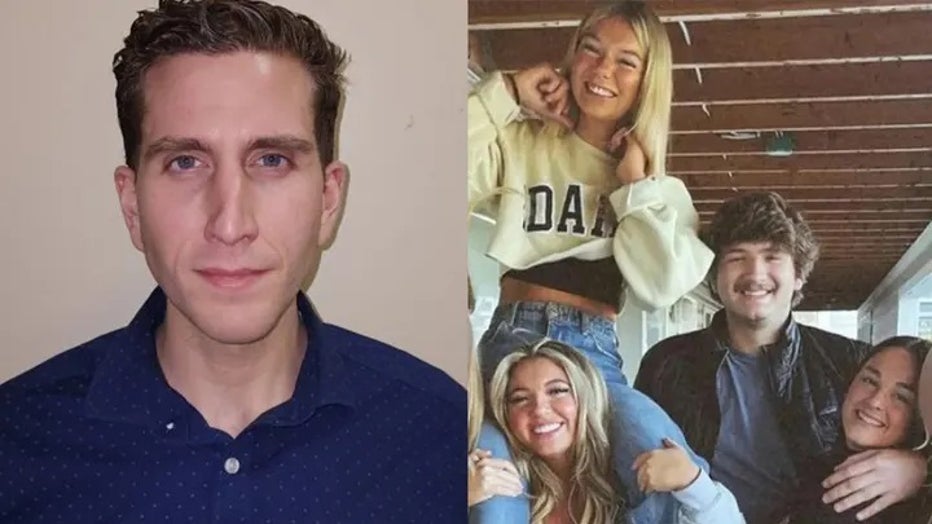
Perhaps the most striking recollection involves the period after the Idaho murders. When the killings of Madison Mogen, Kaylee Goncalves, Xana Kernodle and Ethan Chapin were raised in class, Kohberger, normally vocal, fell silent. One classmate who shared multiple courses with him noted the abrupt change. Another described him as “hollow” or “nonexistent” when he was not performing a social role—like staring into an abyss where something human should be. These observations, made by people who sat near him in the weeks following the crime, have been widely discussed because they contrast so sharply with his earlier classroom eagerness.
The question that arises from these accounts is whether Kohberger’s deep interest in criminology was purely scholarly or whether it coexisted with darker personal preoccupations. He studied serial killers and the psychology of crime under respected professors. He performed well academically. Yet the same peers who noted his intellectual intensity also described arrogance, misogynistic remarks, a need to dominate conversations, and a persistent social awkwardness that never fully resolved. Some wondered aloud, even before his arrest, whether his fascination with the criminal mind reflected more than professional ambition.
Hindsight inevitably colors memory. Classmates speaking after a shocking crime may emphasize details that once seemed merely odd. At the same time, the volume and consistency of the reports—from high school through graduate school—suggest a pattern that predates the murders. Intelligence without empathy, academic focus without warmth, and a tendency to unsettle those around him form a recurring theme. Whether these traits help explain the crime itself remains unknowable. Kohberger has chosen silence on motive, and no classmate claim constitutes proof of intent.
What the accounts do provide is a human texture often missing from the formal case record. They show a young man who moved through educational institutions as a high-achieving but alienating presence, deeply absorbed in the study of crime while leaving many of those around him with a lasting sense of unease. In the absence of an explanation from Kohberger himself, those impressions continue to invite scrutiny. They do not solve the central mystery of why four students died. They do, however, complicate the image of a purely detached academic and keep alive the question of what, beyond textbooks and seminars, drew him so intently to the subject of murder.