More than half a century after Neil Armstrong’s “one small step” in July 1969, humanity is once again reaching for the Moon. Yet as NASA’s Artemis II mission hurtles through space following its launch on April 1, 2026, a nagging question echoes across forums, comment sections, and late-night discussions: if we could land on the lunar surface with 1960s technology, why does a simple crewed flyby in 2026 feel so complicated—and why isn’t the mission attempting a landing?
The official answer is straightforward but unsatisfying to many. Artemis II is deliberately designed as a test flight, not a landing mission. The four astronauts—Commander Reid Wiseman, Pilot Victor Glover, Mission Specialist Christina Koch, and Canadian astronaut Jeremy Hansen—are aboard the Orion spacecraft on a 10-day journey that will take them on a free-return trajectory around the Moon, reaching approximately 4,700 miles beyond the far side. They will travel a total of about 685,000 miles before splashing down in the Pacific. No landing is planned. The focus is on proving that the Orion capsule, the SLS rocket, and all supporting systems can safely carry humans into deep space and bring them home.

This cautious approach stems from hard-learned lessons since the Apollo era. The Saturn V rocket that powered Apollo was retired decades ago. Today’s Space Launch System (SLS) is the most powerful rocket ever built, but it has faced repeated delays due to hydrogen fuel leaks, helium line issues, and battery temperature anomalies in the launch abort system. Engineers rolled the rocket back to the Vehicle Assembly Building earlier in 2026 for repairs. Even on launch day, teams scrambled to resolve a flight termination system issue and instrumentation quirks. These problems highlight a core reality: modern spaceflight prioritizes safety and redundancy over the “go fever” that defined the race to beat the Soviets in the 1960s.
What many observers find suspicious is how much is still being tested in real time with humans aboard. The crew is manually flying the Orion capsule, troubleshooting the spacecraft’s toilet, building an emergency radiation shelter inside a stowage compartment, and monitoring radiation exposure beyond Earth’s protective magnetic field. Once past the Van Allen belts, the astronauts face higher levels of cosmic radiation and the risk of solar storms—dangers Apollo crews also encountered but with far less sophisticated real-time monitoring. Scientists are using the mission to study how the human body responds to prolonged deep-space conditions, including microgravity and radiation doses that, while modest for a 10-day trip, must be fully understood before any surface landing.
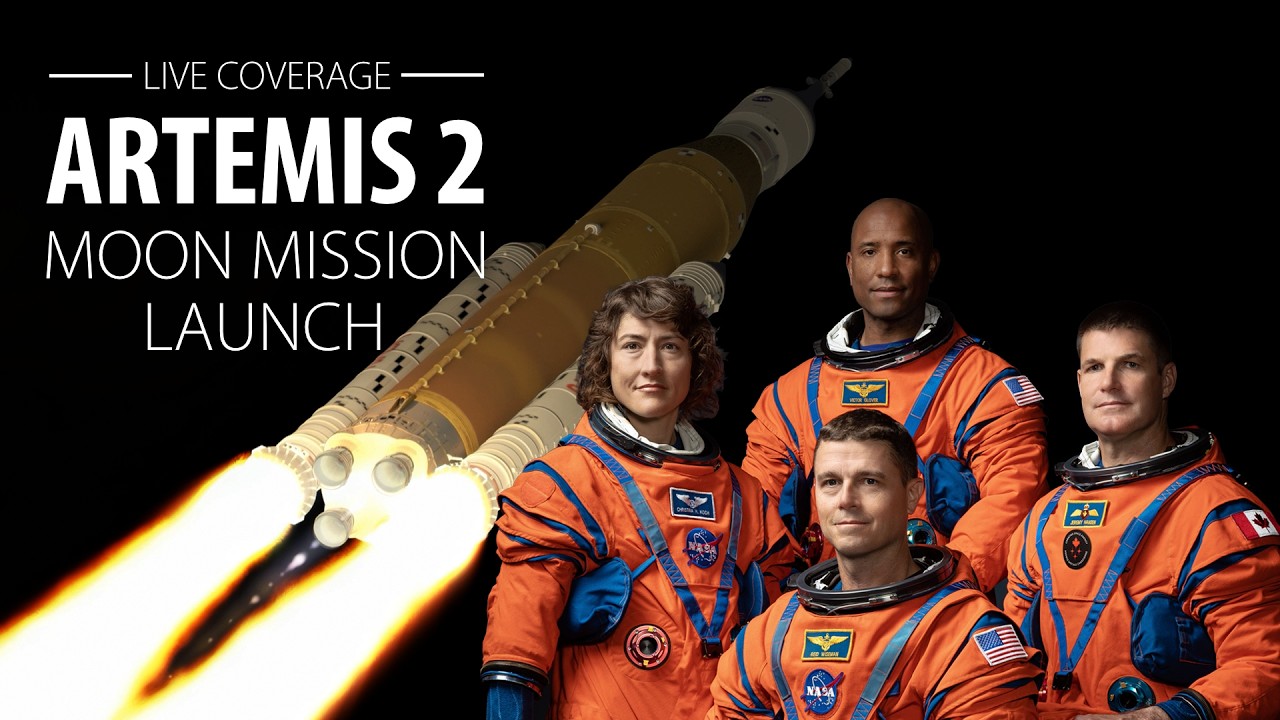
Critics point out that after spending billions and years of development, NASA is sending astronauts on what amounts to a high-stakes dress rehearsal rather than a bold return to the lunar surface. Artemis III, the first planned crewed landing, has already slipped to no earlier than 2027 or later. Technical challenges with the lunar lander, spacesuit development, and sustainable life support systems continue to push timelines. Some wonder aloud whether lost institutional knowledge from the Apollo program, combined with stricter modern safety standards and bureaucratic oversight, has made repeating 1969 feats unexpectedly difficult.

Meanwhile, quietly in the background, teams continue to analyze data from past missions. Radiation sensors on Artemis I (the uncrewed predecessor) revealed uneven shielding inside Orion—some areas offered up to four times more protection than others. Engineers are using this to refine emergency protocols. Old Apollo-era records and lunar samples are also being revisited with today’s advanced instruments, not to question historical achievements, but to better prepare for long-term presence on the Moon.
The mission’s transparency is actually quite high—NASA streams live updates, shares telemetry, and openly discusses problems. Yet the gap between the romantic memory of Apollo’s rapid success and today’s methodical, incremental progress fuels skepticism. Are we truly “going forward,” or is the slow pace revealing deeper engineering and political hurdles that Apollo’s Cold War urgency once masked?

As the Artemis II crew continues their voyage, performing system checks and soaking in views of the distant Earth, the world watches. The mission is a genuine step toward sustainable lunar exploration and, eventually, Mars. But the lingering question remains: why does it feel harder now? The answer may lie not in hidden conspiracies, but in the honest complexity of sending humans safely beyond low-Earth orbit in an era that demands zero preventable risk.
For now, the astronauts are writing a new chapter—one of careful testing, international partnership, and deliberate progress. Whether it satisfies those who remember 1969’s triumph or leaves them asking for more, Artemis II is forcing us to confront how far we’ve come… and how much further we still need to go.