The British Grand Prix at Silverstone has historically been a theater of triumph for Lewis Hamilton, a circuit where the seven-time world champion often seems to find an extra gear, fueled by the unwavering energy of his home crowd. However, the most recent iteration of this iconic race told a different story—one of a brilliant dawn followed by a frustratingly dim twilight. As the weekend commenced, the atmosphere was electric, with Hamilton appearing to be in vintage form. His performance during the Friday sessions suggested that the “Silverstone magic” was very much alive, as he surged to the top of the practice timesheets and subsequently secured pole position for the sprint race. For a driver who entered the weekend trailing his championship rival, Kimi Antonelli, by a significant 46-point margin, this initial burst of speed was exactly what was needed to reignite his title aspirations and satisfy the expectations of the British fans.
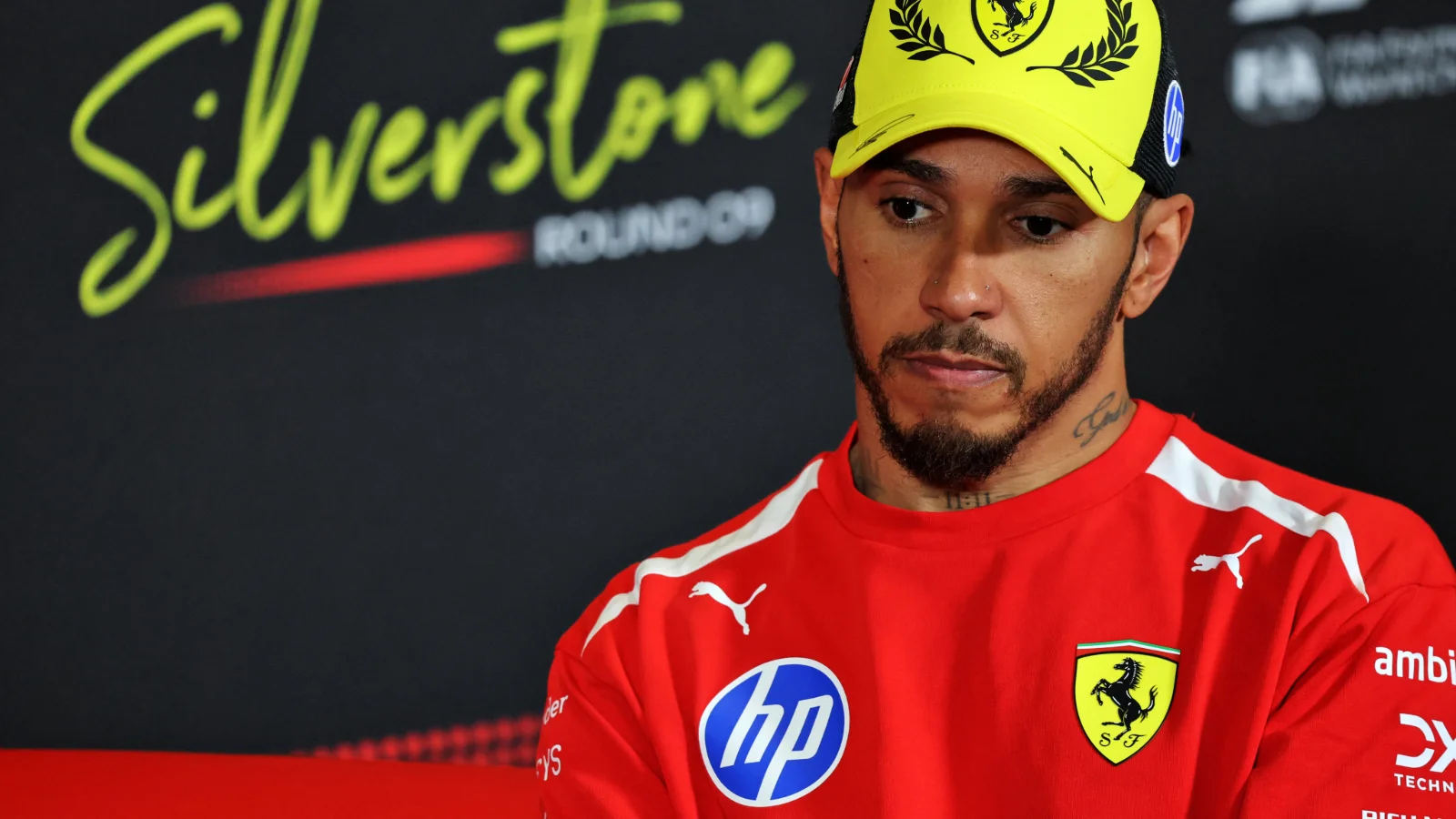
Yet, as the weekend progressed, that initial momentum began to fracture. The first sign of trouble appeared during the sprint race on Saturday. Despite starting from the front, Hamilton was unable to maintain his lead, ultimately losing out to Antonelli. This loss was more than just a missed opportunity for points; it was a psychological blow that shifted the narrative of the weekend. The struggle continued into the primary qualifying session later that afternoon. In a turn of events that surprised many in the paddock, Hamilton found himself outpaced by his own teammate, Charles Leclerc. Instead of the front-row start he had envisioned, Hamilton was relegated to the third grid slot for Sunday’s main event, positioned behind both Leclerc and Antonelli. The optimism that had defined Friday began to give way to a sense of unease, as the technical edge Hamilton seemed to possess earlier in the weekend started to evaporate under the pressure of competition.
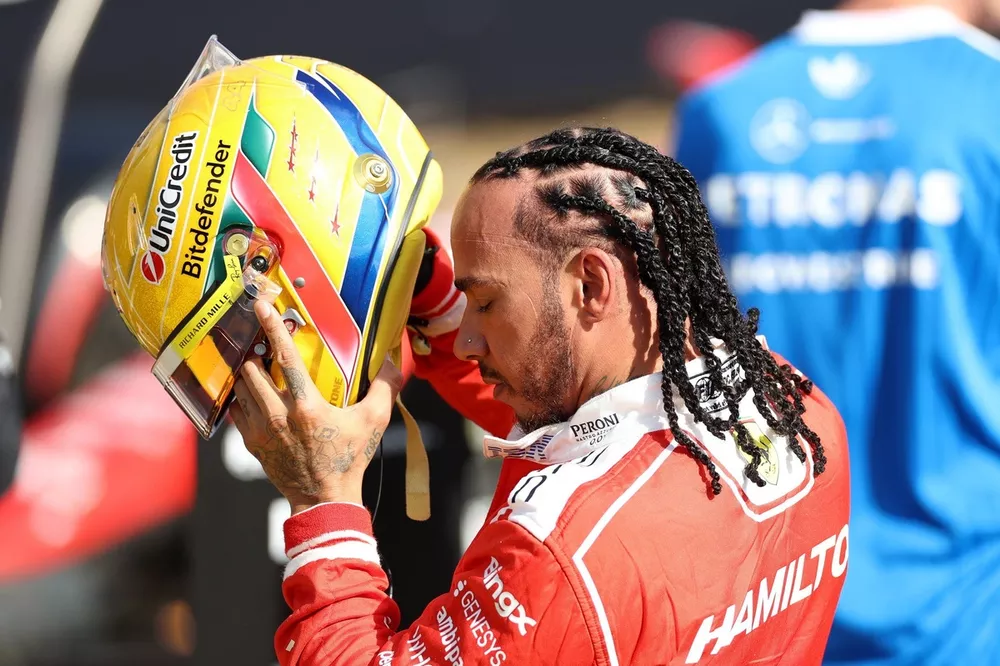
The transition from a dominant Friday to a compromised Saturday set the stage for what would become a grueling Sunday afternoon. For a man who has stood on the top step of the Silverstone podium nine times before, the dream of a tenth home victory was still mathematically possible, but the reality of the situation was becoming increasingly grim. The “magic” that Hamilton had felt during the opening sessions was no longer a tangible asset; instead, he was left grappling with a car that felt fundamentally different from the machine that had looked so invincible just forty-eight hours prior.
The main race on Sunday quickly transformed into a series of unfortunate events that tested Hamilton’s composure and experience. The difficulties began almost immediately with a rare and costly error at the start. Hamilton, a veteran of over 380 Grands Prix, uncharacteristically jumped the start, a move that the stewards quickly flagged. This infringement resulted in a five-second time penalty, a devastating blow that effectively neutralized his chances of fighting for the win before the first lap was even completed. Hamilton himself later reflected on this lapse in judgment with a sense of disbelief, noting how seldom such mistakes occur in his long and storied career. The penalty forced him into a defensive posture, as he had to not only claw back lost time but also keep a wary eye on the charging Max Verstappen in his rearview mirrors.

Beyond the procedural error, the physical handling of the car became a primary adversary. Hamilton and his engineering team admitted to a significant miscalculation regarding the car’s aerodynamic setup, specifically involving the front wing. In F1, where margins are measured in millimeters and milliseconds, “under-egging” the front wing configuration proved to be a critical mistake. Early in the race, Hamilton struggled with a car that felt unpredictable. He observed that his teammate, Leclerc, had opted for a more aggressive balance with increased wing levels, which allowed the Ferrari to perform more consistently. In contrast, Hamilton felt his car was plagued by oversteer due to the differential settings they had selected. Attempting to compensate, he reduced the wing angle, but this only swapped one problem for another, leading to a severe case of understeer during the opening stint.

The technical mismatch made the car nearly impossible to rotate through Silverstone’s high-speed corners. For the first half of the initial stint, Hamilton was a passenger to his own vehicle’s limitations, unable to find the turn-in grip required to keep pace with the leaders. While he eventually managed to mitigate some of these issues through mid-race differential adjustments, the damage was already done. The gap to the front had widened into a chasm, and the looming five-second penalty at his pit stop meant that he was fighting an uphill battle just to remain in contention for a podium finish. It was a compounding series of errors—a “one thing after another” scenario that stripped away any remaining hope of a fairy-tale ending.
Despite the litany of setbacks and the palpable lack of pace compared to his rivals, Hamilton’s resilience allowed him to salvage a respectable result from a weekend that threatened to end in total disappointment. He crossed the finish line in third place, securing a podium finish that was perhaps more a testament to his tenacity and a bit of luck than the car’s actual performance. This podium spot was heavily facilitated by the misfortune of Kimi Antonelli, whose car suffered mechanical issues toward the closing stages of the race. Without Antonelli’s technical failure, it is highly likely that Hamilton would have finished further down the order, potentially outside of the top three entirely.
In the aftermath of the race, Hamilton was strikingly candid about the weekend’s failures. Speaking to the media, he lamented the disappearance of the pace he had enjoyed on Friday, attributing the struggles to a combination of his own errors and engineering missteps. The admission that they had fundamentally missed the mark on the car’s balance was a sobering reflection for a team of their caliber. Hamilton’s self-critique regarding the jump start and the setup choices highlighted the immense pressure of the championship fight and the razor-thin line between success and failure in modern Formula 1. He described the sensation of the car “pulling away” from him, a feeling of helplessness that is rare for a driver of his stature at his favorite circuit.
Ultimately, the British Grand Prix served as a stark reminder of how quickly fortunes can shift in the pinnacle of motorsport. Hamilton entered the weekend as the hero in waiting, poised to close the gap in the standings and reassert his dominance at home. He left with a third-place trophy, but also with a sense of “what could have been” had the Friday magic been sustained. While the points earned in third place provide some damage control in his pursuit of Antonelli, the technical inconsistencies revealed at Silverstone suggest that there is significant work to be done if Hamilton is to reclaim his status as the undisputed king of the track. The weekend was a journey from the heights of optimism to the gritty reality of technical struggle, leaving the seven-time champion to look forward to the next race in hopes of rediscovering the magic that went missing in the British summer air.