The Final Flight of the Fugitive: The Secret Journey that Brought Great Train Robber Ronnie Biggs Home
The annals of British criminal history are filled with rogues, villains, and outlaws, but few captured the public imagination—and the persistent frustration of Scotland Yard—quite like Ronnie Biggs. For decades, Biggs was the “one who got away,” the face of the daring Great Train Robbery of 1963 who turned a fifteen-month prison stint into a thirty-five-year global odyssey. However, in May 2001, the world watched in disbelief as a frail, stroke-stricken man stepped off a private jet at RAF Northolt.

The secret journey from the vibrant streets of Rio de Janeiro back to the cold steel of Belmarsh Prison was the climax of a decades-long game of cat and mouse. It was a journey facilitated by a tabloid newspaper, negotiated through back channels, and motivated by the fading health of a man who simply wanted to have “a pint of bitter in a Margate pub” before he died.
The Legend of the Great Train Robbery
To understand the weight of Biggs’s return, one must revisit the crime that made him a household name. In the early hours of August 8, 1963, a gang of fifteen men intercepted the Glasgow to London Royal Mail train at Bridego Bridge in Buckinghamshire. They made off with £2.6 million—the equivalent of roughly £50 million today.
While the heist was non-violent in its planning, it was marred by the brutal assault on the train driver, Jack Mills, who never fully recovered from his head injuries. Biggs was a relatively minor player in the gang, but his subsequent actions elevated him to legendary status. Sentenced to thirty years in 1964, he served just fifteen months before scaling the wall of Wandsworth Prison using a rope ladder and dropping onto a waiting removal van.
Thirty-Five Years in the Shadows
Biggs’s flight took him through expensive plastic surgery in Paris, a stint in Australia, and eventually to Brazil in 1970. Brazil became his fortress. Because the UK and Brazil had no reciprocal extradition treaty at the time, and because Biggs fathered a Brazilian son, Michael, with dancer Raimunda de Castro, he became “extradition-proof” under Brazilian law.
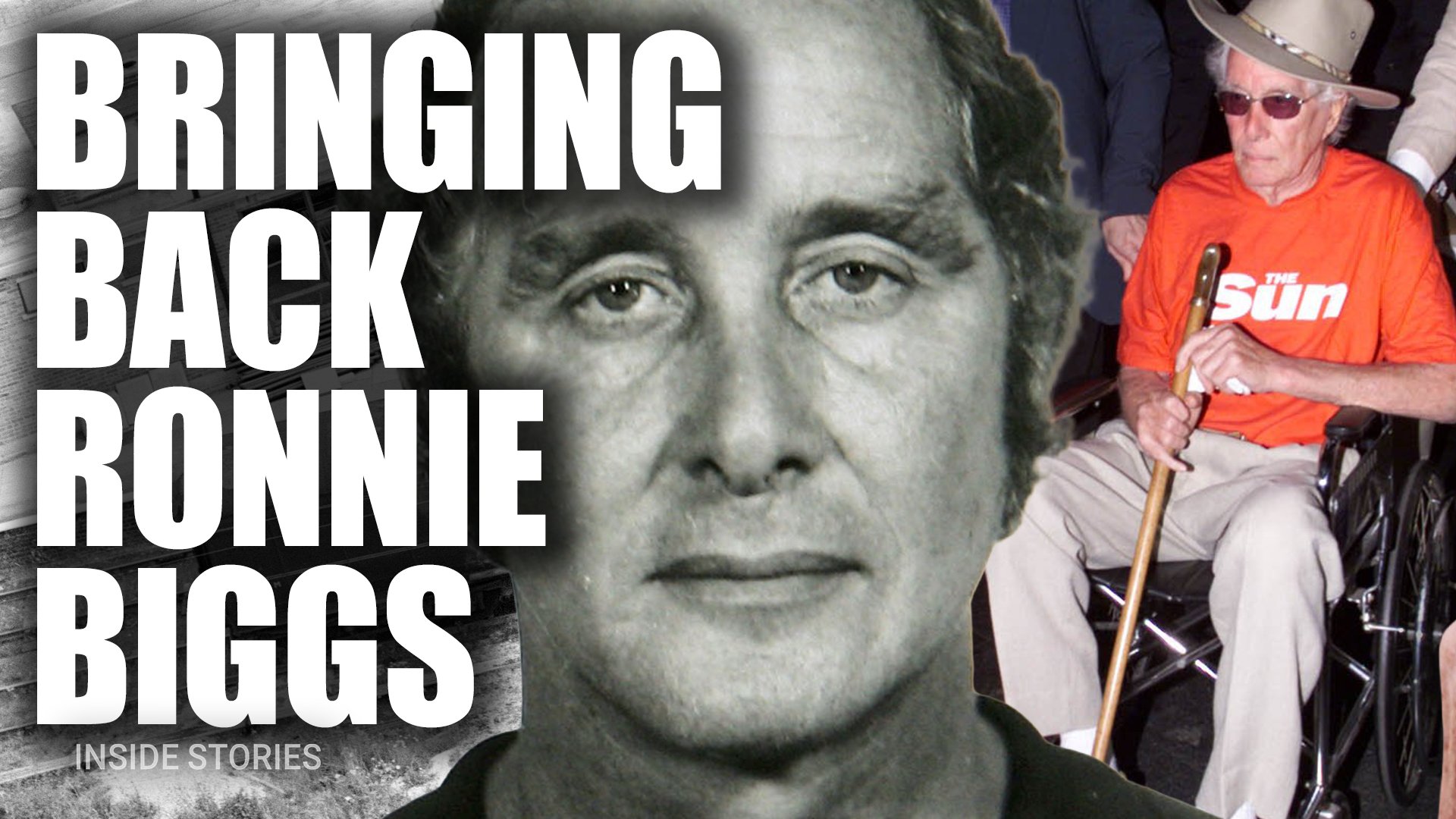
For thirty years, Biggs lived as a high-profile fugitive in Rio. He became a cult figure, selling “I stayed with Ronnie Biggs” T-shirts to tourists, recording with the Sex Pistols, and even appearing in advertisements. He was a thumb in the eye of the British establishment—a reminder of the one man the law could not touch.
The Architecture of a Secret Return
By early 2001, the “Good Life” in Rio had turned sour. A series of debilitating strokes had left Biggs unable to speak or eat properly. He was broke, lonely, and acutely aware of his mortality. The man who had spent a lifetime running now had one final goal: to return to English soil.
The logistical challenge of his return was immense. Biggs was still a wanted man with twenty-eight years of his sentence remaining. If he stepped onto a commercial flight, he risked being arrested in any transit country. If he contacted the British Embassy directly, the diplomatic complications could have stalled his return for years.
The solution came in the form of The Sun newspaper. In a controversial deal, the tabloid agreed to pay for a private chartered jet and provide a medical team in exchange for the exclusive rights to his story and his “surrender.” This was not just a flight; it was a carefully choreographed media event conducted with the quiet cooperation of the British authorities.
The “Muffled” Takeoff from Rio
The secret journey began on the evening of May 6, 2001. To avoid a media circus in Brazil, Biggs was moved in a private ambulance from his modest home in the Santa Teresa district to Galeão International Airport. He was accompanied by his son, Michael, who had spent his life navigating the complexities of his father’s fame.
The private Dassault Falcon 900 jet sat on a secluded part of the tarmac. Biggs, unable to walk, was lifted into the aircraft. As the wheels left the Brazilian soil for the last time, the cabin was filled with a sense of grim finality. There were no celebrations. Biggs was a shell of the man who had arrived in 1970; he was returning not as a victor, but as a prisoner of his own failing body.
Crossing the Atlantic: A Medical and Legal Tightrope
The flight across the Atlantic lasted several hours, during which a doctor and a nurse monitored Biggs’s precarious health. For the journalists on board, it was a surreal experience—the living ghost of the 1960s was sitting inches away, communicating only through a letter board and strained facial expressions.
While the jet cruised at 40,000 feet, Scotland Yard was finalizing the “Reception Committee.” The mission was codenamed “Operation Alibi.” The goal was to ensure that Biggs was arrested the moment he touched British soil, maintaining the integrity of the law while acknowledging the physical frailty of the prisoner.
Landing at RAF Northolt: The End of the Road
At 8:15 AM on May 7, 2001, the Falcon 900 touched down at RAF Northolt in West London. The location was chosen for its security and its distance from the general public. As the cabin door opened, the cool English air rushed in—the first time Biggs had felt it since 1965.
The scene was stark. A phalanx of police officers awaited. Detective Superintendent John Coles of the Extradition Squad boarded the plane. In a moment of high drama, he approached the bedridden fugitive and uttered the words Biggs had evaded for three and a half decades: “Ronald Arthur Biggs, I am arresting you…”
Biggs was processed in a temporary station set up at the airfield. His fingerprints were taken—the same prints that had once been left on the luggage in the mail train. The legal circle was finally closed.
Justice vs. Mercy: The Public Outcry
The return of Ronnie Biggs ignited a fierce national debate. For some, it was a triumph of the rule of law. They argued that a criminal, regardless of age or health, must face the consequences of their actions, particularly out of respect for the family of Jack Mills.
Others saw the return as a pathetic spectacle. They questioned the cost to the taxpayer of imprisoning a man who clearly required round-the-clock medical care. “Why bring a dying man back just to put him in a cage?” asked his supporters.
However, Biggs himself had chosen this. He had traded his freedom in the sun for the right to be a British citizen again, even if that meant being a British prisoner. He was immediately moved to the high-security Belmarsh Prison, where his “luxury” was a specialized hospital bed rather than a Rio villa.
The Final Years and Legacy
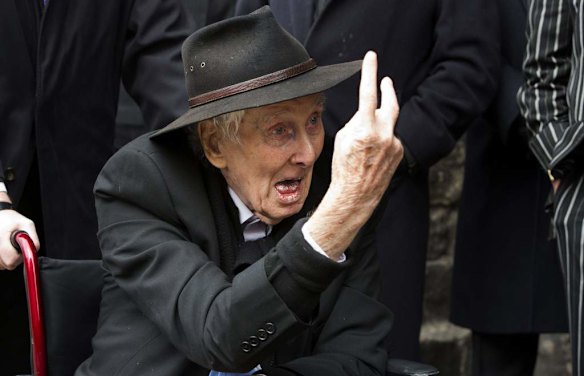
Ronnie Biggs remained in prison until 2009, when he was released on compassionate grounds by then-Home Secretary Jack Straw. He spent his final years in a nursing home, passing away in December 2013, exactly fifty years after the robbery that defined him.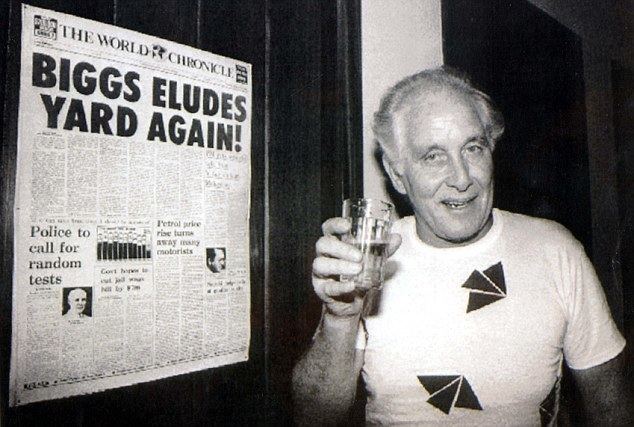
The journey from Brazil was the final act of a man who understood the power of his own myth. Biggs knew that by returning, he was ensuring his story would have a proper ending. He didn’t want to be a forgotten footnote in a foreign land; he wanted to be the man who came home.
The Closing of the Great Train Robbery Chapter
The secret journey of Ronnie Biggs was more than just a fugitive’s surrender. It was the end of a specific era of British crime—the era of the “gentleman thief” and the high-profile escapee. When that plane landed at RAF Northolt, it signaled that the world had grown too small for fugitives to hide forever.

Biggs spent thirty-five years running, but in the end, the gravity of his past and the pull of his homeland proved stronger than the Brazilian sun. He faced justice not with the swagger of a train robber, but with the quiet resignation of an old man who had finally run out of track. The “Great Escape” had ended where it began: in the hands of the British law.