The Scales of Justice: Four Emerging Pieces of Evidence That Could Form the Basis of a Lucy Letby Appeal
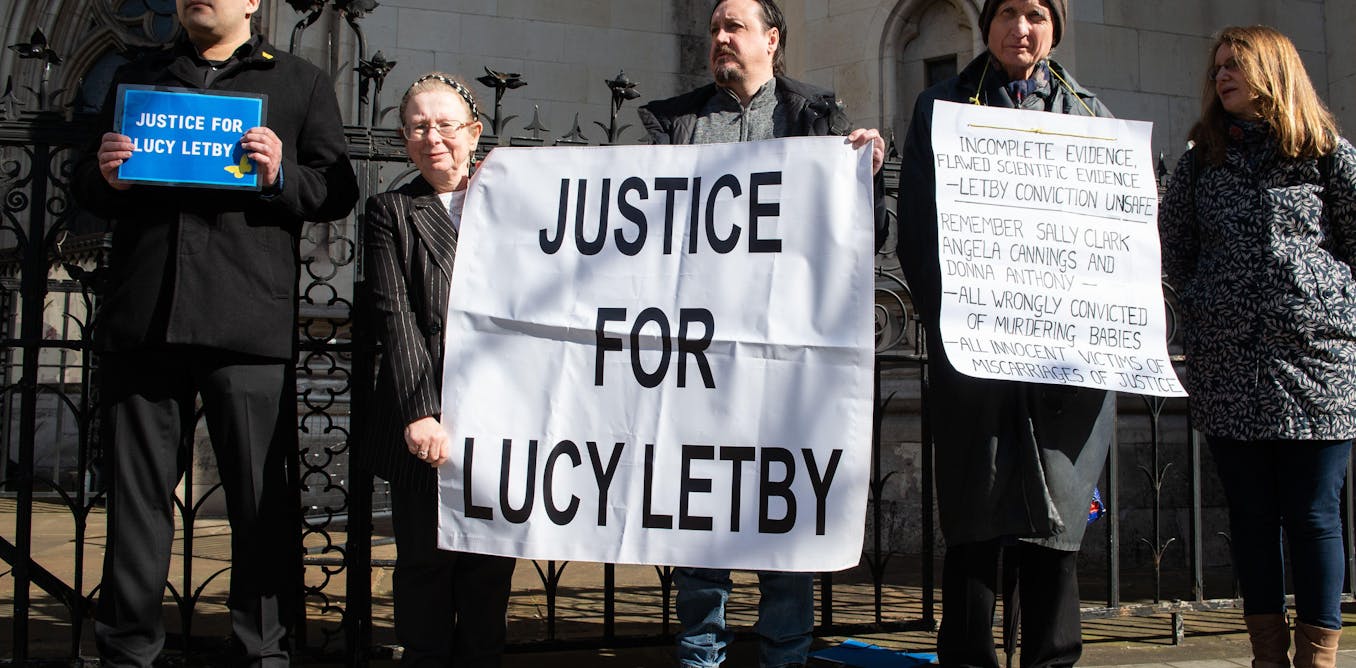
The conviction of Lucy Letby in 2023 for the murder of seven infants and the attempted murder of six others at the Countess of Chester Hospital marked the most harrowing criminal trial in modern British history. Sentenced to multiple whole-life orders, Letby has become a figure of national infamy. However, in the years following the verdict, a growing movement of legal experts, forensic scientists, and investigative journalists has begun to scrutinize the foundations of the prosecution’s case.

While the court found her guilty beyond a reasonable doubt based on the evidence presented at the time, the emergence of new scientific interpretations and procedural questions has opened a window for potential legal challenges. The British legal system maintains a high bar for “fresh evidence,” requiring it to be both credible and capable of affording a ground for allowing an appeal. Here, we analyze four critical areas of emerging evidence and expert testimony that could potentially alter the narrative of the Letby case and serve as the cornerstone for a future appeal.
1. The Disputed Science of Air Embolism
The cornerstone of the prosecution’s medical evidence was the theory that Letby murdered several infants by injecting air into their bloodstream or nasogastric tubes, causing fatal air embolisms. This theory relied heavily on the testimony of expert witnesses who identified specific skin discolorations—described as “bright pink” or “blue-purple” blotches—as a tell-tale sign of such an event.

However, since the trial, several international neonatologists and forensic pathologists have raised significant doubts about this “diagnostic” sign. Emerging evidence suggests that the 1989 research paper primarily used to support this theory in court was based on a very small sample size and has not been consistently replicated in modern clinical settings.
Experts now argue that the skin mottling observed in the infants could have been caused by a variety of other factors, including post-mortem changes, sepsis, or even the intense resuscitation efforts themselves. If an appeals court accepts that the “unique” skin rashes were not definitive proof of air injection, the medical foundation for several of the murder charges could be severely undermined. The argument is not that air embolism is impossible, but that the science used to identify it in these specific cases was “unreliable and outdated.”
2. Statistical Anomalies and the “Texas Sharpshooter” Fallacy
One of the most persuasive tools used by the prosecution was a staff duty roster. This “infamous” chart showed that Lucy Letby was present for every single collapse or death on the neonatal unit during the period in question. To a jury, the visual correlation was devastating.
However, statisticians and data scientists have since scrutinized the parameters of this chart. Critics argue that the prosecution may have inadvertently employed what is known as the “Texas Sharpshooter Fallacy”—where a circle is drawn around a cluster of data points after the fact to create the appearance of a pattern.
Emerging statistical analysis suggests that if the data set had included collapses where Letby was not on duty, or if the timeframe had been widened, the “unique” correlation might have dissipated. Furthermore, the defense could argue that as a highly “workfocused” nurse who frequently volunteered for extra shifts, Letby was naturally more likely to be present during high-stress incidents simply due to her total hours on the ward. New expert testimony focusing on “probability density” and staffing patterns aims to prove that the roster was a misleading representation of causality.
3. Institutional Failure and the “Sub-Optimal” Care Defense
During the original trial, the defense was criticized for not calling its own medical experts to counter the prosecution’s claims. An appeal would likely rectify this by introducing a wealth of evidence regarding the “appalling” state of the Countess of Chester Hospital at the time of the deaths.
Reports from the Royal College of Paediatrics and Child Health (RCPCH), which were partially explored during the trial, indicated that the neonatal unit was chronically understaffed, poorly managed, and frequently took in infants that were far too premature or ill for its Level 2 designation.
New evidence could focus on specific environmental factors:
-
The Sewage Backflow Issue: It has emerged that the unit suffered from recurring plumbing failures, leading to raw sewage backing up into the hand-washing sinks in the intensive care nurseries. This creates a massive risk of localized bacterial outbreaks (such as Pseudomonas) that can cause sudden, catastrophic collapses in neonates.
-
Air Conditioning Failures: During a record-breaking heatwave, the unit’s cooling systems reportedly failed, leading to temperatures that exceeded safe limits for premature infants.
By framing these deaths as the result of a “perfect storm” of institutional negligence rather than individual malice, a defense team could argue that the collapses were tragic but foreseeable consequences of a failing hospital system.
4. The Re-evaluation of the Insulin Evidence
Perhaps the most challenging evidence to overcome was the discovery that two infants had been poisoned with synthetic insulin. The prosecution argued that Letby must have contaminated bags of parenteral nutrition (TPN) with the substance.
However, new forensic toxicology reviews have raised questions about the testing methods used to identify the insulin. Critics point out that the blood tests were conducted at a laboratory designed for clinical diagnosis, not forensic investigation. These tests did not measure the level of C-peptide—a crucial marker that distinguishes natural insulin from the synthetic variety—with the precision required for a criminal conviction.
Moreover, emerging evidence suggests a “chain of custody” issue regarding the TPN bags. If it can be shown that other staff members had equal access to the storage areas or that the contamination could have occurred at the manufacturing level (however unlikely), the “exclusive opportunity” attributed to Letby is compromised. Some experts are now suggesting that the high insulin readings could have been “false positives” caused by cross-reactivity with other substances or biochemical anomalies in the infants’ blood.
The Road Ahead: The Legal Reality
It is vital to note that these “four pieces of evidence” do not automatically equate to an acquittal. They represent a different interpretation of the facts that was not fully explored during the 2023 trial. In the United Kingdom, the Criminal Cases Review Commission (CCRC) is the body responsible for investigating potential miscarriages of justice.
For Lucy Letby to be granted a new trial, her legal team must prove that this evidence is “new”—meaning it was not available or could not reasonably have been obtained at the time of the original trial—and that it is of sufficient weight to potentially change the jury’s verdict.
The public reaction to these emerging points remains deeply divided. For the families of the victims, the suggestion of Letby’s innocence is an unimaginable second trauma. For others, including a growing number of scientists, the pursuit of “scientific truth” is paramount to ensure that the justice system has not made a catastrophic error.
A Question of Reasonable Doubt
The case of Lucy Letby remains one of the most complex legal puzzles in history. The prosecution built a powerful circumstantial case based on a “constellation of coincidences.” However, as these four areas of new evidence suggest, the “certainties” of 2023 are being challenged by the “uncertainties” of 2026.
Science is a constantly evolving field. What was accepted as medical fact five years ago may be viewed as a misunderstanding today. If the air embolism theory is debunked, if the statistics are proven biased, if the institutional failures are given more weight, and if the insulin tests are deemed flawed, the “mountain of evidence” against Letby begins to look like a series of fragmented possibilities.
The ultimate question for the Court of Appeal will not necessarily be “is she innocent?” but rather “is the conviction safe?” In the pursuit of justice, the answer to that question must be absolute. As the legal battle continues, the world watches to see if the scales of justice will remain fixed or if they will tip in the face of these emerging scientific challenges.