Kenneth Iwamasa, Matthew Perry’s former live-in assistant, was sentenced to 41 months in federal prison for his role in the actor’s ketamine overdose death

Federal prosecutors said Iwamasa repeatedly injected Perry with ketamine despite lacking medical training and continued supplying the drug during the actor’s relapse
A close friend and longtime publicist of Perry accused Iwamasa of isolating the actor from people who were trying to help him stay sober
Kenneth Iwamasa, the former live-in assistant to late actor Matthew Perry, has been sentenced to more than three years in federal prison for his role in the ketamine overdose death that shocked Hollywood in 2023.
Iwamasa was sentenced Wednesday in federal court in Los Angeles after pleading guilty to conspiracy to distribute ketamine resulting in death.
U.S. District Judge Sherilyn Peace Garnett ordered the 41-year-old former assistant to serve 41 months in prison, followed by two years of supervised probation.
He was also ordered to pay financial penalties connected to the case.
The sentencing marks one of the final major developments in the sprawling federal investigation into Perry’s death, which resulted in criminal charges against multiple people accused of supplying or facilitating access to ketamine for the beloved actor during his final months.
Federal prosecutors said Iwamasa admitted that he repeatedly injected Perry with ketamine despite having no medical qualifications or training.
Authorities argued that the longtime assistant crossed professional and ethical boundaries as Perry’s addiction struggles intensified.
According to prosecutors, Iwamasa administered multiple ketamine injections to Perry during the actor’s final days in October 2023.
That included injections given on Oct. 28, 2023 — the same day Perry was found dead in the hot tub of his Los Angeles home.
An autopsy later concluded that Perry died from the acute effects of ketamine, with drowning listed as a contributing factor in his death.
He was 54 years old.
Perry had spent decades publicly battling addiction and had openly discussed his experiences with substance abuse, rehab and recovery throughout his life.
The actor became one of television’s most recognizable stars through his role as Chandler Bing on the hit sitcom Friends.
In the years before his death, Perry frequently spoke about wanting to help others struggling with addiction.
But prosecutors said the people around him ultimately enabled the very behavior that placed him in danger.
During sentencing proceedings, federal attorneys portrayed Iwamasa as someone who abandoned his duty to protect Perry in favor of satisfying the actor’s demands for drugs.
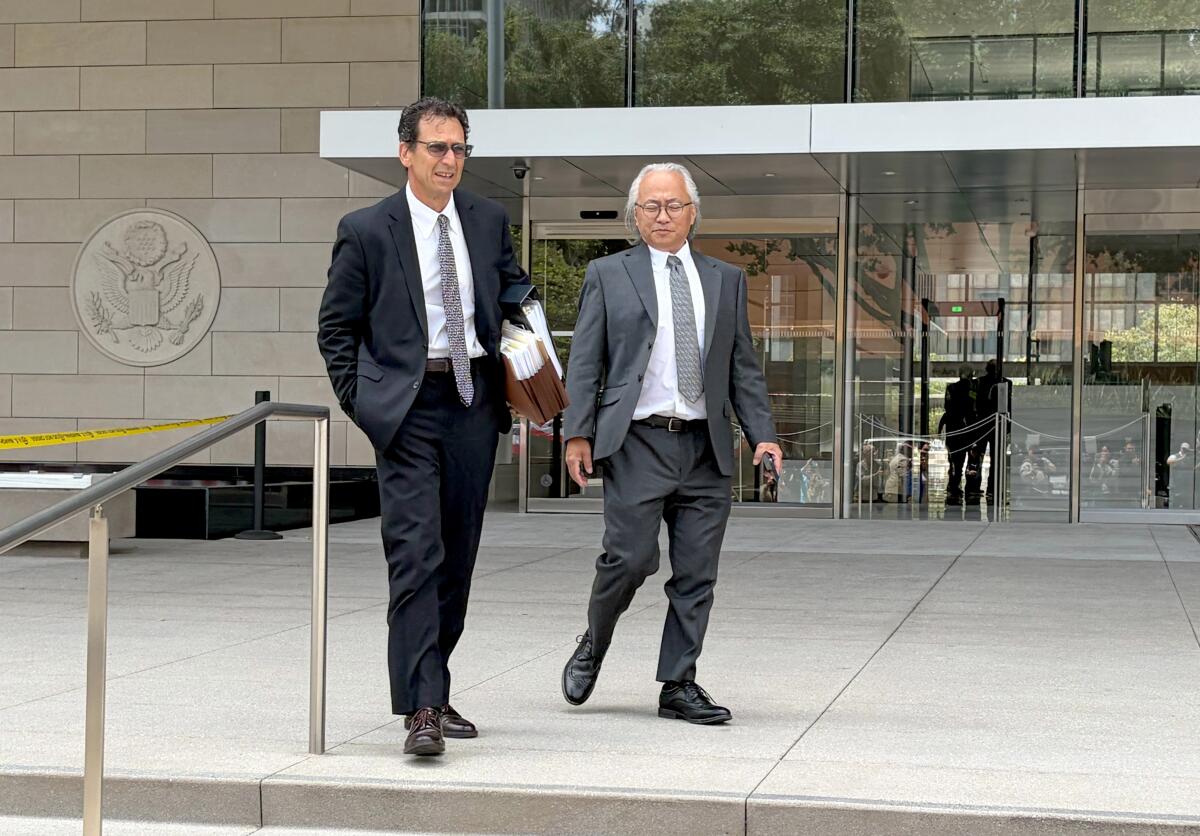
According to court filings, authorities said Iwamasa continued injecting Perry even after observing disturbing physical reactions.
Those reactions allegedly included episodes where Perry lost consciousness or became temporarily unable to speak.
Despite those warning signs, prosecutors argued that Iwamasa continued obtaining and administering ketamine.
The government said the assistant became both an enabler and active participant in Perry’s relapse.
Defense attorneys, however, argued that Iwamasa operated under extraordinary emotional pressure from his employer.
In sentencing documents, his lawyers described him as deeply loyal to Perry and emotionally incapable of refusing requests from someone he had worked closely beside for years.
The defense maintained that Iwamasa’s judgment became clouded by his complicated relationship with the actor.
They argued that Perry’s celebrity status, wealth and personal struggles created a difficult dynamic that blurred the lines between employee, caretaker and friend.
Still, some of the strongest criticism directed at Iwamasa came from people who had known Perry personally for decades.
Among them was Lisa Kasteler Calio, the CEO of the Matthew Perry Foundation and Perry’s longtime publicist and confidante.
In an emotional letter submitted to the judge before sentencing, Calio blamed Iwamasa directly for Perry’s downward spiral and eventual death.
According to court records, Calio described Perry as someone who trusted her “implicitly” after nearly 30 years of friendship and professional partnership.
She recounted the devastating hours after learning of Perry’s death, writing that she sat outside his home for six hours unable to process the tragedy.
“Losing Matthew was like losing a family member,” she wrote.
Much of her letter focused on what she viewed as Iwamasa’s growing influence over Perry during the actor’s relapse.
Calio accused him of isolating Perry from members of his support system and discouraging involvement from sober companions and longtime advisors.
According to her account, that isolation marked a dangerous turning point.
“Kenny convinced Matthew he didn’t need his sober companion or his team,” she wrote.
“And from my point of view, that was the beginning of the end.”
She also accused Iwamasa of concealing alarming medical episodes from people who cared about Perry.
“From what I’ve read, he watched Matthew seize up more than once and never told any of us who cared so deeply for Matthew,” Calio wrote.
“We would have gotten him the help he desperately needed.”
She suggested that fear of losing his position motivated Iwamasa to stay silent.
“Kenny feared that if he did the responsible thing, Matthew would have fired him,” she added.
In perhaps the most explosive line from her statement, Calio directly blamed Iwamasa for Perry’s death.
“Kenny Iwamasa killed my friend,” she wrote.
“His narcissistic, outrageous, irresponsible behavior, his psychotic plan, caused him to heat up the jacuzzi, give Matthew the giant shot he requested and leave him alone to die.”
The sentencing hearing underscored the tragic contradictions surrounding Perry’s life and legacy.
The actor had become widely admired not only for his comedy career but also for his honesty about addiction.
In interviews and his memoir, Perry openly discussed the pain of substance abuse and the years he spent cycling through treatment centers and relapses.
He once said he hoped people would remember him more for helping others than for his acting career.
His sudden death devastated fans around the world.
The federal investigation that followed revealed what prosecutors described as a hidden network of doctors, suppliers and intermediaries who allegedly exploited Perry’s vulnerability.
Iwamasa was one of five individuals charged in connection with the actor’s death.
Others charged included doctors Salvador Plasencia and Mark Chavez, as well as drug counselor Erik Fleming.
Authorities also charged alleged ketamine supplier Jasveen Sangha, whom prosecutors referred to in court as the “Ketamine Queen.”
Federal officials alleged the defendants participated in illegally supplying Perry with ketamine as his dependence on the drug escalated.
The investigation exposed concerns about how ketamine — a dissociative anesthetic increasingly used in medical settings for depression and pain management — can also be abused recreationally.
Prosecutors argued that Perry’s addiction created opportunities for people around him to profit while ignoring the risks to his health.
The sentencing of Iwamasa now closes another chapter in the legal aftermath of Perry’s death.
Still, questions continue to linger about how someone so publicly committed to recovery became surrounded by people accused of helping fuel his relapse.
For Perry’s loved ones, the court proceedings have been a painful reminder of the final months of his life.
For fans, the case has transformed the death of one of television’s most beloved actors into a cautionary story about addiction, celebrity and the people entrusted with protecting vulnerable individuals behind closed doors.
As Iwamasa begins serving his prison sentence, the emotional fallout from Perry’s death continues to reverberate through Hollywood and among millions who grew up watching the actor bring humor and humanity to screens around the world.




