The killer of 18-year-old Henry Nowak has reportedly been given the green light to have prison-to-prison video calls with his mother, despite the fact she was herself jailed for helping conceal the murder weapon used in her son’s crime.
The proposed calls between murderer Vickrum Digwa and his mother, Kiran Kaur, have reportedly angered prison staff and prompted outrage from people close to Henry’s family, who have described the arrangement as another painful blow following the teenager’s death.
Digwa, 23, is serving a life sentence at HMP Frankland in Durham after being convicted of murdering Henry in Southampton. His mother is currently serving a three-year sentence at Bronzefield Prison in Surrey after being convicted of hiding the weapon used in the killing.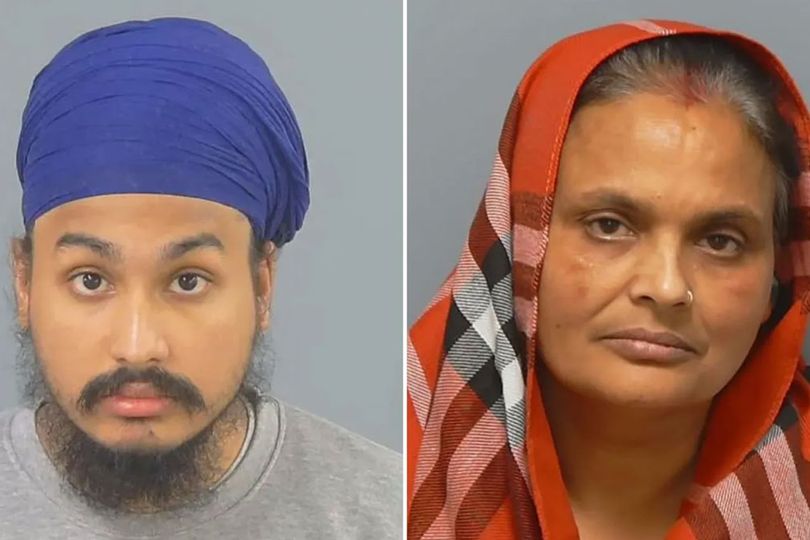
According to prison sources, Digwa is expected to be allowed to speak to his mother through a video link within weeks.
The arrangement has been described by one source as “a disgrace”, with staff reportedly questioning why the convicted killer should receive what they regard as a significant privilege after the devastating circumstances surrounding Henry’s death.
“The fact Digwa will be allowed the video calls with his mum has angered people, including many of the staff at Frankland,” a source reportedly said.
They added that staff were unhappy about having to arrange the calls, particularly because Henry’s family will never have the opportunity to see their son again.
“Poor Henry’s family won’t get to see him again, so why should Digwa be allowed to speak to his mum via video-link?” the source said.
The case has attracted intense attention because of what happened immediately after Henry was fatally stabbed.
Digwa was sentenced to life imprisonment in June, with a minimum term of 21 years, after being found guilty of stabbing Henry six times during a confrontation in Southampton on December 3, 2025.
Henry had been out with his football teammates when he suffered a fatal stab wound to the chest.
In the immediate aftermath, Digwa reportedly attempted to convince police that he had been the victim of a racist attack.
Body-worn camera footage later released by Hampshire Police showed officers dealing with the chaotic aftermath of the stabbing.
Henry could be heard repeatedly telling officers that he had been stabbed and that he could not breathe.
At one point, the dying teenager reportedly said, “I’ve been stabbed,” only for an officer to respond, “Don’t think you have, mate.”
The footage became one of the most disturbing elements of the case and has remained a source of anguish for Henry’s loved ones.
Digwa’s mother subsequently became involved in the aftermath of the killing by hiding the murder weapon. She was later prosecuted and convicted for her role.
Her three-year sentence was handed down at Southampton Crown Court last month, after both she and Digwa had been convicted in May.
The decision to allow mother and son to communicate through prison video facilities has therefore caused particular anger among those who believe the circumstances should make the privilege inappropriate.
However, prison sources have explained that applications for what are known as Purple Visits are considered individually and that prisoners may have rights to maintain family contact while serving their sentences.
One source acknowledged that the nature of the crime made the proposed calls particularly uncomfortable, but suggested there was little chance the application would ultimately be rejected now that Kaur’s own criminal proceedings have concluded.
“Governors have to judge each application on its merits,” the source said.
“But the idea of this happening is horrible, given the nature of the crime, and the fact that his mum got involved after the murder and hid the weapon.”
The source said the fact that Kaur had already been convicted and sentenced meant there was no longer a concern that discussions between the pair could interfere with her criminal case.
The prison system must also take into account prisoners’ rights to maintain family relationships, even when those relationships involve other convicted offenders.
That does not mean the calls will be unrestricted.
According to prison insiders, Digwa and Kaur will be required to speak English during the video calls so that their conversations can be monitored by prison staff.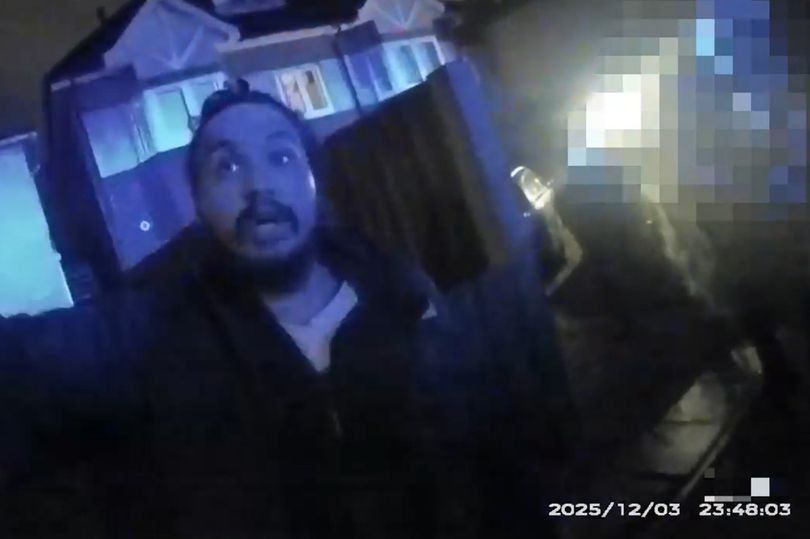
The pair also speak Punjabi, but staff are reportedly expected to intervene if they switch languages during the calls.
A prison insider explained that Digwa would be placed in a room containing a tablet or laptop connected to a device at Bronzefield Prison, where his mother is being held.
Staff would remain outside the respective rooms while the conversation was also monitored from a security area.
If Digwa and Kaur began speaking Punjabi or discussing details of Henry’s murder, the call could reportedly be terminated.
The prisoner would be warned about those conditions before the conversation begins.
The restrictions are designed to ensure that the calls remain within prison rules and do not create a security risk.
Digwa has reportedly already been in contact with the Samaritans and the Independent Monitoring Board since arriving at HMP Frankland.
The Independent Monitoring Board regularly visits prisons and monitors conditions and treatment of prisoners. According to the source, Digwa may have been informed of his entitlement to maintain contact with his mother and may have received assistance in making the application.
The prospect of the calls has nevertheless been deeply upsetting for Henry’s family.
Following Kaur’s sentencing, Henry’s loved ones released a statement expressing their disappointment at the three-year sentence and vowed to continue seeking what they described as the “full truth” surrounding the teenager’s death.
Henry was just 18 when he was killed.
His family has had to endure not only the loss of a young man with his life ahead of him, but also the lengthy criminal proceedings that followed and the continuing questions surrounding the actions of those involved.
The reported decision regarding the video calls has added another layer of frustration.
Former Shadow Secretary of State for Justice and Reform MP Robert Jenrick has also condemned the arrangement.
“While Henry Nowak’s family and friends struggle to get over their loss and his terrible death, his despicable killer is enjoying perks in jail,” Jenrick said.
He argued that Digwa should not receive privileges of this nature and specifically criticized the possibility of him speaking to the mother who helped hide the murder weapon.
“It is a disgrace,” Jenrick said.
Despite the anger, it is understood that Digwa has not yet actually completed a video call with Kaur.
The arrangements are still being put in place, with prison staff expected to oversee every stage of the communication.
The system is intended to balance security concerns with prisoners’ rights to maintain family connections.
For Henry’s family, however, the issue is far more personal.
Their son cannot return home, while the man responsible for his death remains alive and able to communicate with his own mother from inside prison.
That contrast has intensified the family’s sense of injustice.
Digwa’s original account of what happened was also a major part of the case. He reportedly told officers that he had been attacked because of his race, but the evidence presented in court ultimately led to his conviction for Henry’s murder.
The fatal confrontation ended the life of a teenager who had been enjoying a night out with football teammates.
Henry’s family has since been left to cope with a loss that can never be reversed.
Meanwhile, Digwa has begun serving what is expected to be decades behind bars before he can even be considered for release.
His minimum term of 21 years means he will remain imprisoned for a substantial part of his adult life.
His mother’s three-year sentence, meanwhile, reflects her separate conviction for helping conceal evidence after the killing.
The proposed video calls between them will therefore take place under close supervision, with staff watching and listening to ensure prison rules are followed.
Whether the calls go ahead as planned remains a deeply controversial issue.
For prison officials, the decision appears to be governed by established rules concerning family contact, security and the rights of prisoners.
For Henry’s loved ones and those who have criticized the arrangement, however, the calls represent something much more troubling: the perception that a convicted killer is being offered comfort and privileges that seem painfully difficult to reconcile with the suffering inflicted on the Nowak family.
As Digwa continues his life sentence and Kaur serves her own term, Henry’s family remains determined to keep attention focused on the teenager they lost and on the circumstances surrounding his death.