The sentencing of admitted Gilgo Beach serial killer Rex Heuermann to multiple life terms without the possibility of parole closed one chapter in one of America’s most disturbing serial murder investigations. Yet for many investigators, journalists and families connected to the case, the biggest remaining question may not be what Heuermann has already confessed to — but whether there are victims who have yet to be identified.
Nearly three years after his arrest and more than a decade after human remains were discovered along Long Island’s Ocean Parkway, Heuermann’s guilty plea and subsequent sentencing have finally delivered justice for eight women whose lives were brutally cut short. But the conclusion of the criminal case may also open new investigative avenues that were previously unavailable.

One of the most significant developments following sentencing involves Heuermann’s DNA profile. With his convictions finalized, law enforcement agencies can more broadly utilize his genetic information through national databases, potentially allowing investigators across the country to compare evidence from unsolved murders and missing-person cases against a confirmed serial killer whose crimes stretched across nearly two decades.
The possibility has renewed speculation about whether the Gilgo Beach case is truly over.
For years, investigators have maintained that Heuermann was responsible for the murders of eight women between 1993 and 2010. In April 2026, he pleaded guilty to seven killings and admitted responsibility for an eighth victim, Karen Vergata. Prosecutors said he strangled most of the women, several of whom worked as escorts, before disposing of their remains in remote areas of Long Island.
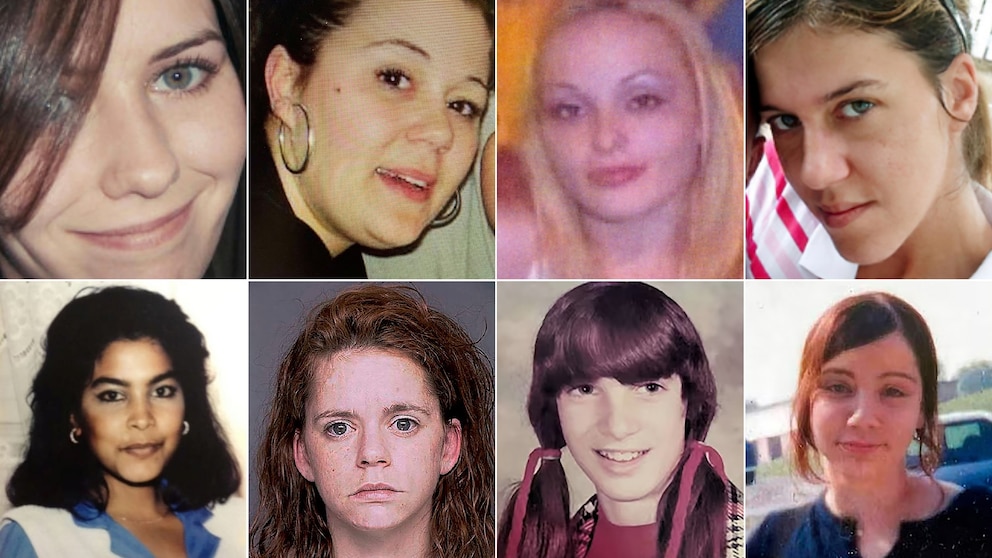
The sentence imposed by Judge Timothy Mazzei ensured that Heuermann will spend the remainder of his life in prison. The judge delivered three life terms without parole along with additional consecutive sentences for the murders, calling the crimes among the most horrific to come before the court.
Yet even as the courtroom proceedings concluded, questions remained about whether authorities have uncovered the full extent of Heuermann’s alleged criminal history.
The Gilgo Beach investigation has always been larger than the eight murders for which Heuermann accepted responsibility. Human remains belonging to multiple other individuals were discovered in the broader search area along Ocean Parkway beginning in 2010 and 2011. Some of those victims have never been conclusively identified, and authorities continue to investigate whether they are connected to the same offender or offenders.
One particularly haunting mystery involves an unidentified Asian victim whose remains were discovered near Gilgo Beach. Suffolk County District Attorney Ray Tierney recently confirmed that investigators are continuing efforts to identify that individual through investigative genetic genealogy. According to reports, authorities plan to work with communities in the New York region in hopes of obtaining DNA information that could finally reveal the victim’s identity.
For investigators, identifying victims is often the key that unlocks an entire case.
Once a victim’s identity is established, detectives can reconstruct their final days, determine who they associated with, identify patterns and potentially uncover links to known suspects. In a complex serial murder investigation such as Gilgo Beach, even one identification could generate entirely new leads.
The question of additional victims has gained further attention because of Heuermann’s connections outside New York.
Public records have shown ties between Heuermann, his family and properties in multiple states, including South Carolina and Nevada. Since his arrest, journalists and independent investigators have examined whether unsolved cases in those regions might warrant a fresh look. So far, authorities have not publicly announced any charges linking Heuermann to crimes outside New York, but the possibility continues to generate interest among those following the case.
Adding to the intrigue is the sheer length of Heuermann’s admitted killing timeline.

According to prosecutors, his known murders span from 1993 through 2010. That represents approximately 17 years of criminal activity. Many criminologists note that serial offenders who successfully evade detection for such lengthy periods often leave behind additional victims who are never officially connected to them.
That does not mean Heuermann necessarily killed more people than the eight victims he admitted to murdering. However, it does explain why law enforcement agencies and crime analysts continue examining cold cases for possible connections.
The sentencing hearing itself underscored how much remains unknown.
Family members of the victims delivered emotional statements describing decades of grief, unanswered questions and shattered lives. Some relatives spoke about the years they spent wondering what happened to their loved ones before arrests were finally made. Others expressed frustration that many questions may never be answered fully.
Heuermann offered only a brief statement.
“There are no words,” he told the court. “I am responsible.” When asked if he was sorry, he replied that he was. Judge Mazzei and prosecutors expressed skepticism regarding the sincerity of those remarks.
For many observers, the limited statement was notable not only for what Heuermann said but also for what he did not say.
He provided no public explanation for his crimes.
He offered no detailed account of how he selected victims.
He gave no indication whether there were additional murders beyond those already known.
As a result, investigators may continue relying primarily on physical evidence, forensic science and digital records rather than any expectation of meaningful cooperation from the convicted killer.
Still, there is reason to believe the investigation itself is not ending.
Authorities have previously described the Gilgo Beach inquiry as one of the largest and most complex homicide investigations in New York history. The case involved DNA analysis, cellphone records, vehicle information, internet searches and extensive forensic examinations. Those tools continue to evolve, meaning evidence collected years ago could potentially yield new discoveries in the future.

The advancement of genetic genealogy has already transformed numerous cold cases across the United States. Investigators can now identify victims and suspects using techniques that were unimaginable when many of the Gilgo Beach remains were first discovered.
For families still searching for answers, that technological progress offers a measure of hope.
Justice for eight women has finally been secured. Rex Heuermann will never walk free again. But the broader mystery surrounding Gilgo Beach may not be fully resolved.
Some victims remain unidentified.
Some leads remain unexplored.
And until every question has been answered, investigators, journalists and grieving families are likely to continue searching for the truth.
The sentencing may have marked the end of Heuermann’s criminal case, but it may not be the end of the Gilgo Beach story. If additional victims exist, or if unidentified remains are eventually connected to the sprawling investigation, the pursuit of justice will continue long after the convicted killer begins serving the rest of his life behind bars.




