A psychiatric discharge, a violent warning, and more than sixty gunshots fired into moving traffic on a busy Cambridge roadway all collided within a single hour on Monday afternoon, according to newly released police records that detail the chaotic sequence of events leading up to the Memorial Drive shooting.
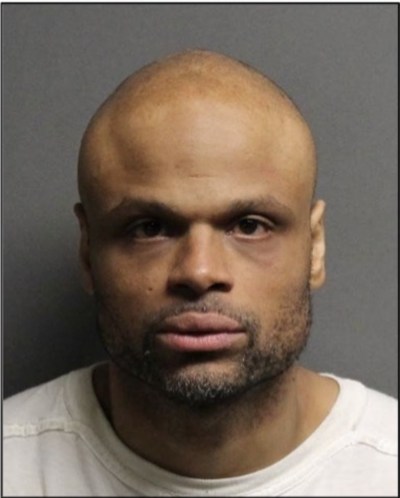
The suspect, identified by Middlesex County District Attorney Marian T. Ryan as 46-year-old Tyler E. Brown, had only been released from a psychiatric hospital three days earlier. According to a state police incident report filed in Cambridge District Court, Brown was already under parole supervision and had a documented history of firearms-related violence when the situation escalated into what officials described as an active shooting incident.
Less than an hour before the first shots rang out, Brown allegedly made a chilling statement to his parole officer: “these people are gonna f—ing pay.” He did not identify any specific target, but investigators say the remark now forms part of a broader timeline suggesting an imminent breakdown in control.
Authorities say Brown is now facing charges including armed assault with intent to murder, unlawful possession of a firearm, and possession of a large-capacity feeding device. He remains hospitalized under guard and has not yet been arraigned.
Court documents and police accounts describe a rapidly unfolding crisis that began earlier in the day, when parole officials were alerted that Brown had been behaving erratically. One individual living in the same rooming house reportedly told a parole officer that Brown had been drinking heavily the night before and was “off his rocker.”
That warning came just days after Brown’s release from McLean psychiatric hospital, a detail that has intensified scrutiny of how he was monitored in the immediate aftermath of his discharge.
By midday, the situation escalated further. At approximately 12:08 p.m., a parole officer contacted Brown via FaceTime and allegedly saw him holding what appeared to be a semi-automatic rifle inside a kitchen. The origin of the weapon remains under investigation.
During the video call, Brown allegedly made statements that alarmed the officer, including claims that he would not return to prison and that he had previously committed killings he had never been caught for. He also reportedly said, “I’m not going back to prison.”
The parole officer immediately attempted to locate him in person while simultaneously alerting law enforcement. Brown ended the call and briefly disappeared from contact.
At some point shortly after, according to the report, Brown called the officer again and claimed he was no longer Tyler Brown, but was instead “repping his ‘shooter name.’” Investigators say this marked a clear escalation in his behavior.
Over the next hour, multiple agencies worked to locate him. Boston police obtained a search warrant tied to Brown’s cellphone location data, while federal assistance helped narrow his position within a broad area of Cambridge. A second, more precise warrant later placed him within roughly 100 meters of a residential block near Kelly Road.
At 1:30 p.m., gunfire erupted along Memorial Drive.
Witnesses described a sudden and terrifying scene: a man walking along the roadway, weapon raised, firing repeatedly into passing vehicles without apparent warning or target selection. Police say Brown discharged between 50 and 60 rounds in a short span of time, creating what one official described as “an active moving threat through traffic.”
Two men inside separate vehicles were struck and seriously injured. One of the victims was identified by family members as an MBTA driver, while another was reportedly working as a delivery driver at the time of the shooting. Both remain hospitalized with life-threatening injuries.
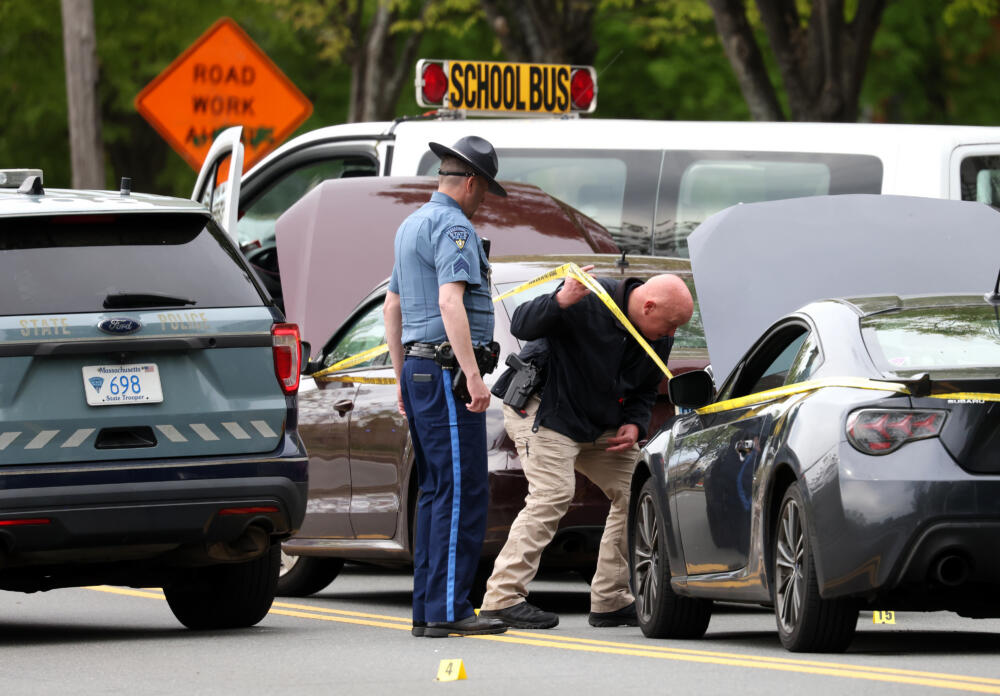
Cambridge police and Massachusetts State Police responded within minutes. Officers arriving on scene encountered vehicles stopped at odd angles, drivers fleeing on foot, and multiple areas of ballistic damage along the roadway. Nearby businesses and gas station employees took cover as bullets struck cars and pavement.
Residents of nearby apartment buildings also reported seeing the chaos unfold from balconies above, with some recording video as emergency sirens converged on the area.
“It was like he was just firing at anything moving,” one witness said in a statement relayed by investigators. “People were running, cars were stopping in the middle of the road. Nobody knew where to go.”

The shooting ended when Brown was confronted by a Massachusetts State Police trooper and a civilian firearms carrier, a former Marine who happened to be driving through the area. According to the police report, both individuals engaged Brown after he opened fire near them.
The trooper and the civilian discharged their weapons, striking Brown multiple times in the extremities and bringing him to the ground. He was taken into custody at the scene and transported to a Boston hospital, where he remains under guard.
Video captured by nearby residents reportedly shows Brown collapsing after being hit, then tossing his firearm aside while lying on the ground.
Authorities have emphasized that the rapid exchange of gunfire created an extremely dangerous environment for both civilians and responding officers.
Brown’s criminal history is now also under renewed examination. Court records indicate he previously served a prison sentence for a 2020 incident in which he fired at Boston police officers while already on probation for a separate violent offense. He was released last year under parole supervision.
At the time of his earlier sentencing, prosecutors had reportedly sought a significantly longer prison term than the one imposed by the court.
Following Monday’s shooting, criticism quickly spread among law enforcement unions and political commentators. The Boston Police Patrolmen’s Union described the earlier sentencing as a “ball drop,” arguing that the justice system had failed to adequately protect the public from repeat violent behavior.
“The fact that the judicial system thought it prudent to show leniency to a wannabe cop killer five years ago is not only the definition of insanity but an undeniable insult to those who put their lives on the line every day,” the union said in a public statement.
Officials have not yet confirmed how Brown obtained the firearm allegedly used in Monday’s shooting, nor whether parole officers were aware he had access to it prior to the incident.
As the investigation continues, prosecutors say they are working to reconstruct the full timeline, including the critical hour between Brown’s final FaceTime call and the first shots fired along Memorial Drive.
For now, two victims remain in critical condition, a city is left questioning how a known violent offender was able to escalate from psychiatric care to an alleged mass shooting threat in less than a week, and investigators are working to determine what, if anything, could have prevented the attack.