The husband of a New Mexico laboratory employee whose disappearance and death have captivated national attention is seeking court protection from a private investigator hired by her family, accusing him of conducting a campaign of harassment, intimidation and false accusations as authorities continue to investigate the mystery surrounding her case.
Mark Casias, the husband of deceased Los Alamos National Laboratory employee Melissa Casias, filed a petition in New Mexico’s 8th Judicial District Court seeking a restraining order against private investigator Thomas McNally, according to court documents.
The filing adds another dramatic chapter to the increasingly contentious dispute between Melissa Casias’ immediate family and the private investigator retained by members of her birth family, who have long questioned the circumstances surrounding her disappearance.
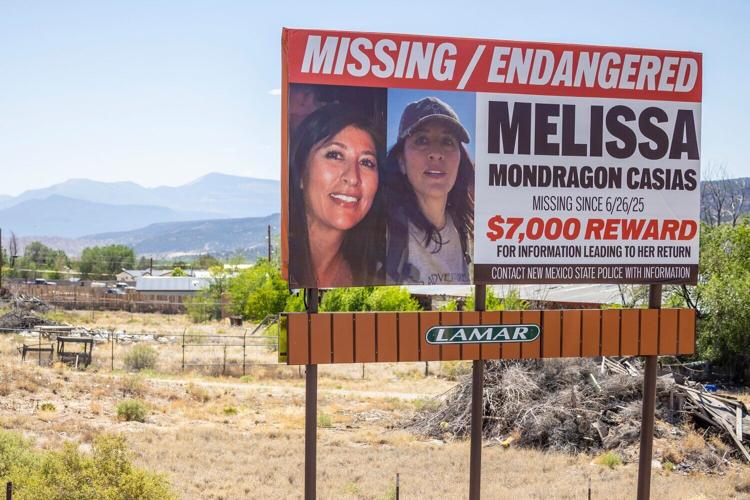
Melissa Casias, 53, vanished on June 26, 2025, after leaving work-related obligations in northern New Mexico. Nearly a year later, her skeletal remains were discovered in a remote area of Carson National Forest, reigniting public interest in a case that had already generated widespread speculation.
The discovery of her remains answered one question but left many others unresolved.
Authorities have yet to determine a final cause or manner of death.
Investigators continue to analyze evidence recovered from the scene where her remains were found, including a handgun discovered nearby.
While New Mexico State Police have repeatedly emphasized that the investigation remains active and ongoing, the uncertainty surrounding the case has fueled competing theories from family members, online observers and independent investigators.
Now, those tensions appear to have spilled into the courtroom.
In his petition filed on May 18, Mark Casias alleged that McNally engaged in what he described as an escalating pattern of public harassment and defamatory accusations directed toward him and members of his family.
According to the filing, Casias claims the investigator has repeatedly portrayed him as suspicious in connection with his wife’s disappearance despite the absence of criminal charges or any public identification of him as a suspect by law enforcement.
The petition further alleges that McNally’s actions have created significant fear and anxiety for Casias and those close to him.
Court records indicate that Casias is asking a judge to intervene before the situation worsens.
The filing reportedly cites public statements, social media activity and interviews conducted by McNally in which the investigator questioned aspects of the official investigation and suggested additional scrutiny should be directed toward Melissa’s husband.
McNally has become one of the most visible figures associated with the case.
A former homicide detective and private investigator, he was retained by members of Melissa Casias’ birth family after they became frustrated with what they believed was a lack of progress in the search for answers.
Since then, McNally has frequently spoken to media outlets about the case and has openly criticized elements of the investigation conducted by New Mexico State Police.
Among his criticisms have been claims that authorities failed to launch an aggressive enough search effort during the critical early days following Melissa’s disappearance.
He has also raised questions about evidence found inside the Casias home and suggested investigators should more thoroughly examine various aspects of the case.
Law enforcement officials have consistently defended their handling of the investigation.
They have repeatedly stated that all available evidence is being examined and that investigators are following facts rather than speculation.
The dispute between Mark Casias and McNally reflects the broader divide that has emerged among those closest to Melissa.
Following her disappearance, different branches of the family developed sharply contrasting views about what may have happened.
Some relatives believed Melissa may have left voluntarily or suffered a mental health crisis that led her into the wilderness.
Others became convinced that foul play could have been involved and pushed for a more aggressive investigation.
The discovery of her remains in May only intensified those disagreements.
Melissa’s body was found in the McGaffey Ridge area of Carson National Forest after a hiker came across the remains.
Authorities later confirmed that the remains were those of the missing mother and Los Alamos National Laboratory employee.
The condition of the remains complicated efforts to determine exactly how she died.
State police later revealed that forensic specialists were reconstructing portions of her skull to evaluate fractures and other injuries that might provide clues about the circumstances of her death.
Investigators also disclosed that an initial CT scan did not reveal any projectiles within the skull.
That finding led to additional questions regarding the handgun discovered near the scene.
Officials have not publicly disclosed whether the firearm belonged to Melissa or whether forensic testing has linked it to her death.
As a result, speculation has continued to grow.
Before her remains were found, Melissa Casias’ disappearance attracted attention beyond New Mexico because it occurred during a period when several individuals with ties to scientific, aerospace and defense-related work had also disappeared or died under unusual circumstances.
Online commentators frequently grouped her case together with those incidents, although investigators have never announced any evidence connecting them.
Family members have also repeatedly stated that Melissa’s employment at Los Alamos National Laboratory was unrelated to her disappearance.
Despite those statements, theories surrounding the case proliferated across social media platforms and internet forums.
The intense public scrutiny placed additional pressure on both investigators and family members.
For Mark Casias, the attention became increasingly personal.
In interviews conducted over the past year, he has consistently denied any involvement in his wife’s disappearance and has rejected suggestions that he had anything to do with her death.
According to previous public statements, he maintained that he was at work on the day Melissa vanished and learned she was missing only after receiving a call from her employer.
No law enforcement agency has publicly named him as a suspect.
The restraining order request suggests that Casias now believes public accusations and speculation have crossed a line.
In the court filing, he reportedly argues that McNally’s conduct has moved beyond legitimate investigative efforts and entered the realm of harassment.
The filing seeks legal protections intended to prevent future contact or conduct that Casias claims threatens his family’s safety and well-being.
Whether a judge agrees remains to be seen.
McNally has previously defended his work on the case, arguing that independent scrutiny is necessary when unanswered questions remain.
Supporters of the investigator say he has helped keep public attention focused on Melissa’s disappearance and pushed for additional examination of evidence.
Critics, however, contend that some of his public statements risk fueling speculation before investigators have reached definitive conclusions.
The legal battle now unfolding could bring additional attention to those disagreements.
At the same time, the central mystery remains unsolved.
Authorities continue working to determine exactly what happened to Melissa Casias during the nearly year-long period between her disappearance and the discovery of her remains.
Investigators have not announced any arrests, identified any suspects or ruled her death a homicide.
For Melissa’s loved ones, the lack of answers continues to be a source of frustration and grief.
Following confirmation that her remains had been located, family members released a statement acknowledging the emotional toll of the discovery.
They described the situation as overwhelming and pledged to continue seeking justice and answers.
“Our hearts are heavy,” the family said.
They also noted that the location where Melissa was found had reportedly been searched previously during earlier efforts to locate her.
That revelation generated still more questions about how her remains went undiscovered for so long.
As forensic testing continues and investigators review evidence, authorities have urged the public to avoid speculation and allow the investigative process to proceed.
Meanwhile, the dispute between Mark Casias and Thomas McNally has introduced a new legal dimension to an already complicated case.
With the restraining order request now before the court and the death investigation still unresolved, the story of Melissa Casias remains far from over.
Nearly a year after she vanished and weeks after her remains were found, the search for definitive answers continues, leaving investigators, family members and the public waiting for clarity in a case that has become one of New Mexico’s most closely watched mysteries.




