A suspected serial killer accused of targeting vulnerable women across Texas has been arrested after investigators linked him to two murders spanning six years and two additional shootings in which the victims survived.
Authorities say the suspect, 26-year-old Luis Fernando Benitez-Gonzalez, may be responsible for even more acts of violence, warning that investigators are actively searching for additional possible victims in multiple Texas cities.
Benitez-Gonzalez was taken into custody on April 27 in the Dallas area by the Lone Star Fugitive Task Force, according to Austin police and U.S. Marshals officials. Investigators allege the Mexican national killed two women — 34-year-old Alyssa Ann Rivera and 28-year-old Alba Jenisse Aviles-Marti — and later shot two additional women who survived separate attacks in late 2025.
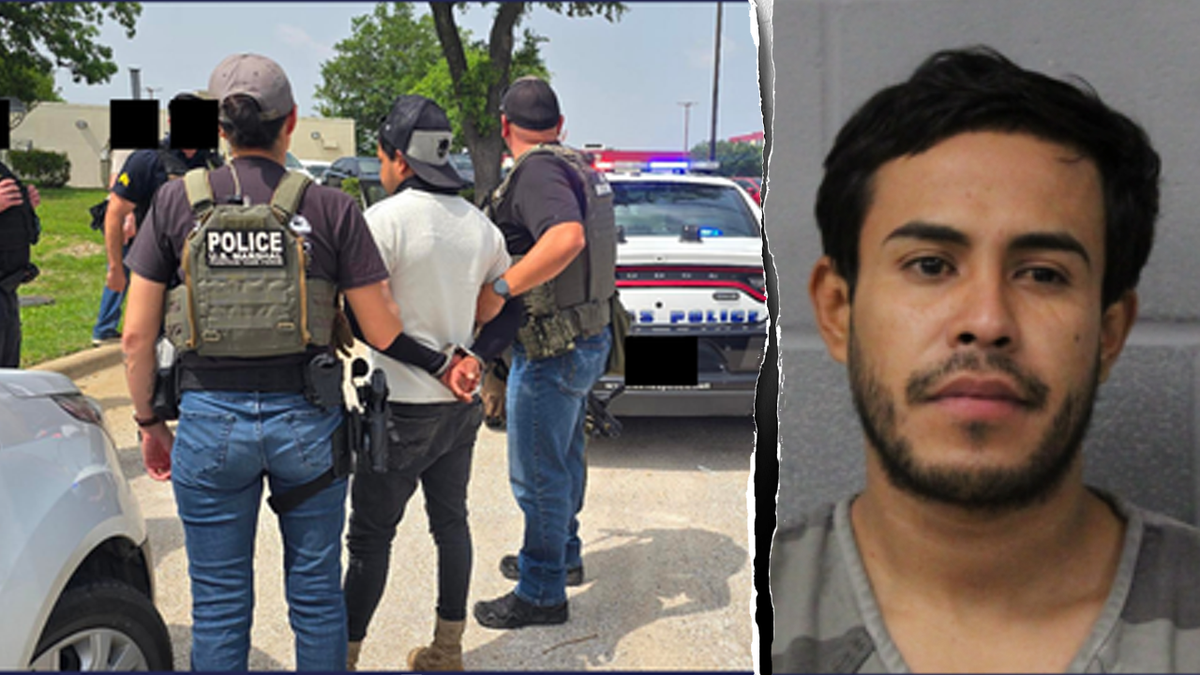
At a tense news conference announcing the arrest, Austin Police Detective Chris Anderson said investigators believe the suspect’s pattern of violence likely extends beyond the currently known cases.
“We believe that there is a strong likelihood that Benitez is responsible for further acts of extreme violence,” Anderson told reporters.
The detective said the evidence collected so far, combined with statements allegedly made by Benitez-Gonzalez during questioning, revealed what investigators described as a disturbing and repeated pattern of attacks against women.
“The evidence and his own statements show a repeated pattern of violence conducted against vulnerable female victims,” Anderson said.
Police now believe the suspect may have crossed paths with additional women in Austin, Dallas, Houston, and Hidalgo County, and they are urging anyone who may have had contact with him to come forward.
Authorities say one of the most troubling aspects of the investigation is the time gap between the two murder cases linked to the suspect. Investigators allege Benitez-Gonzalez murdered Alba Jenisse Aviles-Marti in 2018 and then killed Alyssa Rivera six years later in 2024.
But detectives say they do not believe the violence suddenly stopped during that period.
“He has a 2018 case, and he has a 2024 case,” Anderson said. “People who commit crimes of this nature, with the very distinct MO, they usually don’t take a break. Not for six years.”
The investigation into Rivera’s death began on June 21, 2024, when a resident called 911 after discovering a body inside a vacant home on Metcalfe Road in Austin. Officers arrived to find Rivera dead. Authorities later determined she had been beaten and strangled.
The crime scene immediately raised alarm among homicide investigators because of the brutality involved. Detectives worked for months trying to identify a suspect while processing forensic evidence recovered from the scene.
During the investigation, authorities discovered similarities between Rivera’s murder and the unsolved 2018 killing of Alba Jenisse Aviles-Marti in neighboring Bastrop County.
According to investigators, Aviles-Marti had been sexually assaulted and strangled with a seatbelt inside her vehicle. Her body was discovered after a passing driver spotted her car parked along the shoulder of San Antonio Road.
The location of the crime scene stunned investigators after they realized it was only about three miles away from where Rivera’s body would later be found six years afterward.
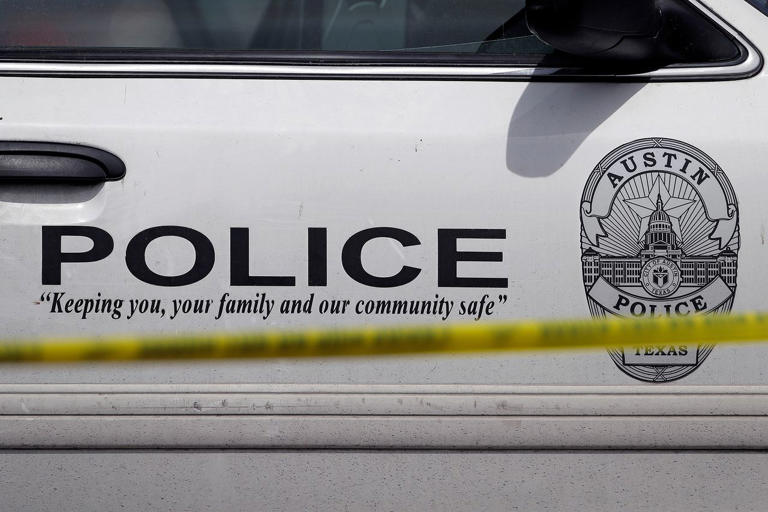
In 2024, Austin police publicly announced that DNA evidence connected the two murders after investigators submitted forensic samples into the FBI’s CODIS database, a nationwide DNA tracking system used by law enforcement agencies.
At the time, however, detectives still did not know who the suspect was because Benitez-Gonzalez’s DNA profile was not yet in the system.
Authorities said it would take another two years before investigators finally identified and charged him.
The investigation dramatically intensified after two women survived separate shootings in November and December 2025.
According to Anderson, one of the surviving victims fought back during the attack and managed to seize her attacker’s phone during the struggle. That crucial piece of evidence eventually helped investigators connect the shootings to Benitez-Gonzalez.
Ballistic testing later linked the two shootings together, and detectives ultimately tracked evidence leading to the suspect in Dallas.
Authorities said investigators then conducted an interview with Benitez-Gonzalez after his arrest.
“During that interview, he made admissions related to both aggravated assaults and the 2024 homicide of Alyssa Rivera and the 2018 homicide of Alba Jenisse Aviles-Marti,” Anderson said.
However, detectives noted that Benitez-Gonzalez allegedly attempted to portray the attacks as acts of self-defense.
“Although Benitez-Gonzalez attempted to characterize his actions as self-defense, the totality of the evidence developed in this investigation does not support that claim,” Anderson added.
Federal authorities also revealed during the briefing that Benitez-Gonzalez is a Mexican national who had previously been voluntarily deported from the United States in 2020.
Deputy U.S. Marshal Brandon Filla confirmed the deportation history but said it remains unclear exactly when or how the suspect re-entered the country.
The revelation added another layer of controversy to the case, especially amid growing national debates surrounding violent crimes involving undocumented immigrants and border enforcement.
Authorities have not yet disclosed whether Benitez-Gonzalez had any prior criminal convictions in the United States before the murders and shootings linked to him in Texas.
As investigators continue reviewing evidence, police say they are increasingly concerned that there could be more unidentified victims connected to the suspect.
Detectives are now combing through unsolved cases involving violence against women across multiple Texas jurisdictions in an effort to determine whether Benitez-Gonzalez may have been involved.
Investigators are also working to establish a clearer timeline of the suspect’s movements over the last several years, especially during the lengthy gap between the two murders.
For the families of Rivera and Aviles-Marti, the arrest marks a painful but significant breakthrough after years of uncertainty and grief.
Rivera’s death devastated loved ones who struggled to understand how someone could abandon her body inside a vacant property after such a brutal attack. Similarly, Aviles-Marti’s family had spent years without answers following her murder in 2018.
Now, with the suspect in custody, authorities hope the investigation may finally provide some measure of justice.
Still, detectives warn the case may be far from over.
Investigators believe the combination of strangulation, violence against vulnerable women, and the suspect’s alleged admissions point to a potentially broader pattern of predatory behavior that may have gone undetected for years.
Police are encouraging anyone who may have encountered Benitez-Gonzalez in Austin, Dallas, Houston, Hidalgo County, or surrounding areas to contact law enforcement immediately, especially women who may have experienced threatening or violent encounters with him.
As the investigation expands, authorities say their primary focus remains identifying any additional victims and ensuring no other crimes connected to the suspect remain hidden.
For now, Benitez-Gonzalez remains at the center of a rapidly growing investigation that has shaken communities across Texas and raised disturbing questions about how many violent acts may still be undiscovered.