The discovery of a longtime Los Alamos employee’s body in a remote New Mexico forest has intensified scrutiny surrounding a disappearance that baffled investigators for nearly a year and fueled widespread speculation about a series of unexplained cases involving government-linked workers.
Melissa Mondragon Casias, 53, was found dead on May 28, 2026, almost eleven months after she vanished without a trace. Her remains were discovered by a hiker in the McGaffey Ridge area of Carson National Forest, a rugged and heavily wooded region outside Taos, New Mexico.
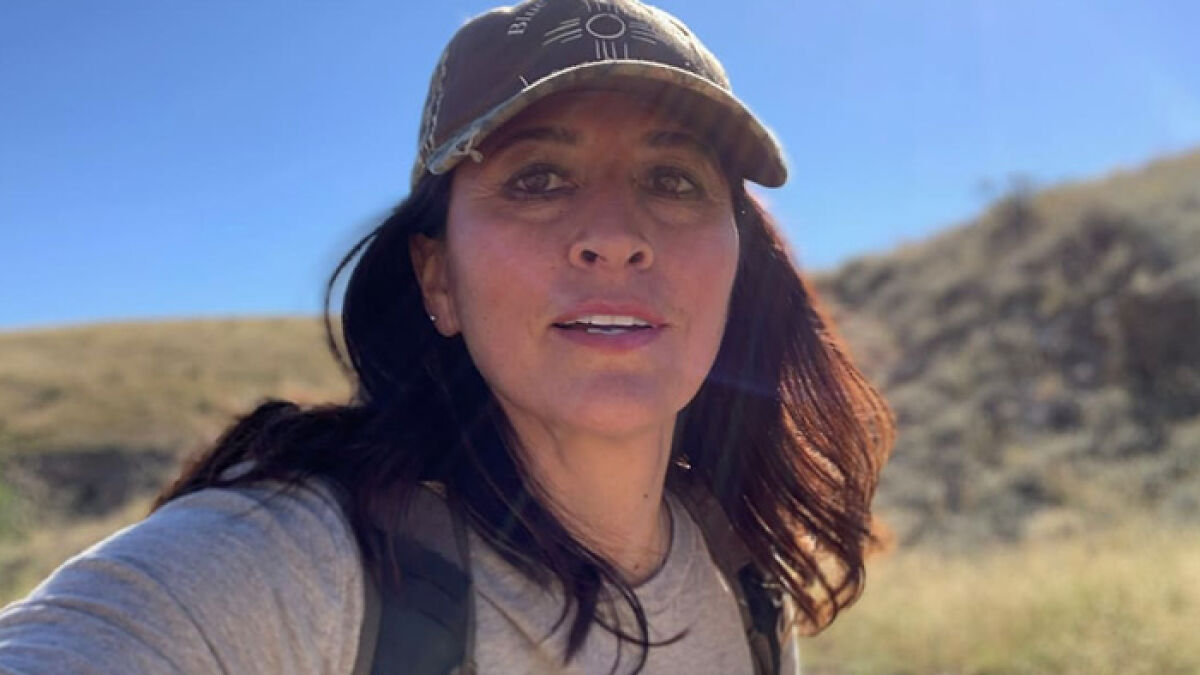
According to New Mexico State Police, Casias’ remains were located alongside a firearm. Yet despite the discovery, authorities have not publicly revealed either the cause or manner of death, leaving family members desperate for answers and generating renewed interest in the mystery surrounding her disappearance.
For Casias’ husband, Mark, the unanswered questions have become increasingly difficult to process.
“I can’t grasp it, I don’t know, I can’t figure it out,” he reportedly told local media after learning that his wife’s remains had been identified.
The uncertainty has only deepened because investigators have released few details regarding what they found at the scene, how long the remains may have been there, or whether any evidence points toward foul play.
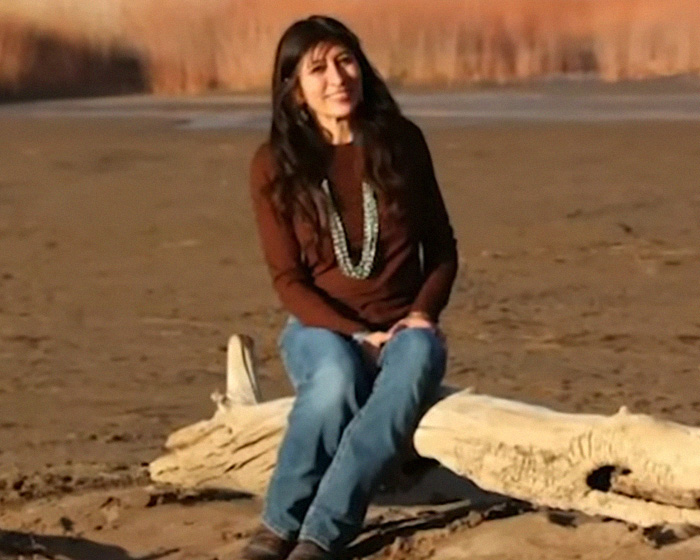
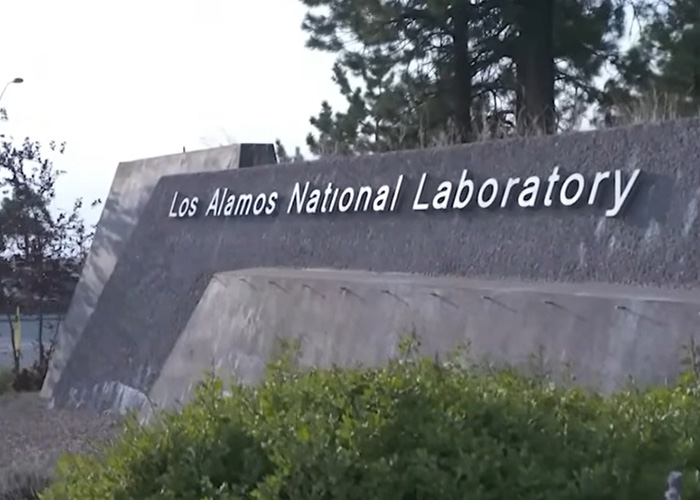
Casias worked as an administrative assistant at Los Alamos National Laboratory, one of the nation’s most significant scientific facilities and a cornerstone of America’s nuclear research infrastructure.
Founded during the Manhattan Project in World War II, the laboratory has long been associated with highly sensitive government work, including nuclear weapons research and national security programs.
While Casias herself was not a scientist, her employment at the laboratory has nevertheless attracted considerable attention online, particularly among those attempting to connect her disappearance to other cases involving government employees and researchers.
The timeline of her disappearance remains one of the most puzzling aspects of the case.
On the morning of June 26, 2025, Casias drove her husband to work at Los Alamos National Laboratory. According to family members, she dropped him off around 6:15 a.m. and indicated that she needed to complete a task elsewhere on the laboratory grounds before returning home.
Instead, investigators later learned that she drove back to her residence.
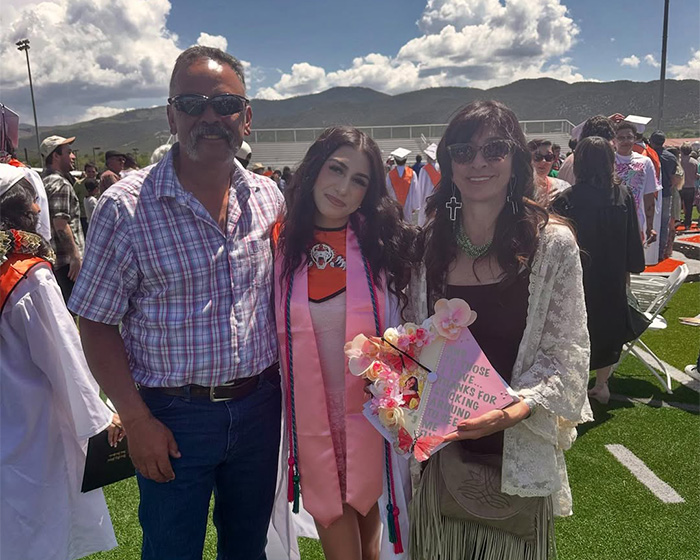
When her daughter Sierra encountered her later that morning, Casias reportedly explained that she would be working remotely because she had forgotten her security badge.
That explanation immediately became significant after family members pointed out an apparent contradiction.
Mark Casias later stated that his wife had used her badge when entering the laboratory property earlier that morning.
According to him, security procedures required the driver to display identification when entering the facility, making it difficult to understand why she would later claim not to have the badge.
At the time, however, neither he nor their daughter viewed the explanation as suspicious.
Sierra later recalled that her mother’s behavior appeared entirely normal.
Nothing seemed unusual during their interaction, and there was no indication that anything was wrong.
The final known encounters with Casias occurred later that day.
Around midday, she visited her daughter at work in Taos Plaza and brought her a sandwich from Subway.
The brief visit appeared routine.
After speaking for several minutes, Casias reportedly told her daughter she had errands to run before leaving.
That would be the last time anyone in her family saw her alive.
The mystery deepened later that afternoon.
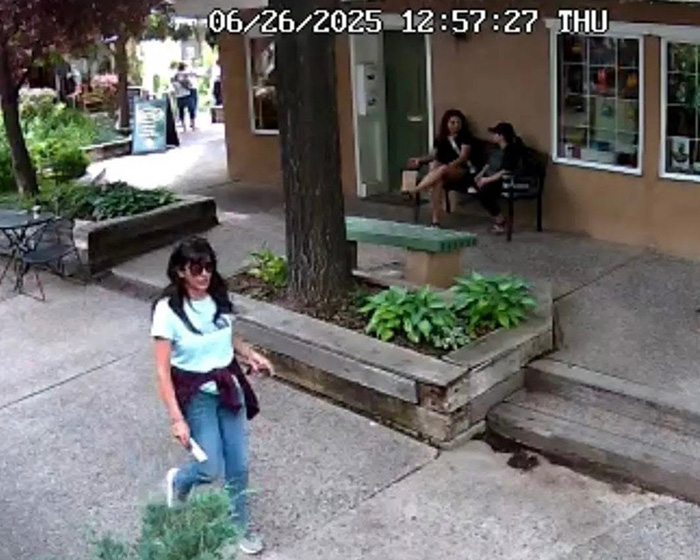
Surveillance footage allegedly captured Casias walking alone along New Mexico State Road 518 around 2:20 p.m.
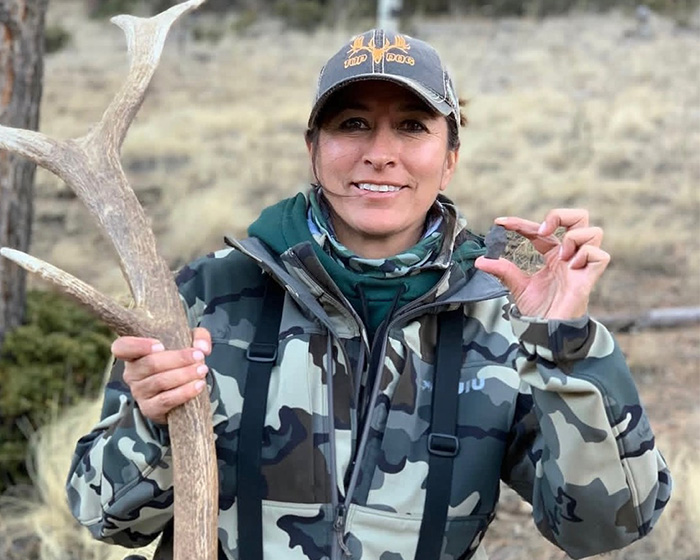
The location was approximately three miles from her home and several miles from where her remains would eventually be discovered nearly a year later.
She appeared to be dressed casually, wearing jeans, a T-shirt, sneakers and sunglasses.
No obvious signs of distress were visible in the footage.
When family members later returned home, they discovered something that immediately raised concerns.
Both of Casias’ cell phones had been left behind.
Even more puzzling, the devices had reportedly been wiped through a factory reset.
Personal identification documents and other belongings also remained at the residence.
The discovery prompted immediate concern because it suggested a level of planning inconsistent with an impulsive disappearance.
Investigators launched a search effort, but months passed without major developments.
Then came another surprising detail.
The area where Casias’ remains were eventually found had reportedly been subject to restoration work by the U.S. Forest Service beginning in late 2025.
Crews had reportedly been active in the region for months.
That fact has led some observers to question how the remains remained undiscovered for so long.
Authorities have not publicly addressed those questions.
As the investigation stalled, online speculation flourished.
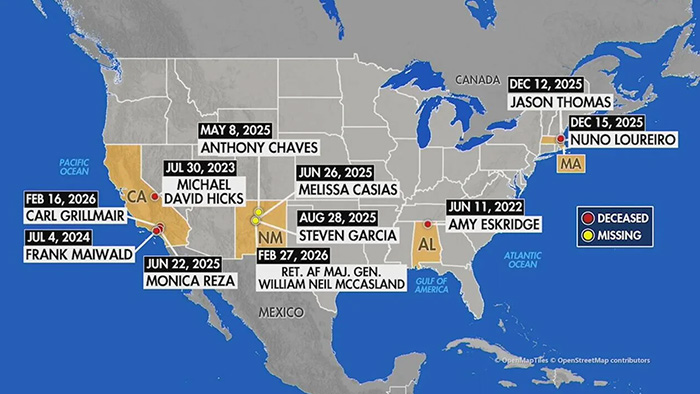
Numerous social media users and conspiracy theorists began connecting Casias’ disappearance to several other cases involving current or former government employees, particularly individuals associated with scientific research, defense work or national security programs.
Among the names frequently mentioned is Anthon Chavez, a retired Los Alamos employee who disappeared in 2025.
Others include Steven Garcia, reportedly connected to government contracting work, and retired Air Force Major General William “Neil” McCasland, who vanished under separate circumstances.
Theories have also incorporated cases from outside New Mexico, including personnel connected to aerospace and defense research organizations.
Some online commentators have suggested that these individuals possessed sensitive knowledge related to classified projects and were targeted because of that information.
Those claims, however, remain entirely speculative.
No law enforcement agency has publicly stated that the cases are connected.
Investigators have repeatedly emphasized that each disappearance is being evaluated independently based on available evidence.
Family members of several missing individuals have also rejected conspiracy theories, arguing that such speculation distracts from legitimate investigative efforts and causes additional emotional pain.
Still, comments made by former FBI Assistant Director Chris Swecker have attracted attention.
Speaking previously about several disappearances involving individuals connected to government facilities, Swecker suggested investigators should not automatically dismiss the possibility of broader connections.
He noted that even administrative employees working within secure facilities may have access to information or operational knowledge that could make them valuable targets.
Swecker emphasized that cases involving workers tied to sensitive government programs should be thoroughly examined before conclusions are reached.
His comments have been cited repeatedly by those who believe a larger pattern may exist.
Whether such a pattern actually exists remains unknown.
At present, authorities have released no evidence indicating that Casias’ disappearance was connected to her employment at Los Alamos National Laboratory or to any classified activities.
Instead, investigators appear focused on determining basic facts surrounding her death.
The firearm discovered near her remains could prove critical to that effort.
However, officials have not disclosed whether the weapon belonged to Casias, whether it was registered to someone else, or whether forensic testing has produced meaningful results.
Until those findings are released, many of the most important questions remain unanswered.
For the Casias family, the priority is far simpler than the online theories that continue to circulate.
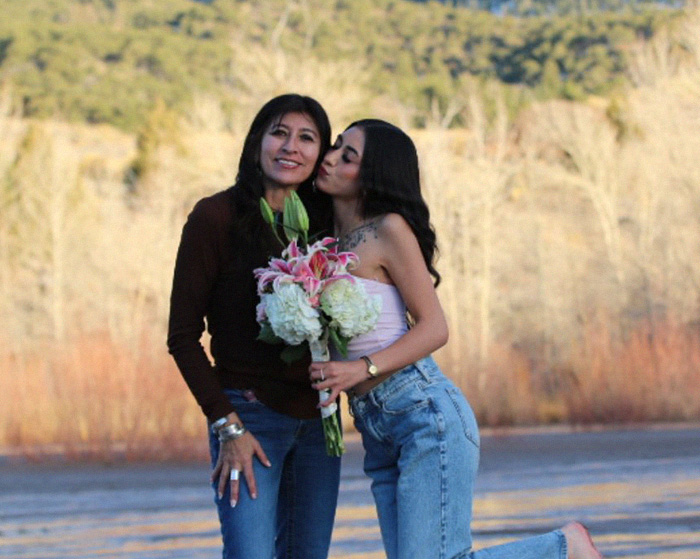
They want to understand what happened during the final hours of Melissa’s life.
They want to know why she left home after apparently making plans for the day.
They want to know why her phones were wiped and abandoned.
And perhaps most importantly, they want to know how she died.
Nearly a year after her disappearance, the discovery of her remains has provided a measure of closure, but not the answers they hoped for.
As investigators continue their work and forensic experts examine the evidence, the death of Melissa Casias remains one of New Mexico’s most perplexing unsolved mysteries—one that continues to generate questions far faster than answers.