Kimi Antonelli: The Boy ‘Born in a Garage’ Who Learned to Drive on His Father’s Lap
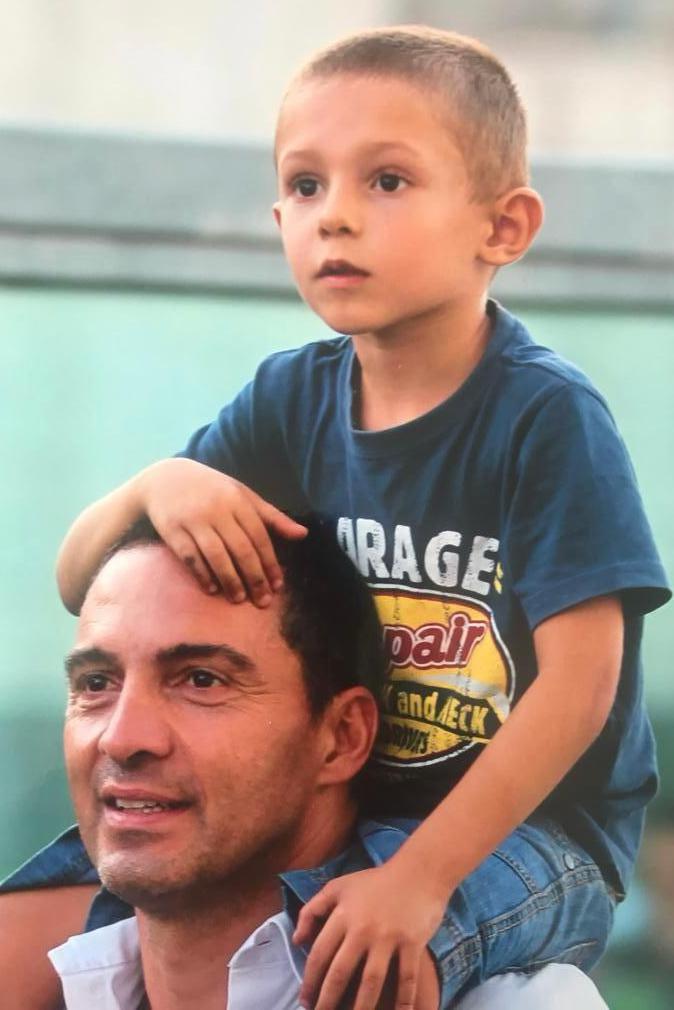
Kimi Antonelli was only ten years old when his father first understood that the child sitting on his lap might possess an extraordinary gift for racing. The setting was the Adria circuit in north-east Italy. Marco Antonelli was there with his Lamborghini sports-car team; Kimi had been competing in a kart race. At the end of the day Marco asked his son a simple question: did he want to try the Lamborghini? The answer was never in doubt.
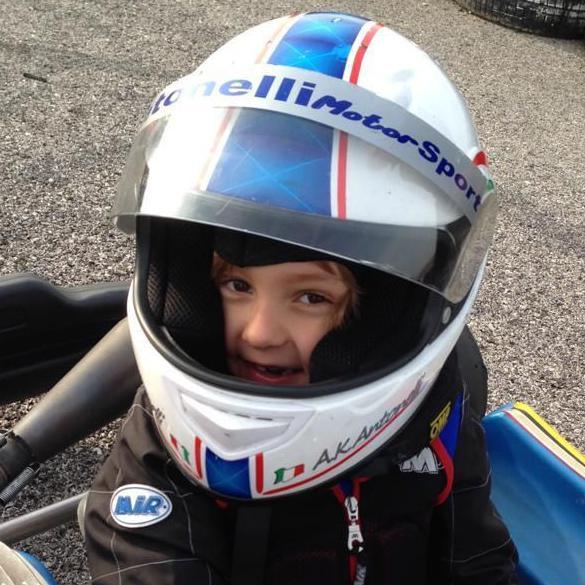
Marco strapped both of them into the car, the belts stretched around father and son. He would control the throttle and the brake; Kimi would handle the steering and the gears. “I couldn’t see the track because he was in front of me with a helmet on,” Marco recalls. “I could only see beside me the marker panels before each corner – 100m, 50m. We started to drive, step by step, faster, faster, faster. In the end, I pushed like I was alone and I arrived at the braking point at the end of the straight, 320km/h, braked very hard and at the limit. The car had a lot of oversteer. Kimi controlled the oversteer perfectly, then I went on the throttle, Kimi finished the oversteer, changed gear, and went. I said: ‘OK, stop, because it has now become dangerous.’ But when I saw the video, 10 years old, on my leg, oversteer, everything perfect, I said: ‘Maybe he has something special.’”
That moment has become part of the origin story of a driver who, at nineteen and in only his second Formula 1 season, is dominating the world championship. Six poles and six wins in eleven races have given him a fifty-point lead heading into the Dutch Grand Prix. Reliability problems have cost him still more points; without them the advantage would be larger. The scale of the turnaround from a difficult rookie year has surprised almost everyone connected with the team.
Born Among Engines
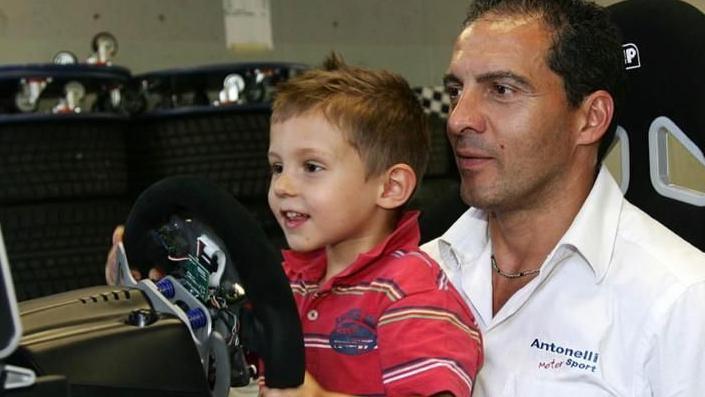
Marco Antonelli likes to say his son was “born in a garage.” From the age of fifteen days Kimi was present while his parents, Marco and Veronica, worked on their racing-team business. Engine noise and exhaust fumes formed the soundtrack of his earliest months. By the time he was about three, during the Christmas holidays, Marco brought home a simulator he had acquired for guests to try at the Bologna Motor Show. Each evening the small boy wanted to drive. Once again he sat on his father’s leg, the controls divided in the same way as they later would be in the Lamborghini. One night Marco, exhausted from an early start at work, began to fall asleep and missed a braking point. The simulator session ended in a crash. Kimi’s reaction was immediate: “Dad, dad, no sleep, no sleep. I have to drive.”
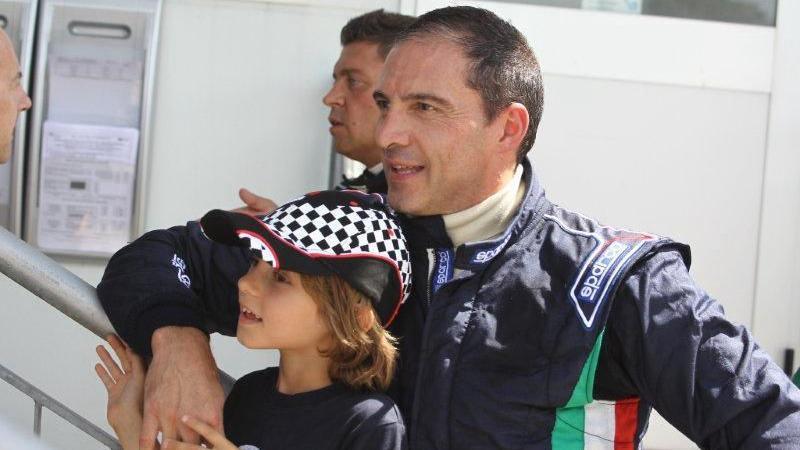
Marco himself had been a racing driver and carried the scars of unfulfilled opportunity. In the 1990s he stood on the verge of a works seat in the DTM touring-car series, then one of the most popular categories in Europe. He tested for Alfa Romeo; the team boss left and the chance disappeared. Another opportunity arose with BMW alongside established stars Roberto Ravaglia and Steve Soper; again the door closed. “I suffered a lot for it,” Marco says. “And, of course, I was scared that my son [would] relive the same situation. At the beginning, I was very stressed about the passion my son had for motorsport.”
Karting and the Limits of a Normal Family Budget
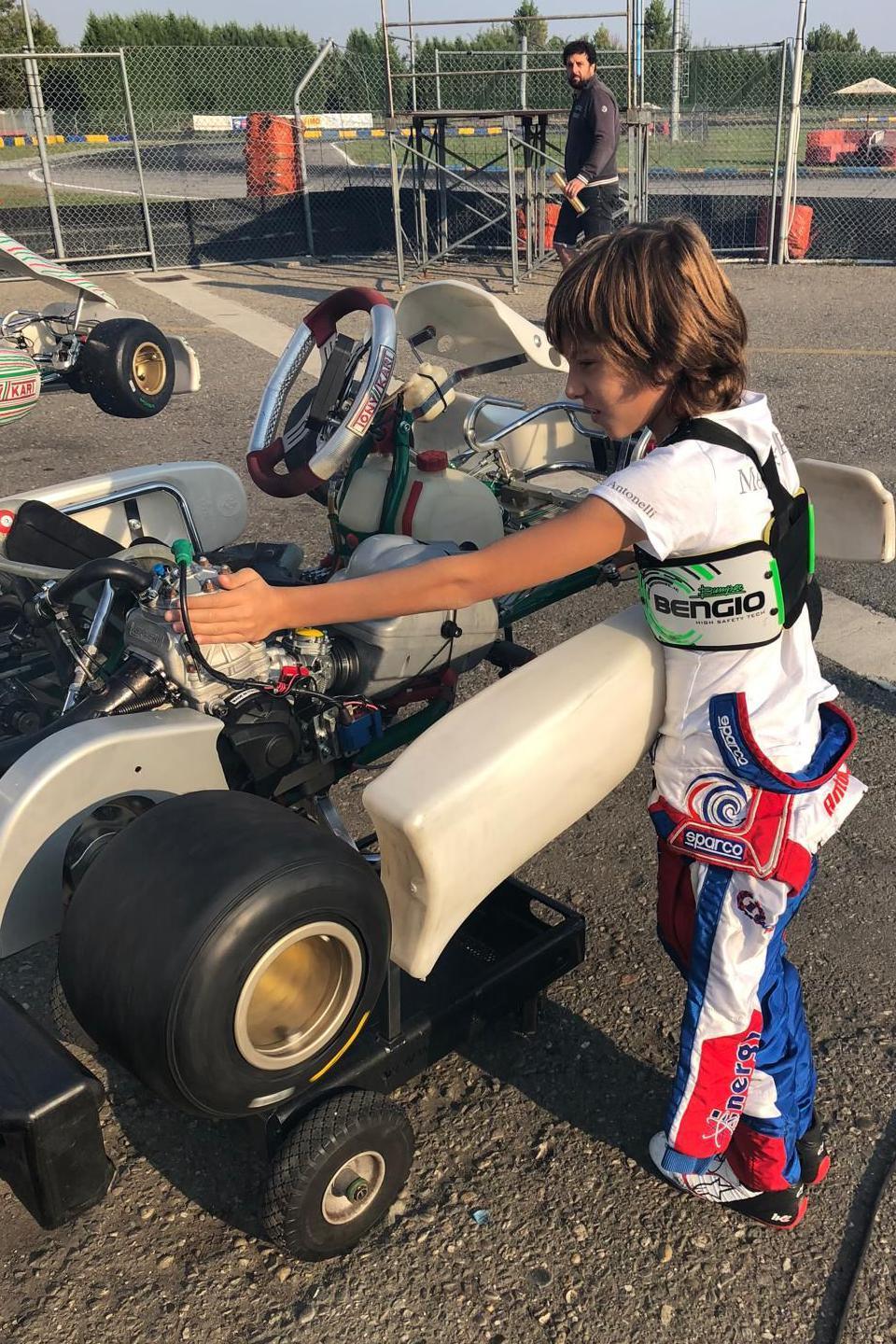
Kimi first tried a go-kart at five and immediately displayed an instinctive grasp of racing lines, braking points and car control. The Antonellis describe themselves as a normal family. They could not finance a full progression through every junior category all the way to Formula 1. Marco calculated that he could support karting and a single year of Formula 4; beyond that the realistic path might be a seat in one of his own GT cars. Kimi, however, kept winning. Whatever machinery he was given, he was quick.
By the age of eleven his name was circulating in professional paddocks. Mercedes sent academy scout Gwen Lagrue to Italy. That season Kimi was competing in a kart with less power than many of his rivals. Marco had framed the disadvantage as a lesson: concentrate on improvement rather than results, and keep pushing. Lagrue was struck by the performance under those constraints. “Maybe they understood that Kimi was a different child,” Marco says. Membership of the Mercedes driver academy removed the family’s financial pressure and allowed father and son to focus on development.
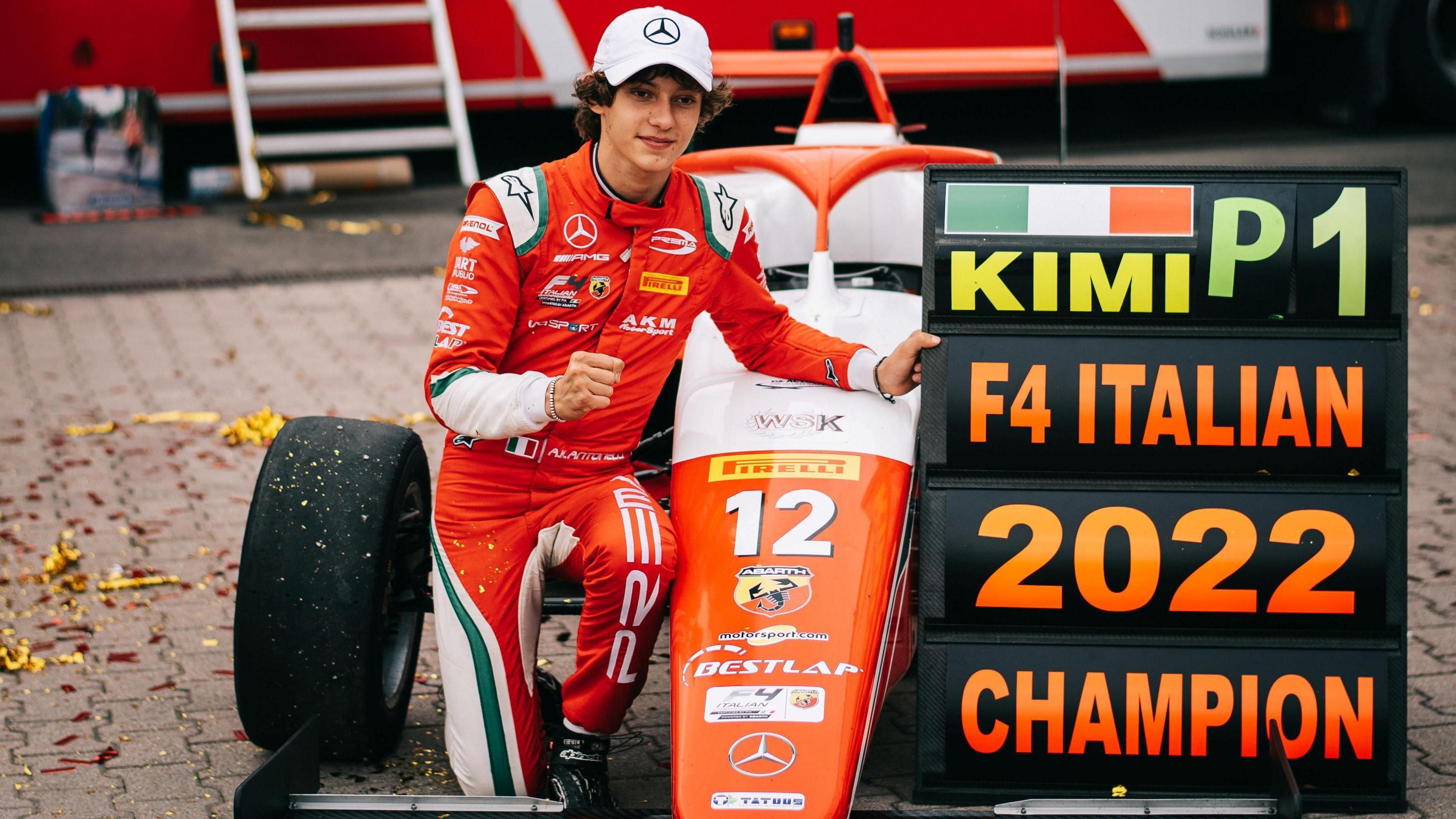
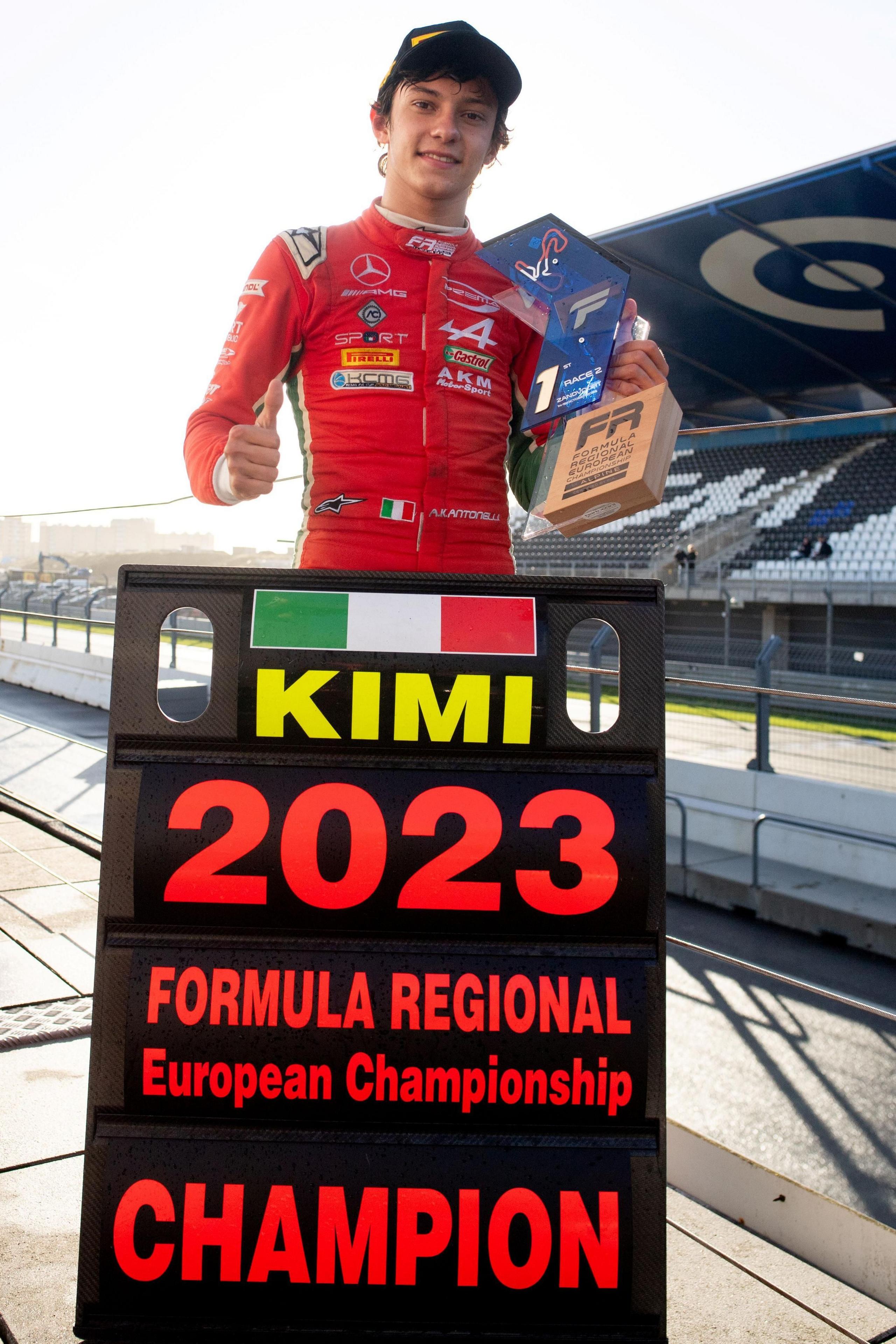
Max Verstappen, the only other teenager to have won a Formula 1 race, later observed that even in karting Antonelli stood out as one of the clear talents of his generation. At fifteen, as final preparation for cars, Kimi contested a geared karting category. On debut, with almost no testing, he took pole. At the world final he claimed pole again. From the end of 2021 he moved full-time into single-seaters. In 2022 he dominated Formula 4 championships; in 2023 he did the same in Formula Regional.
Mercedes, Hamilton and an Accelerated Timeline
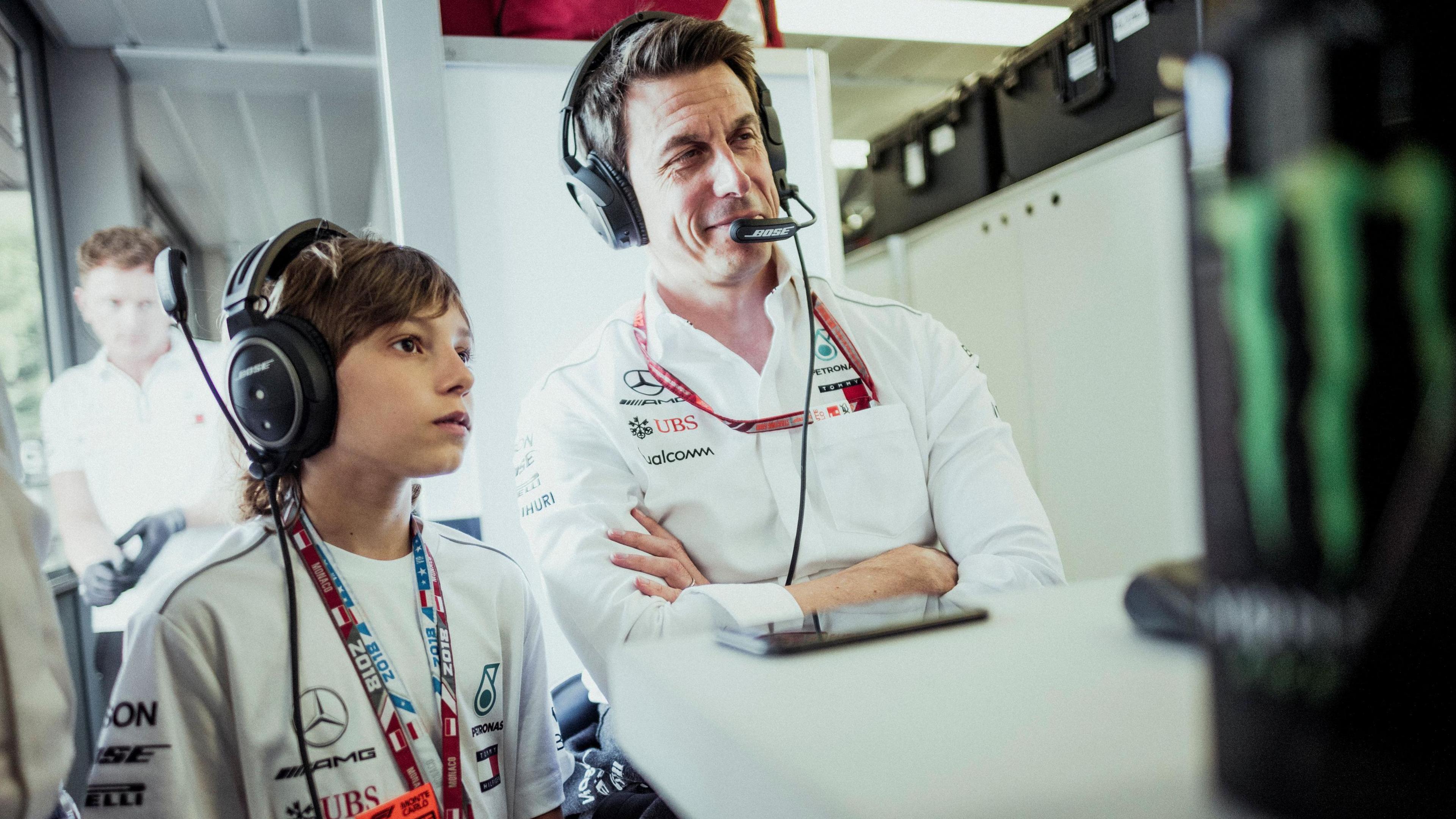
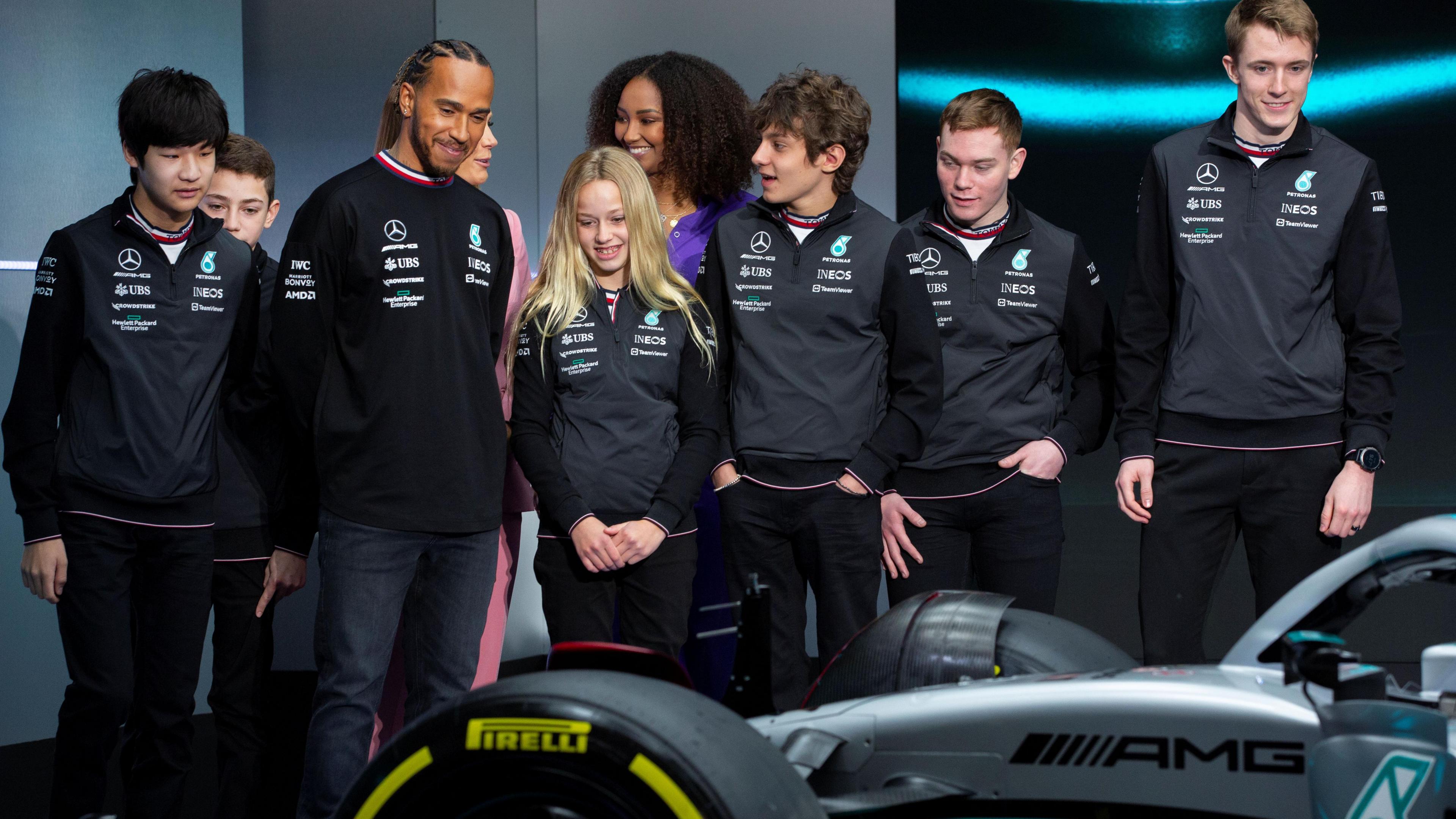
Inside Mercedes, team principal Toto Wolff had already begun to view Antonelli as a potential long-term successor to Lewis Hamilton. With the seven-time champion approaching forty, Wolff was planning a controlled generational transition. During contract discussions in 2023 Hamilton sought at least two guaranteed years; Wolff preferred a single year with an option. They settled on 2024 with an option for 2025. Hamilton, dissatisfied, explored alternatives and in late January 2024 informed Wolff that he would join Ferrari in 2025.
Wolff immediately telephoned Marco Antonelli. “We put Kimi in Formula 1,” he said. “What do you think?” Marco’s reply was cautious: happiness mixed with the question of readiness. At a management away day Wolff gathered his senior engineers. Trackside engineering director Andrew Shovlin recalls a rapid review of options and a collective willingness to take the risk on the teenager. “We were all keen to just go with Kimi, which we knew was a bit of a risk. But it was quite exciting and we thought, based on his career to date, he had a good chance of being very good.”
Antonelli had not yet driven a Formula 1 car. Mercedes organised more than twenty test days in older machinery at circuits around the world. Shovlin and his colleagues were struck by the speed with which the young driver reached the limit. Most newcomers improve incrementally; Antonelli needed only a couple of runs to understand the car’s behaviour and thereafter operated at the edge. His car control—the ability to hold the machine on the brink of oversteer without losing it—reminded them of George Russell’s early impressions. Mistakes, when they occurred, tended to be errors of judgment or inexperience rather than evidence of a talent ceiling.
Monza Debut and the Weight of Expectation
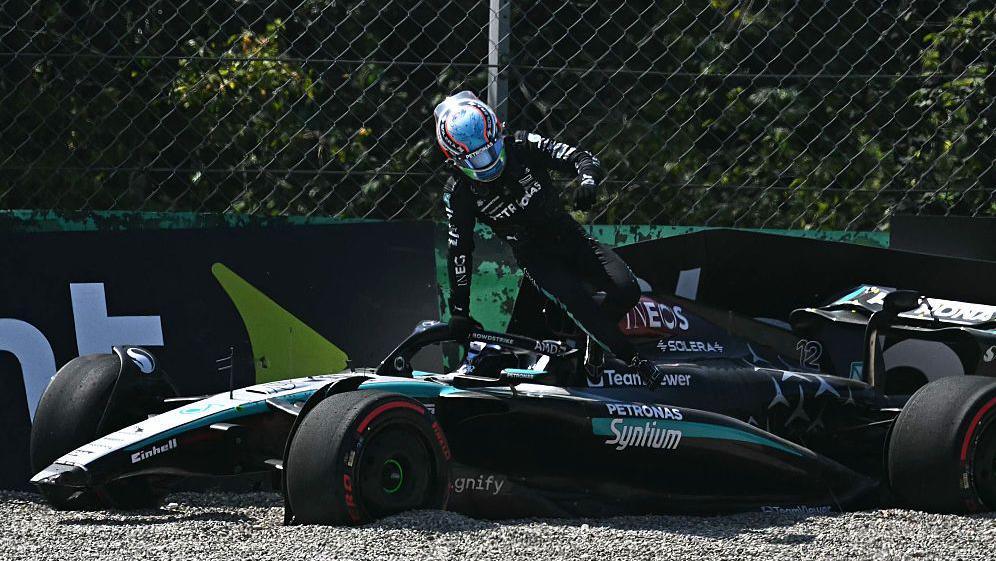
Wolff gave Antonelli his first taste of a grand-prix weekend in free practice at Monza in 2024. The session was dramatic. On his first flying lap he set the fastest time. On the next he was still quicker until he lost the car at the Parabolica and crashed heavily. Shovlin’s assessment was blunt: no driver could have negotiated the corner at the speed Antonelli attempted. It was an error of judgment born of a desire to produce something special at his home circuit. Wolff told the teenager the incident was acceptable and not to dwell on it, yet the crash left a lasting mark on Antonelli’s confidence.
Heading into the 2025 rookie season Wolff publicly managed expectations, conditioning himself for “moments of brilliance and moments where you want to tear your hair out.” Early highlights arrived—out-qualifying Russell in Jeddah, pole for the Miami sprint—but the European portion of the calendar proved difficult. A rear-suspension change made the car nervous; Antonelli’s confidence dipped, his pace suffered and mistakes multiplied. Shovlin admits the team had expected more. Marco notes that Mercedes, still adjusting to life after the Hamilton era, needed both cars to score consistently, and that Kimi felt that pressure acutely. The Monza crash remained difficult to forget.
Wolff never lost faith, even while others inside and outside the team began to doubt. A second practice crash at Monza a year after the first prompted a direct conversation: the level was not good enough. Antonelli’s reply was simply, “I know.” Father and son talked extensively. Kimi, Marco says, understood that situations can change and began to recover confidence step by step.
The Step Change of 2026
Once the championship left Europe in the autumn of 2025, progress became tangible. Shovlin sensed genuine improvement, though no one predicted the scale of what would follow in 2026. This season Antonelli has established clear superiority over Russell in the same machinery. Six poles, six victories and a fifty-point championship lead after eleven races have transformed the narrative. Reliability issues have prevented an even larger advantage.
Wolff attributes much of the leap to the simple fact that Antonelli now knows what to expect: the tracks, the media scrutiny, the constant evaluation, the demands on his time. Self-confidence has grown without tipping into entitlement. Marco points to a mental resilience visible since the junior formulae, where slow starts were repeatedly converted into championships through sustained work. Verstappen, observing from outside the team, says he never doubted that the second season would bring greater consistency; the current level of performance simply accelerates a normal trajectory.
Family, Temperament and Outside Advice
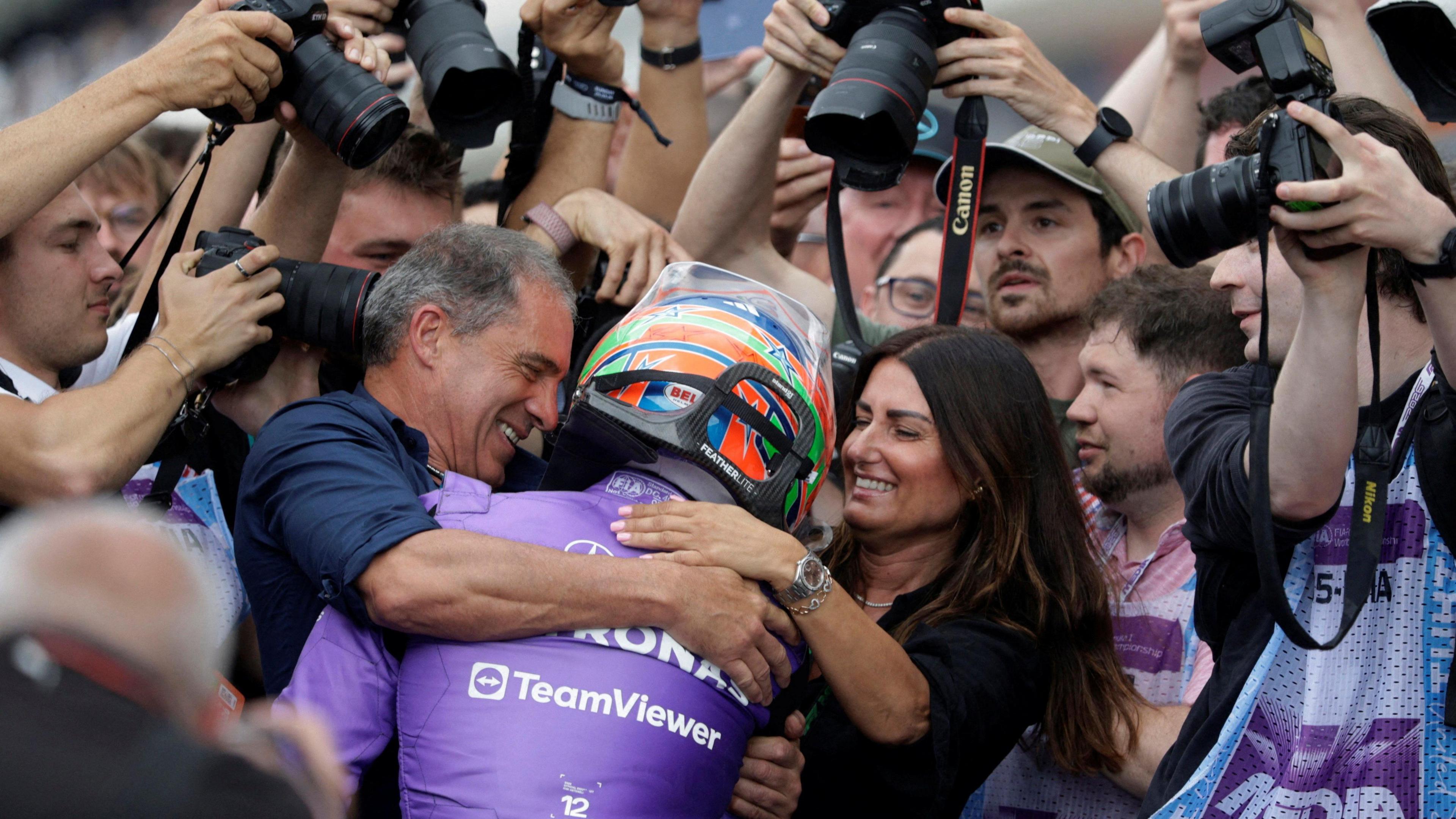
Kimi describes his father as his “rock.” Wolff praises the close Italian family environment—caring, loving, grounded. He sees in the driver a blend of gentleness, empathy, charisma and the precise intelligence required at the top of the sport. Emotional control has been a point of discussion within the team, especially after moments such as the Canadian sprint in which the two Mercedes cars ran close to the edge of conflict. Antonelli’s own wry explanation—“I’m young, I’m Italian, what do you expect?”—reveals both humour and self-awareness.
In the cockpit and in debriefs, Wolff and Shovlin observe something calmer: full concentration, rapid analysis of problems, and an even temperament that does not swing wildly with the quality of a session. This summer Antonelli met Roger Federer at Wimbledon. Their conversation touched on pressure, focus and emotional regulation. Federer’s advice—concentrate on one contest at a time, control only what can be controlled, and manage the emotions that produce mistakes—echoed principles Marco has long emphasised at home. In the Antonelli household the idea is simple: live each day as the best possible day and work steadily toward the larger project.
Overachievement Against the Original Timeline
In February 2024, shortly after the decision to promote Kimi, Wolff met Marco in Milan and outlined a realistic pathway: 2025 would be for experience; 2026 would be the year results began to arrive. Marco’s assessment now is concise: they have overachieved. The boy who once steered a Lamborghini from his father’s lap while the older man worked the pedals is leading the world championship in only his second season. The garage that formed the backdrop to his infancy has been replaced by the global stage of Formula 1, yet the central relationships—the guidance of his father, the measured faith of his team principal, the quiet accumulation of experience—remain the constants in a story that is still only beginning.