Lewis Hamilton Praises New Ferrari Engineer Carlo Santi as His ‘Italian Bono’
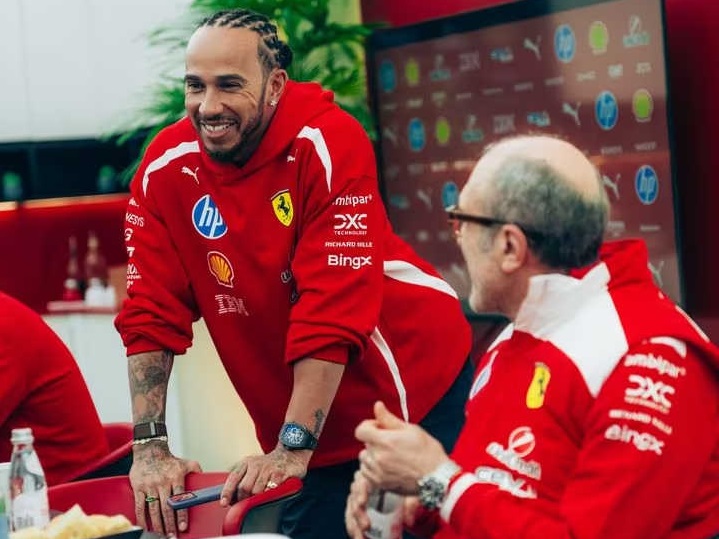
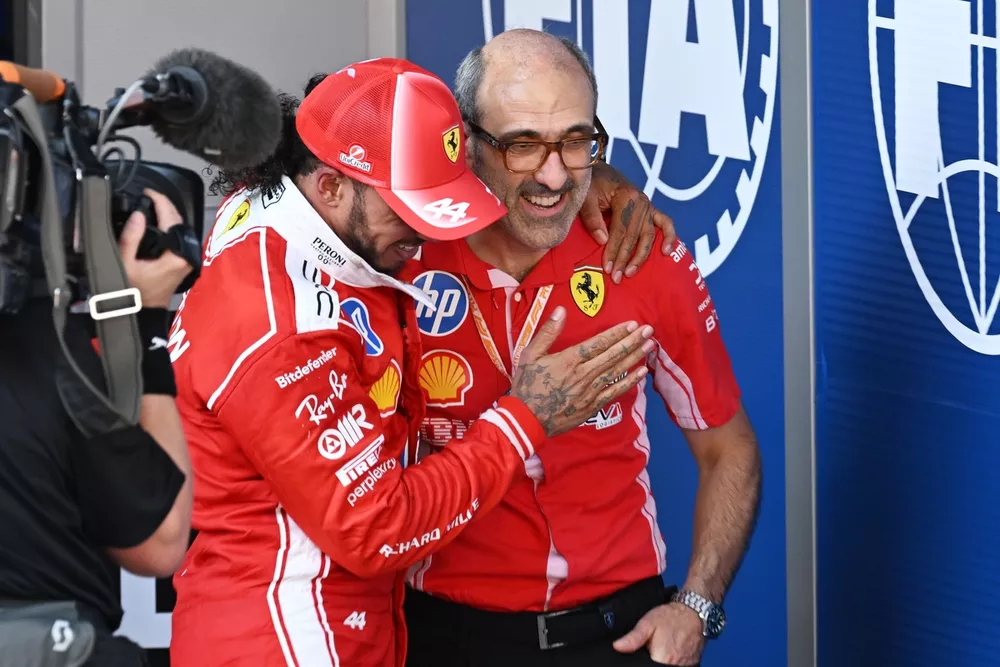
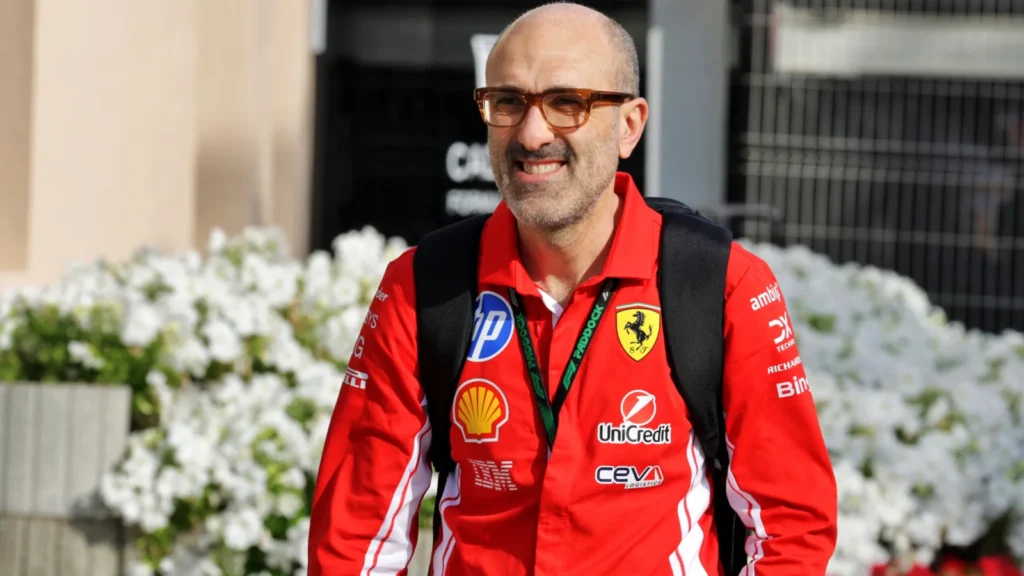
Lewis Hamilton believes he has found a working partnership at Ferrari that echoes the most successful collaboration of his career, describing race engineer Carlo Santi as his “Italian Bono.” The comparison with Peter Bonnington, the Mercedes engineer who guided Hamilton through 83 race wins and six world championships, underlines how highly the seven-time champion rates the new relationship and its contribution to a much stronger 2026 season.
Ferrari elected to change Hamilton’s race engineer before the start of the current campaign after a difficult debut year with the team in 2025 in which he failed to score a single podium. Riccardo Adami, who had previously worked with Sebastian Vettel and Carlos Sainz, was reassigned. Although Hamilton has been careful to speak warmly of Adami as a person and a professional, the pair never reproduced the instinctive understanding that defined the Hamilton–Bonnington era at Mercedes. In Santi, a veteran engineer who once guided Kimi Räikkönen to victory at the 2018 United States Grand Prix in Austin, Ferrari appear to have found a more natural fit.
Building Understanding Corner by Corner
Speaking to the media, Hamilton went into unusual detail about what he requires from a race engineer and why the process can take time. “Last year, Adami and I had a really good relationship, and he was a lovely guy,” he said. “We worked actually relatively well together. I think catering to a driver’s needs, it takes time to learn when you’re giving an engineer feedback: their understanding of through-corner balance, their understanding of all the elements that contribute to the struggles; you try to describe what it is, the problem you have, corner by corner, entry, middle, and exit. You dissect it into five sections, if you want, and having that driver engineer, sometimes it is hit and miss.”
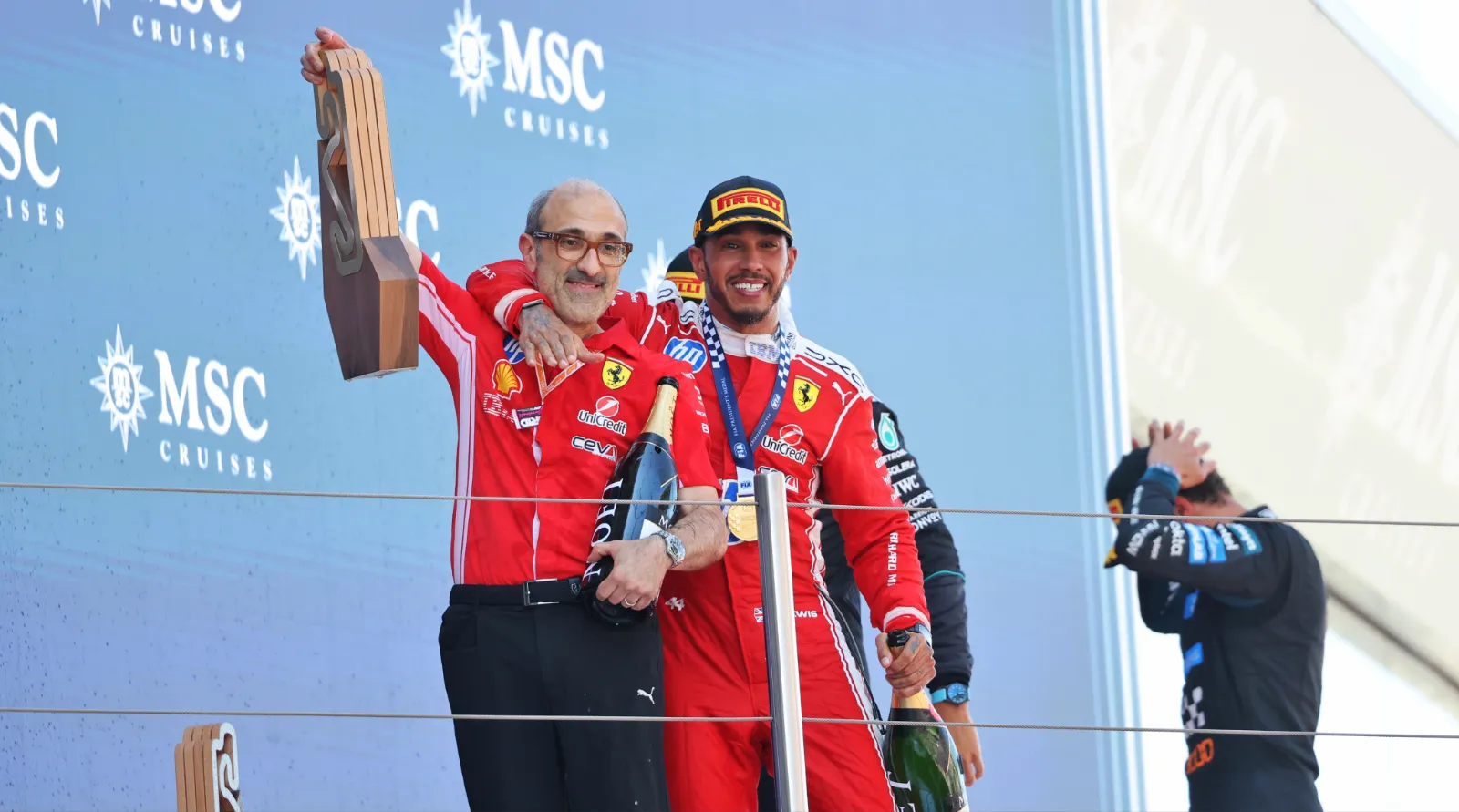
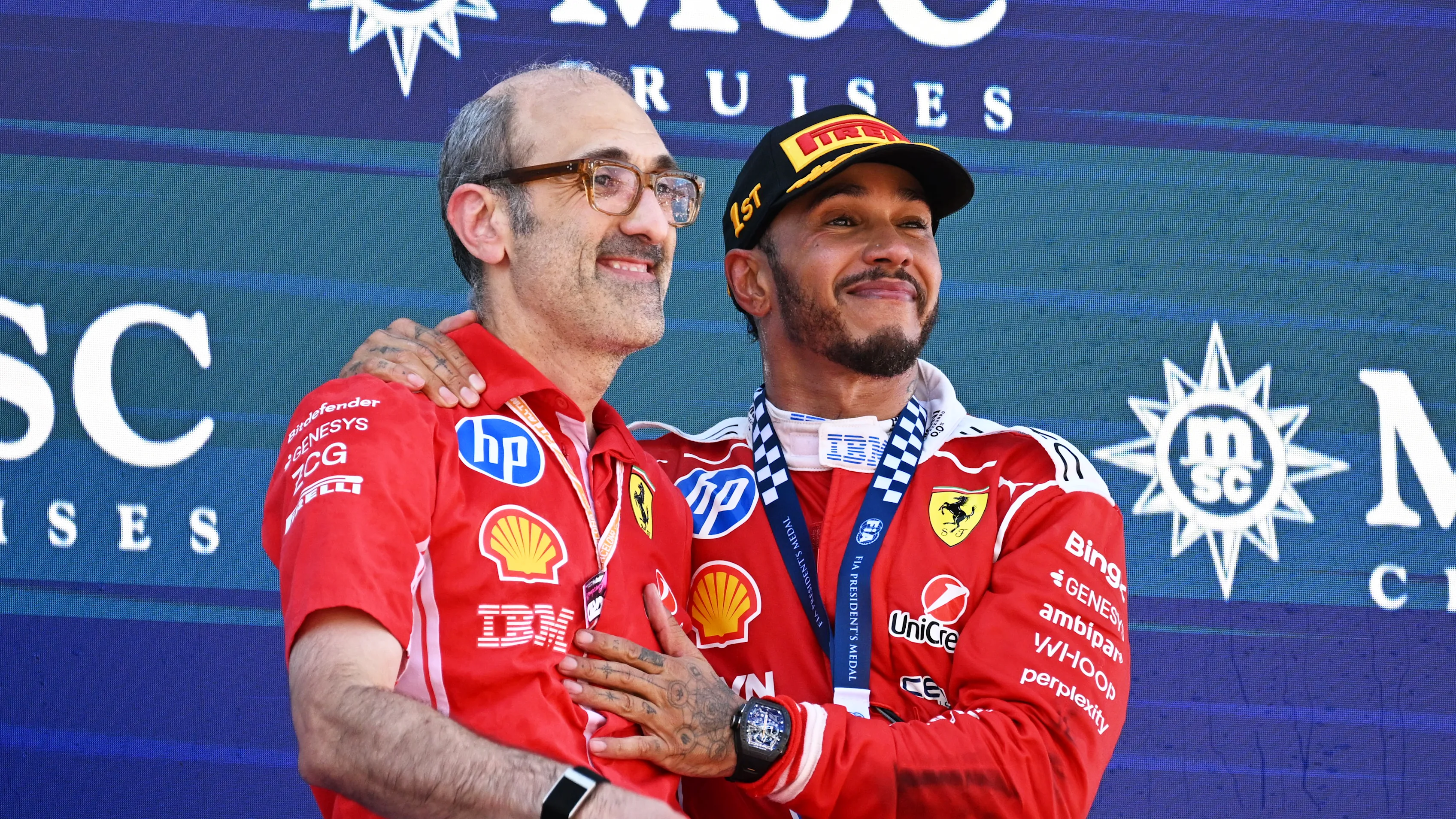
With Bonnington, Hamilton noted, the connection was immediate. He now senses a similar quality in Santi. “With Bono, it was hit off from the beginning. Mostly, he had a good working relationship with Michael [Schumacher], and I do feel like Carlos is like my Italian Bono. I told Bono that the other day, and [Santi] is a bit of an OG; he feels like he’s an older guy who’s been all around the block and is very calm. You can hear on the radio, but this is the detail that we’re able to go into together with our understanding of the engineering side.”
The reference to Santi as an “OG”—a veteran who has seen every variation of the sport—captures the tone Hamilton values: calm authority combined with the technical depth to translate a driver’s sensory feedback into concrete car adjustments. The ability to discuss balance problems with precision across every phase of a corner has, in Hamilton’s view, shortened the feedback loop and allowed the team to extract more from both the car and the driver.
Impact on the 2026 Campaign
The improved chemistry has coincided with a clear upturn in results. Hamilton secured a breakthrough victory in Barcelona and has established himself in second place in the drivers’ championship. While many factors influence performance—car development, tyre management, strategy and pure driving—the driver himself has singled out the engineering partnership as a decisive internal change. In a sport where marginal gains decide grid positions and race outcomes, the quality of the conversation between cockpit and pit wall can be as important as aerodynamic upgrades.
At Mercedes the Hamilton–Bonnington alliance became legendary for its brevity and clarity under pressure. Radio exchanges were economical yet precise; both men seemed to anticipate the other’s thinking. Hamilton’s public comparison suggests he recognises the same economy and mutual comprehension with Santi. The fact that he has already mentioned the parallel to Bonnington himself indicates how genuine the assessment is rather than a polite media line.
Adami’s Departure in Context
The decision to move Adami was not presented as a personal failure. Hamilton’s comments make clear that the relationship was cordial and professionally functional. The difficulty lay in the finer calibration required when a driver of Hamilton’s experience and sensitivity tries to convey exactly where a car is unstable or unresponsive. Some engineer–driver pairings click within a few races; others need longer or never quite achieve the same resolution. Ferrari’s willingness to make the change before a second full season demonstrates a pragmatic approach: protect the investment in Hamilton by giving him the technical partner best equipped to maximise his feedback.
Santi’s previous success with Räikkönen offers a useful precedent. The 2018 Austin victory required precise setup work and calm race management—qualities that translate directly to the demands Hamilton places on his engineer. Veterans who have worked across different generations of regulations and with contrasting driver personalities often develop a flexible, unruffled style. Hamilton’s description of Santi as calm and experienced aligns with that profile.
Radio Detail and Shared Language
One of the more revealing aspects of Hamilton’s remarks is the emphasis on shared technical language. When a driver and engineer can divide a corner into entry, mid-phase and exit, then further subdivide those segments, they reduce ambiguity. Problems become locatable and therefore solvable. Hamilton suggests that level of granular discussion is now routine with Santi, mirroring the working method he enjoyed with Bonnington. Listeners to team radio may notice only short exchanges; the real work lies in the hours of debrief and setup conversation that precede those moments.
The broader Ferrari organisation also benefits. Clear, accurate driver feedback improves the quality of data that reaches the wider engineering group, helping the team prioritise development direction. In a season in which Ferrari have returned to contention, that internal clarity is an unseen competitive advantage.
Looking Ahead
Hamilton’s second season at the Scuderia has already delivered the first win that eluded him in 2025 and a sustained championship position. He continues to stress the collective nature of the recovery, yet his willingness to highlight Santi by name and to reach for the Bono comparison shows how central the relationship has become to his day-to-day confidence in the car. For a driver approaching the later stages of a long career, the presence of an engineer who understands his feedback almost instinctively can extend competitive peak and reduce the cognitive load of translating feel into engineering action.
Whether the partnership ultimately yields further victories or a championship challenge will depend on many variables beyond any single role. What Hamilton has made clear is that the technical conversation inside the Ferrari garage now feels closer to the standard he once took for granted at Mercedes. In Carlo Santi he believes he has found an Italian counterpart to the engineer who helped define an era of his career—and the results on track suggest the comparison is more than sentimental.