“WE WERE BOTH PUSHING ON THE LIMIT” — Kimi Antonelli Admits Mercedes Battle With George Russell Went “On The Edge” as Explosive Title War Reaches Dangerous New Level
The tension inside Mercedes is no longer hiding beneath polite interviews, respectful soundbites, or carefully controlled team messaging. After an extraordinary and increasingly aggressive weekend at the Canadian Grand Prix, Kimi Antonelli has now openly admitted that his fierce Formula 1 battle with George Russell pushed dangerously close to the limit — and perhaps even beyond it at times.
For much of the season, Mercedes tried to present the rivalry between Antonelli and Russell as healthy internal competition. But after the chaos that unfolded in Montreal, that carefully balanced narrative is beginning to crack.
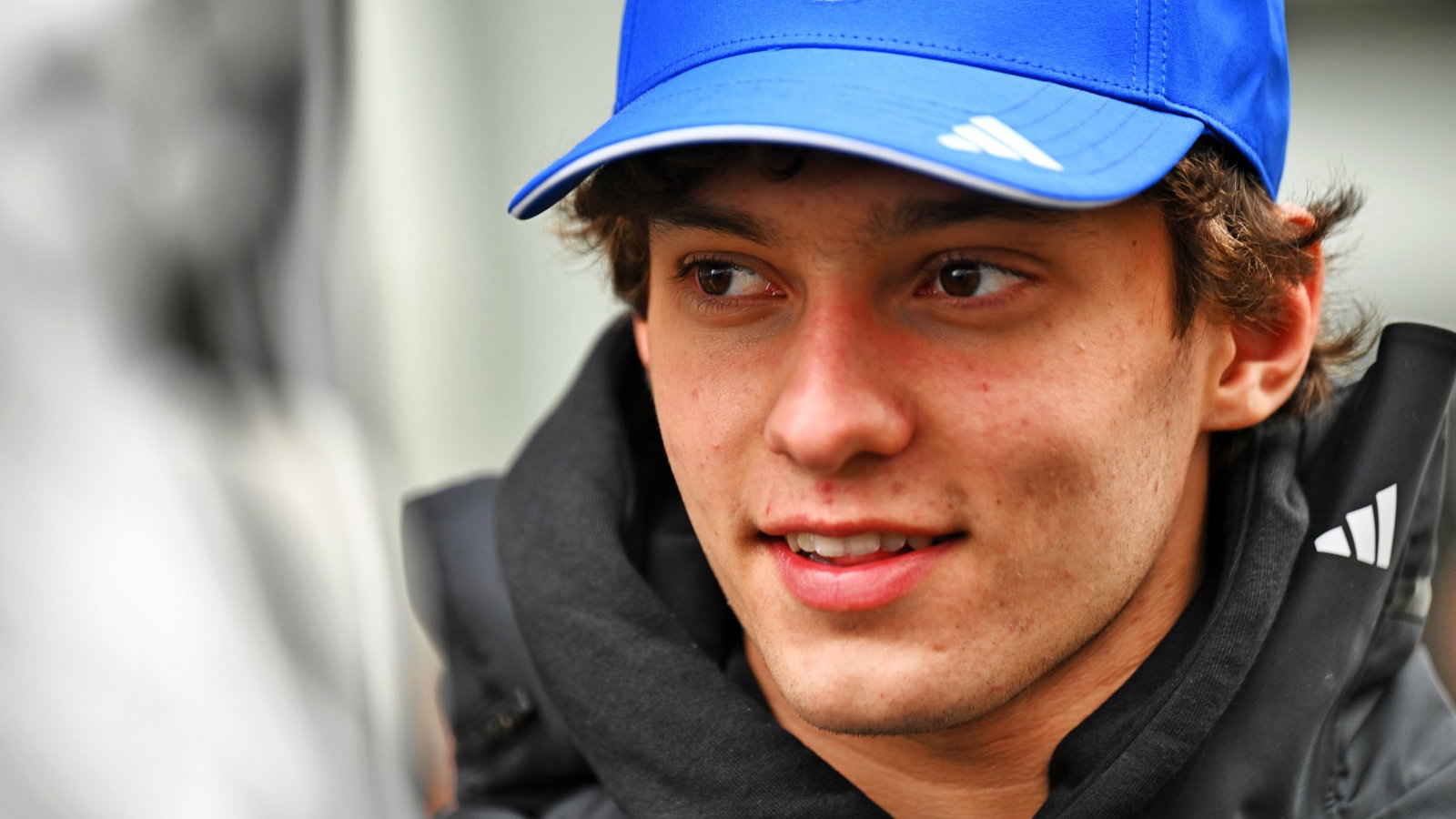
Because what fans witnessed in Canada was not simply two teammates racing hard.
It was two drivers fighting for authority, status, and the future direction of Mercedes itself.
Antonelli ultimately emerged victorious after Russell retired with a power unit issue midway through the Grand Prix, allowing the Italian sensation to extend his championship lead to 43 points. Yet despite celebrating his fourth consecutive Grand Prix win, Antonelli’s post-race comments revealed just how emotionally intense the battle had become behind the scenes.
“It was a tough fight,” Antonelli admitted afterward.
Then came the sentence that instantly caught the attention of the Formula One paddock.
“A couple of times was maybe a little bit on the edge.”
That understated description may actually have softened the reality of what unfolded between the two Mercedes drivers across one of the most explosive weekends of the season so far.
Mercedes’ Civil War Is Escalating Fast
From the very beginning of the Canadian Grand Prix weekend, it was obvious the atmosphere between Russell and Antonelli had changed.
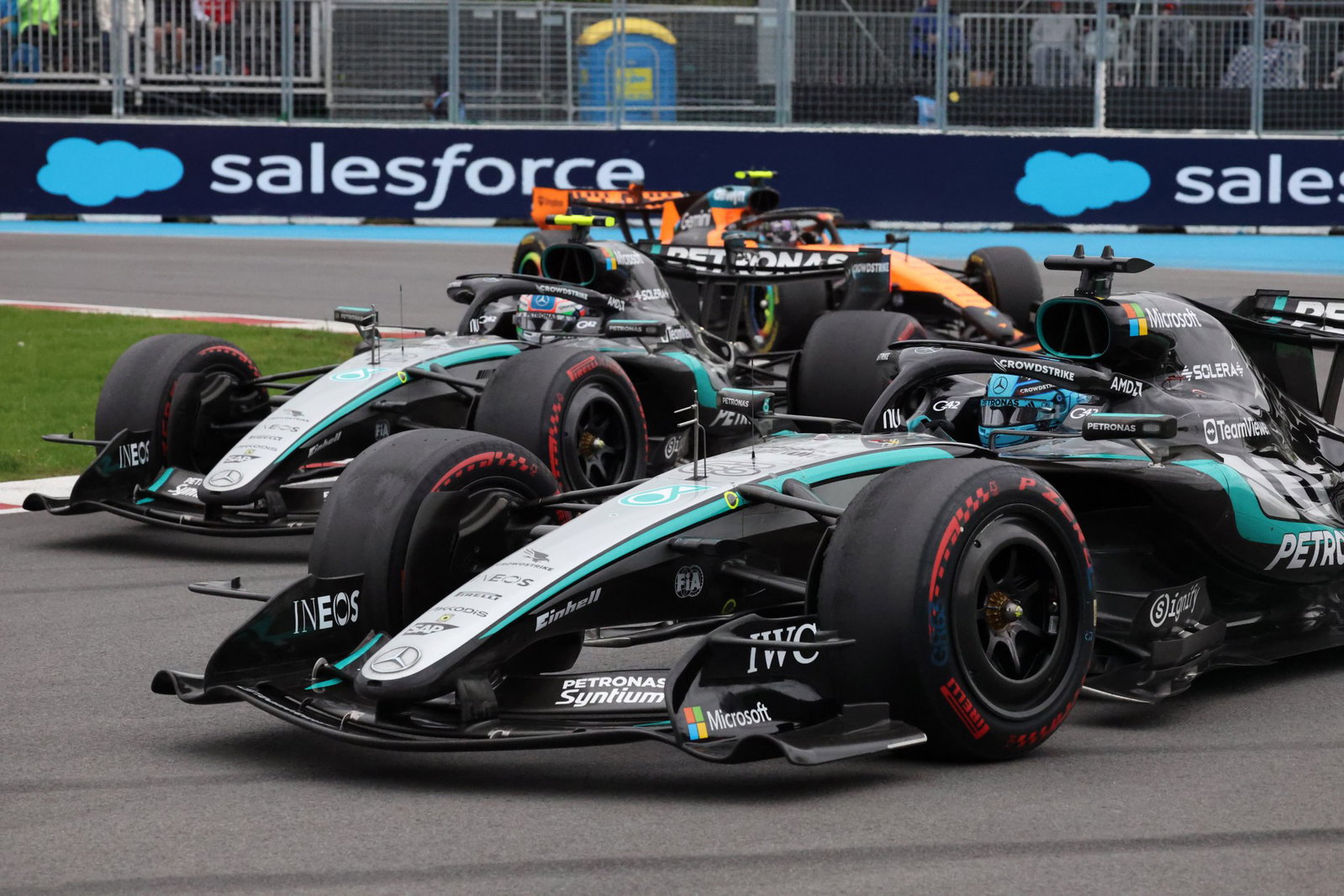
The Sprint race already exposed growing frustration between both drivers as they repeatedly squeezed each other aggressively into corners with almost no margin for error. Antonelli felt Russell had forced him off the circuit unfairly during one particularly controversial moment and even demanded a penalty for his teammate over the radio.
That complaint reportedly irritated Mercedes boss Toto Wolff enough to personally intervene during the race.
“It’s the fourth time to talk about this,” Wolff warned Antonelli sharply over team radio. “We shall talk about this internally and not on team radio.”
At the time, many observers interpreted the exchange as simple frustration in the heat of competition.
But by Sunday’s Grand Prix, it became clear something far more serious was developing.
The pair resumed their battle almost immediately once the main race began, repeatedly attacking each other with astonishing aggression despite the obvious risks involved. Several moments came frighteningly close to ending in disaster as neither driver showed any willingness to yield position voluntarily.
And crucially, Mercedes allowed it to happen.
“No Space Given” Became More Than A Racing Philosophy
One of the most fascinating aspects of the Montreal showdown was the apparent internal permission given to both drivers to race without compromise.
The “no space given” mentality effectively became the defining theme of the weekend.
Rather than imposing immediate team orders or calming the situation early, Mercedes leadership appeared willing to let both drivers settle the fight naturally on track — at least until the danger level began approaching something unmanageable.
Antonelli embraced that freedom completely.
“We were both pushing and we both wanted to win,” he explained afterward.
“And it was, I think, for everyone watching, pretty entertaining.”
From a fan perspective, he was absolutely right.
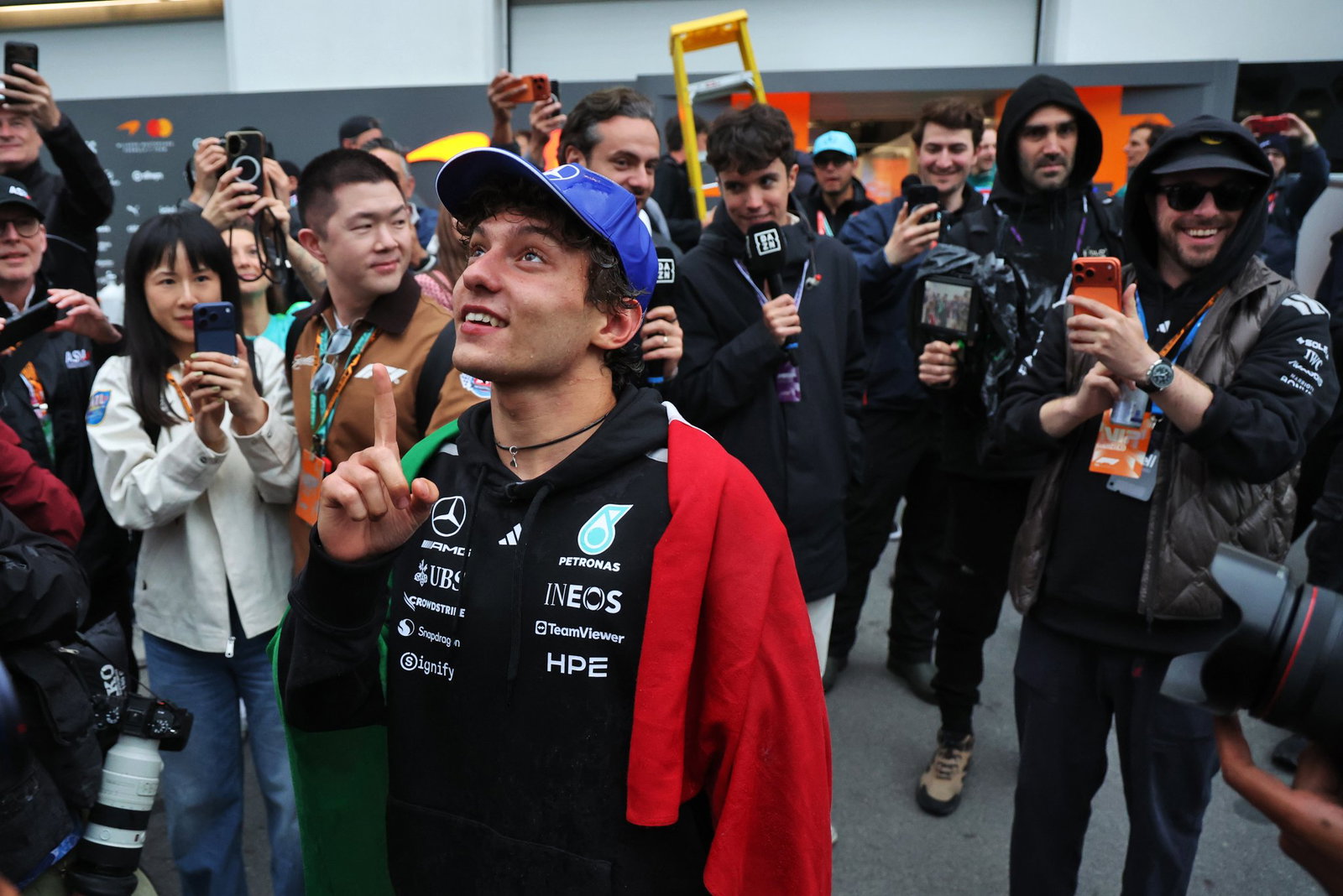
The duel between Antonelli and Russell instantly became one of the defining battles of the 2026 Formula One season. Lap after lap, the two Mercedes cars ran separated by barely anything, trading momentum through different sectors while simultaneously balancing tire degradation, battery management, and psychological pressure.
But while fans saw entertainment, Mercedes management saw risk.
Because every aggressive overtake attempt carried the possibility of catastrophe.
Antonelli Is No Longer Acting Like The Junior Driver
Perhaps the most important takeaway from Montreal is how completely Antonelli now appears comfortable challenging Russell directly.
Earlier in the season, there were still moments where the Italian teenager seemed cautious about fully asserting himself against his more experienced teammate. That hesitation has completely disappeared.
In Canada, Antonelli raced like a driver who genuinely believes Mercedes already belongs to him.
There was no visible fear. No deference. No sign that he viewed Russell as the established leader inside the garage.
Instead, Antonelli repeatedly attacked Russell with the confidence of a championship frontrunner — and perhaps more significantly, with the pace to justify it.
By the latter stages of their battle, Antonelli even believed he held a small performance advantage.
.webp)
“I think at the end of the stint I had a little bit the upper hand,” he explained afterward.
“I had a little bit more pace.”
That comment alone will likely fuel enormous discussion inside Formula One circles because it directly challenges one of the assumptions that existed when the season began: that Russell would naturally remain Mercedes’ lead driver while Antonelli developed gradually around him.
Montreal suggested something very different.
The student may already be surpassing the teacher.
Russell’s Retirement Changed The Ending — Not The Story
Ironically, the battle that felt destined to produce a dramatic final-lap showdown ended abruptly due to Russell’s mechanical failure.
After several near misses and relentless wheel-to-wheel exchanges, Russell suddenly slowed with a power unit problem before retiring from the race entirely.
For Antonelli, the victory immediately felt emotionally complicated.
“Of course, it was not really the way I wanted to win,” he admitted afterward.
The Italian insisted he would have preferred defeating Russell directly through racing rather than mechanical misfortune. And judging by the pace of both cars, the battle genuinely appeared capable of lasting all the way to the checkered flag.
“It would have been a very intense fight until the end,” Antonelli reflected.
That honesty revealed an interesting side of the young Mercedes driver.
Despite the growing rivalry, there still appears to be mutual respect underneath the aggression — at least for now.
But Formula One history repeatedly shows that teammate rivalries rarely remain emotionally manageable once a championship enters its decisive phase.
Especially when both drivers genuinely believe the team should belong to them.
Toto Wolff Now Faces His Biggest Mercedes Problem In Years
For Toto Wolff, the Canadian Grand Prix may have confirmed fears that have quietly been building inside Mercedes for months.
Because managing two drivers this competitive — while both remain genuine title contenders — is one of the most dangerous situations any Formula One team principal can face.
.webp)
The parallels with the Lewis Hamilton-Nico Rosberg era are becoming increasingly difficult to ignore.
Back then, Mercedes also initially encouraged free racing between teammates before eventually discovering the emotional and political consequences could become uncontrollable. Crashes, accusations, and psychological warfare gradually poisoned the atmosphere inside the garage.
Now, with Antonelli and Russell, there are signs history may be beginning to repeat itself.
Wolff already warned both drivers after Montreal that Mercedes would not hesitate to intervene if the team’s interests become threatened.
And after watching how close both cars came to collision multiple times in Canada, that warning suddenly feels very real.
Because while Mercedes may enjoy the spectacle publicly, the team understands one brutal truth privately:
If this rivalry escalates much further, eventually one of them will refuse to back down at exactly the wrong moment.
Formula One May Be Watching A New Superstar Take Control
Beyond the internal Mercedes politics, the Canadian Grand Prix also reinforced something increasingly difficult to deny:
Kimi Antonelli may already be transforming from future superstar into present-day championship favorite.
Winning four consecutive Grands Prix at his age is extraordinary enough. Doing it while directly outdueling an experienced teammate like George Russell elevates the achievement even further.

More importantly, Antonelli now carries himself differently.
There is growing authority in his interviews. More confidence in wheel-to-wheel combat. More willingness to emotionally embrace pressure rather than avoid it. Montreal did not look like a young driver surviving a title fight.
It looked like a young driver beginning to enjoy controlling one.
And that is precisely why the situation inside Mercedes suddenly feels so volatile.
Because George Russell is no longer simply defending race positions.
He is defending his place in the future of the team itself.
And after Canada, Kimi Antonelli looks increasingly determined to take it from him.