Mattia Binotto Compares Early Audi Project to Ferrari’s 1995 Starting Point
Mattia Binotto has drawn a striking parallel between his first impressions of Audi’s Formula 1 operation and the Ferrari he joined more than three decades ago, describing the Swiss facilities as reminiscent of the Scuderia’s more modest set-up in 1995. The Italian, now chief executive of the German manufacturer’s Formula 1 programme, believes the comparison illustrates both the scale of the task ahead and the potential for transformation by the end of the decade.
Audi’s stated ambition is to contend for championships by 2030. The company has already made clear that long-term performance takes priority over short-term gains, most notably by redirecting resources toward the 2027 power unit and stepping back from certain development programmes on the current car. Binotto’s arrival was widely viewed as a signal of intent: a figure with 27 years of experience inside Ferrari, including a period as team principal, was brought in to oversee the transition from the former Sauber organisation into a fully competitive manufacturer entry.
First Impressions at Hinwil
In an interview with the Dutch edition of RacingNews365, Binotto recalled his initial reaction upon arriving at the team, then still operating as Kick Sauber. “When I started here, it reminded me of what I saw at Ferrari in 1995,” he said. “For me, the comparison with Ferrari in 1995 is therefore very clear. It was an old and small factory, with few people and few processes. It is like comparing the Ferrari of 1995 with the Ferrari of today.”
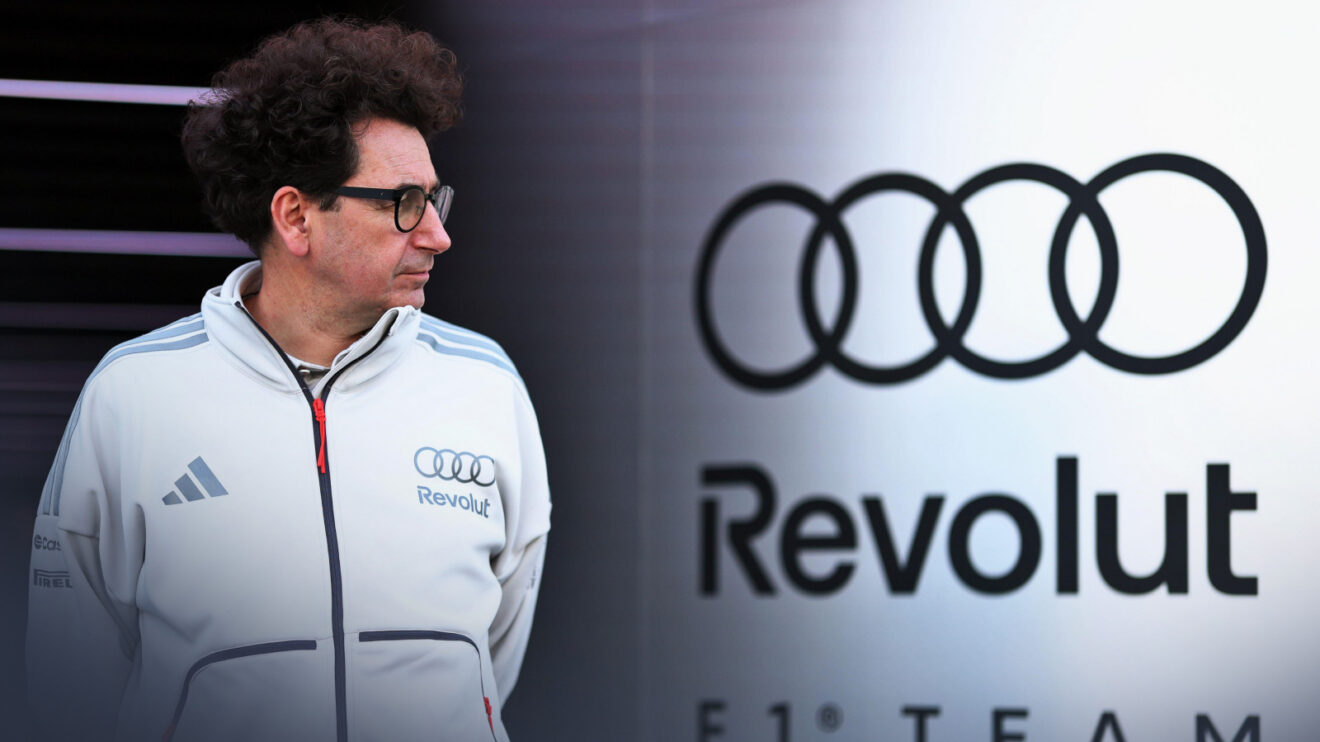
The analogy is deliberate. Ferrari in the mid-1990s was a long way from the polished, resource-rich organisation it later became. Binotto’s point is that the gap between Audi’s present infrastructure and the level required to fight at the front is significant, yet not dissimilar to the journey Ferrari itself once undertook. He expressed confidence that the necessary foundations are already being laid.
“I think we are heading in the right direction,” he continued. “The team is getting better and making progress, and a lot is also happening in the factory that is not visible to the media or the fans. But a tremendous amount is happening. We are really working on laying the foundation for the future. So yes, I can confirm that it is certainly feasible to compete for the world championship in 2030. 2030 is a concrete goal.”
Building for the Next Regulatory Cycle
The decision to prioritise the 2027 engine regulations underlines the timescale on which Audi is operating. Rather than chasing incremental gains with the existing package, the organisation has accepted a period of more limited on-track progress in order to concentrate engineering effort on the power unit that will define the next era of the sport. Binotto’s experience at Ferrari, where long-term technical programmes frequently spanned several seasons, is regarded as relevant to managing that kind of multi-year project.
Much of the work he describes remains behind closed doors. Factory processes, recruitment, simulation capability and organisational structure rarely generate headlines, yet they determine whether a team can convert investment into consistent performance. Binotto’s insistence that “a tremendous amount is happening” is an attempt to reassure observers that the absence of dramatic short-term results does not indicate stagnation.
The Driver Factor
Technical progress alone will not be enough. Binotto and Audi recognise that championship contention also depends on attracting drivers of sufficient quality. The team has taken encouragement from public links with established names, viewing them as evidence that elite performers are at least prepared to consider the project.
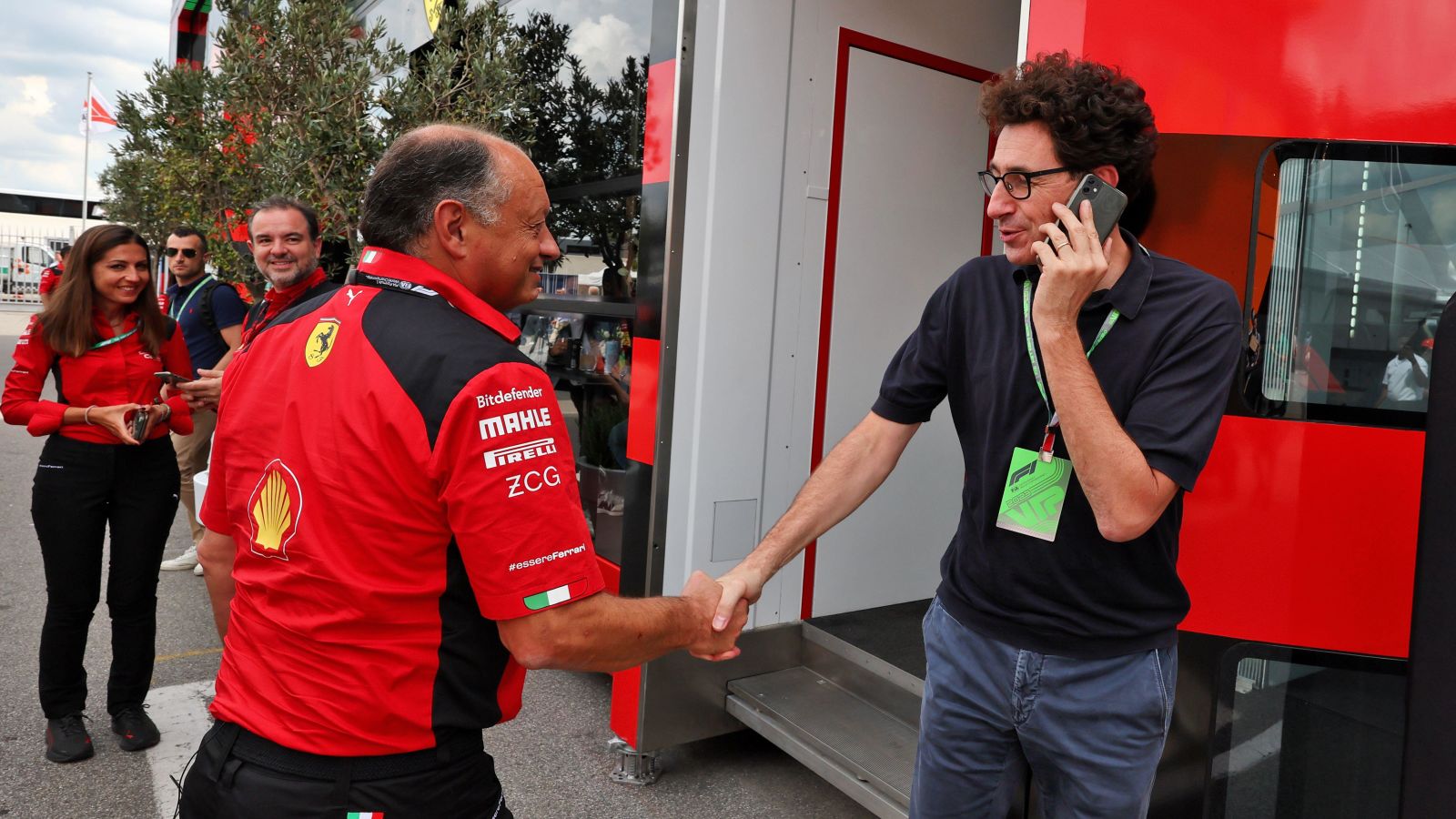
Oscar Piastri and Carlos Sainz have both been mentioned in connection with possible future moves. More recently, reports have suggested that George Russell could be open to discussions about a switch in 2028. Audi has interpreted this interest as a positive signal. At the same time, the organisation acknowledges that speculation is not the same as a signed contract. Until a driver of proven championship calibre actually commits, the links remain only that—indications of potential rather than secured assets.
The challenge is circular. Top drivers prefer teams already capable of fighting at the front, yet building that capability is easier when high-level talent is already present. Binotto’s task is to make the Audi project sufficiently credible that drivers are willing to join before the results fully materialise. The 2030 target provides a clear horizon, but the intervening seasons will test whether the combination of technical investment and organisational change can generate the momentum required to close the gap.
A Measured Timescale
Binotto’s comparison with Ferrari in 1995 serves two purposes. It honestly acknowledges the current limitations of the Hinwil operation while simultaneously framing those limitations as temporary. Ferrari’s subsequent transformation demonstrated that sustained investment, clearer processes and the right leadership can elevate a midfield team into a consistent contender. Audi is attempting a similar journey under a different corporate structure and in a more tightly regulated technical environment.

The Italian has been careful not to promise immediate breakthroughs. His public comments emphasise direction and foundational work rather than imminent podiums. That measured tone is consistent with a programme that has already chosen to sacrifice some present performance for future power-unit competitiveness. Whether the strategy succeeds will depend on execution inside the factory, the quality of the 2027 power unit, and the ability to persuade leading drivers that the project is worth joining.
For now, Binotto’s message is one of cautious conviction. The facilities he encountered on his first day recalled a Ferrari of three decades earlier—smaller, less sophisticated and still searching for consistent success. He believes the same trajectory is available to Audi, provided the unseen work continues and the right people, both in the factory and in the cockpit, are brought into the programme. The 2030 championship target remains, in his words, a concrete goal rather than a vague aspiration. The coming seasons will determine whether the comparison with Ferrari’s past ultimately holds.