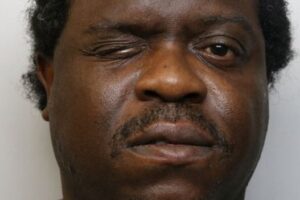
BRYAN KOHBERGER’S RECENT REQUEST LEAVES MANY IN DISBELIEF
Bryan Kohberger has made the legal move few expected after his dramatic 2025 guilty plea.
The 31-year-old, now serving four consecutive life sentences without parole for murdering Kaylee Goncalves, Madison Mogen, Xana Kernodle and Ethan Chapin, has filed a petition seeking to withdraw his guilty plea and potentially return to court for a trial.
The handwritten petition was filed from Idaho Maximum Security Penitentiary in late July.
And its contents immediately created another storm around a case that has already consumed the victims’ families for years.
Kohberger now alleges that his former defense attorneys improperly pressured him into accepting the plea agreement that spared him from a possible death sentence. He claims his plea was influenced by coercion, misinformation and promises concerning what his life in prison would be like.
That is an extraordinary reversal.
On July 2, 2025, Kohberger appeared before District Judge Steven Hippler and pleaded guilty to four counts of first-degree murder and one count of burglary.

The plea brought an abrupt end to preparations for what was expected to become one of America’s most closely watched murder trials.
In exchange, prosecutors removed the death penalty from consideration.
Kohberger was subsequently sentenced to four consecutive life terms without parole, plus another 10 years for burglary.
But now he wants to undo the agreement that saved him from facing a capital trial.
And there is one enormous obstacle standing in his way:
His own words.
During the 2025 plea proceedings, Kohberger told the judge that he was pleading guilty freely and voluntarily.
He confirmed that he had not been forced into the agreement.
When Judge Hippler directly asked whether he was pleading guilty because he was guilty, Kohberger answered yes.
The written plea paperwork also specifically asked whether any additional promises had influenced his decision. Kohberger indicated that there were none.
His new version of events is dramatically different.
Kohberger alleges that his lawyers frightened him with descriptions of what life on death row could be like while giving him misleading expectations about conditions he could receive if he accepted life imprisonment instead.
He also claims that potentially helpful evidence was not properly disclosed or reviewed during plea discussions.
Among the details he has raised is what he characterized as an unknown hair associated with Ethan Chapin.
But that allegation comes with an important complication.
Reporting on the evidence indicates that a defense DNA expert tested the hair and determined that it matched Chapin rather than Kohberger.
That means Kohberger’s petition is not automatically the bombshell that some online speculation has portrayed it as.
Filing a request is one thing.
Convincing a court to erase an already-entered guilty plea after sentencing is something very different.
Under Idaho law, Kohberger faces a demanding legal standard. To withdraw his guilty plea at this stage, he must demonstrate a “manifest injustice”—potentially by establishing that the plea was involuntary or that serious constitutional violations occurred.
And prosecutors can point directly to the safeguards used when his plea was originally accepted.
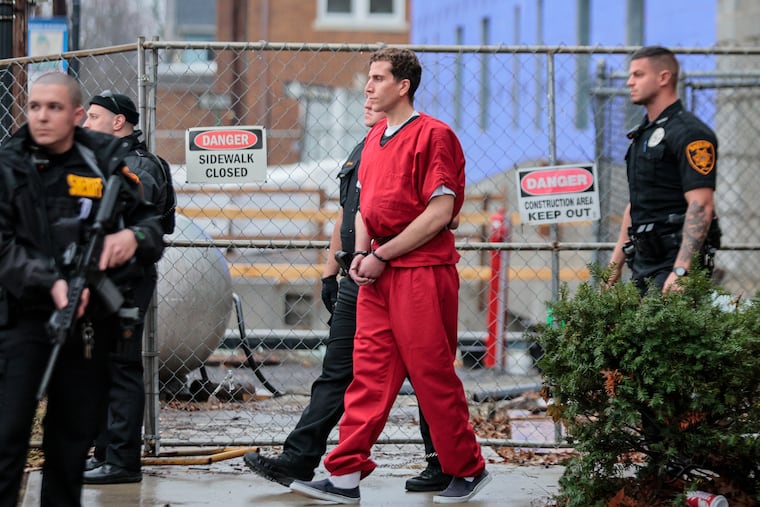
Kohberger signed paperwork.
He answered questions from the judge.
He acknowledged understanding the consequences.
He said he had not been coerced.
And he explicitly admitted guilt.
Those statements could make his new argument extraordinarily difficult.
Yet even the possibility of reopening proceedings has brought painful emotions back to the surface for the families of the four students.
Kaylee Goncalves’ family responded sharply, making clear that they were prepared to confront Kohberger again if necessary.
Her mother, Kristi Goncalves, has spoken about the emotional toll of the renewed legal fight and the difficulty of dealing once again with the man convicted of killing her daughter.
That reaction reveals why Kohberger’s latest filing is about far more than legal procedure.
For the families, the guilty plea was supposed to provide finality.
It prevented a lengthy murder trial.
It guaranteed that Kohberger would spend the rest of his life in prison.
And it ended the uncertainty surrounding whether a jury would convict him and whether prosecutors would ultimately secure a death sentence.
Now, Kohberger is attempting to reopen the door.
If he somehow succeeds, the consequences could be enormous.
His convictions based on the guilty pleas could potentially be undone and the case could move toward trial.
But that outcome is far from guaranteed.
Legal analysts have described the challenge he faces as substantial precisely because withdrawing a plea after sentencing requires much more than simply declaring that one regrets the original decision.
Kohberger must persuade a court that something was fundamentally wrong with the process that produced his plea.
His allegations against his former attorneys therefore sit at the heart of the fight.
The defense team had spent years challenging important parts of the prosecution’s case and attempting to prevent Kohberger from facing capital punishment.
When those efforts failed and trial approached, the plea agreement accomplished one crucial objective for the defense:
It ensured he would not be executed.
Kohberger now portrays that agreement very differently.
His filing claims he was persuaded to confess falsely despite maintaining actual innocence in discussions with counsel.
If that sounds impossible to reconcile with his courtroom statements, that is exactly the issue a judge may ultimately have to confront.
Was Kohberger’s sworn admission of guilt truthful?
Or can he establish that the circumstances surrounding that admission were so flawed that the plea should no longer stand?
For the victims’ families, even having to revisit those questions can feel like another ordeal.
The murders of Goncalves, Mogen, Kernodle and Chapin in November 2022 devastated Moscow, Idaho, and generated enormous national attention.
The investigation lasted weeks before Kohberger was arrested in Pennsylvania.
Years of pretrial litigation followed.
Then, just before the anticipated trial, came the guilty plea.
For many, that appeared to be the final major turning point.
It wasn’t.
Kohberger’s latest maneuver has ensured that the legal story continues.
But claims that his petition already exposes a hidden truth or proves he was wrongfully convicted are unsupported.
At this stage, these are Kohberger’s allegations, and they directly conflict with what he previously told the court.
That distinction is crucial.
The petition does not erase his convictions.
It does not automatically grant him a trial.

And it certainly does not establish innocence.
What it does is force the legal system to confront an extraordinary request from a prisoner who once stood before a judge, accepted responsibility and obtained the enormous benefit of removing the death penalty from the table.
Now he wants that decision undone.
Whether a court will allow it remains uncertain.
But for four families who believed the courtroom chapter had finally closed, Kohberger’s request has already achieved one undeniable result:
A case they desperately wanted to leave behind has been dragged back into the spotlight—and the man who once admitted guilt is once again preparing to fight.