DUANE ‘KEFFE D’ DAVIS AND HIS SHOCKING STATEMENT BEFORE THE TUPAC SHAKUR TRIAL
HE JUST SPOKE FROM PRISON… AND WHAT HE SAID HAS THROWN THE TUPAC SHAKUR CASE BACK INTO THE SPOTLIGHT!
Nearly three decades after Tupac Shakur was gunned down on the Las Vegas Strip, a case that once seemed destined to remain permanently unresolved is again producing extraordinary claims.
And this time, they are coming from the man prosecutors accuse of playing a central role in the killing.
Duane “Keffe D” Davis has spoken from jail while awaiting trial, and his message is unmistakable:
He says he did not murder Tupac.
Even more explosively, Davis has claimed that he knows who was responsible.
It is the kind of declaration almost guaranteed to reignite one of the most famous murder mysteries in music history.
But there is an enormous problem.
Davis has spent years making public statements about the night Tupac was shot—statements prosecutors believe help connect him to the crime.
Now, with his own freedom on the line, he is challenging the interpretation of those words.
The question is whether a jury will believe him.
“I DIDN’T DO IT”
Davis has pleaded not guilty to the murder charge stemming from Tupac’s September 1996 killing.
From jail, he has maintained his innocence and argued that the case against him is fundamentally flawed.
He has also insisted that authorities are pursuing the wrong man.
That alone would be significant.
But Davis went further.
He suggested that he knows who killed Tupac.
Such a claim immediately creates another mystery.
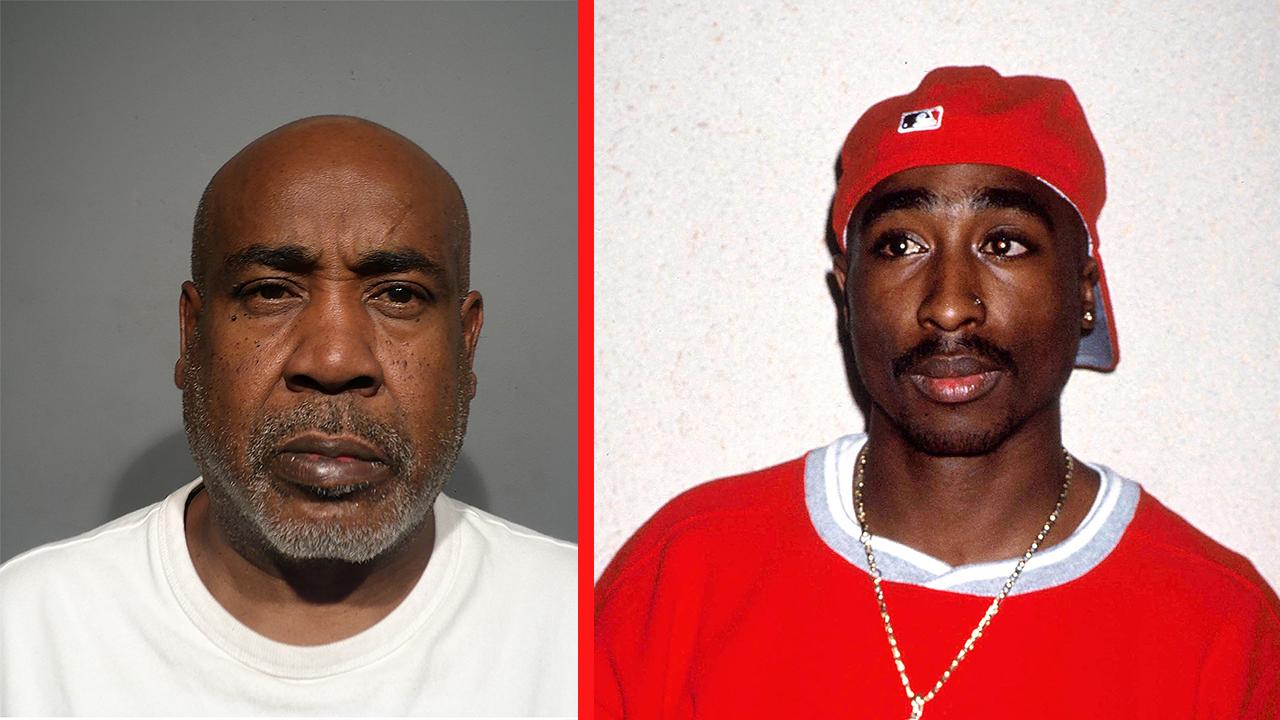
If Davis possesses information capable of identifying someone else as responsible, what exactly does he know?
How does he know it?
And why should investigators or jurors trust the account he gives now when his previous public statements are expected to become such an important part of the prosecution’s case?
That contradiction sits at the heart of everything.
THE NIGHT THAT CHANGED HIP-HOP
On September 7, 1996, Tupac attended a Mike Tyson fight at the MGM Grand in Las Vegas.
Afterward, Tupac and members of his entourage became involved in a confrontation inside the casino with Orlando Anderson, Davis’s nephew and a reputed South Side Compton Crips member.
Tupac was captured on surveillance footage participating in the assault on Anderson.
Hours later, Tupac was riding in a BMW driven by Death Row Records boss Marion “Suge” Knight.
Near the intersection of Flamingo Road and Koval Lane, a white Cadillac pulled alongside them.
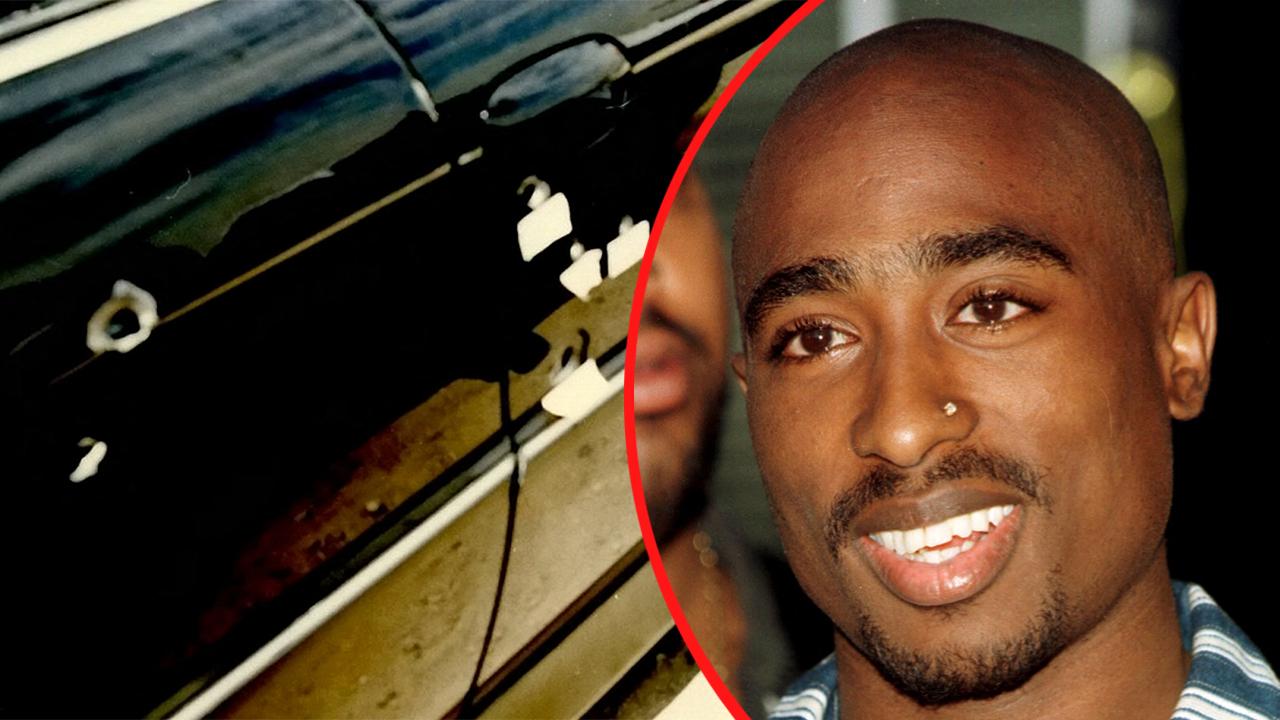
Gunfire erupted.
Tupac was struck multiple times.
He died six days later, on September 13, at just 25 years old.
For decades, theories multiplied.
Witnesses died.
Stories changed.
Books were published.
Documentaries dissected almost every minute surrounding the shooting.
Yet nobody was charged with Tupac’s murder.
Until Davis.
WHY PROSECUTORS SAY KEFFE D MATTERS
Prosecutors do not necessarily have to prove that Davis personally pulled the trigger.
Their theory is broader.
They allege that Davis participated in the plan that led to Tupac’s killing and provided the firearm used in the attack.
Davis has previously acknowledged being inside the Cadillac connected to the shooting.
He also discussed the killing publicly in interviews and in his memoir, providing details about events surrounding Tupac’s death.
Those statements now create an extraordinary legal problem for him.
Words that may once have generated publicity, notoriety or attention can look very different when played before a jury in a murder trial.
Prosecutors can argue that Davis repeatedly placed himself inside the story.
The defense can counter that those statements were exaggerated, unreliable, protected by earlier agreements with authorities or otherwise insufficient to prove murder beyond a reasonable doubt.
That battle could become one of the defining features of the trial.
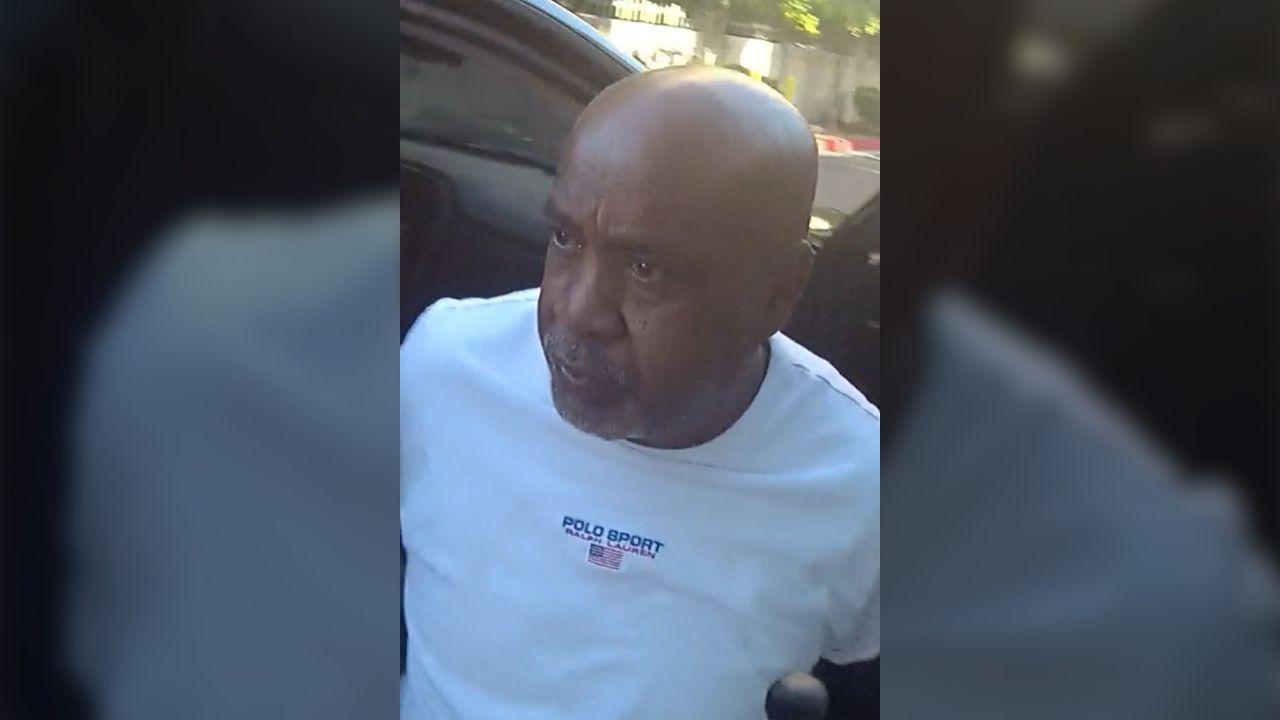
BUT NOW HE SAYS HE KNOWS WHO DID IT
Davis’s latest position creates perhaps the most tantalizing question of all.
If he was not responsible, who was?
For years, Orlando Anderson was publicly suspected by some investigators and commentators of being the shooter.
Anderson denied killing Tupac and was never charged. He died in an unrelated shooting in 1998.
Davis’s current assertions therefore cannot simply be treated as proof that another identified person committed the murder.
A defendant saying he knows the real killer does not make the statement true.
The claim must be tested against evidence.
And that is exactly where the courtroom becomes crucial.
THE DEFENSE HAS ANOTHER MAJOR ARGUMENT
Davis’s lawyers have also challenged whether prosecutors should be allowed to use some of his previous statements against him.
The dispute traces back to interviews Davis gave authorities years before his arrest.
The defense has argued that Davis spoke under agreements that protected what he told investigators from later being used to prosecute him.
Prosecutors dispute the idea that those protections gave Davis unlimited immunity—particularly regarding statements he subsequently made publicly.
That distinction could prove enormously important.
There is a major difference between information provided during a protected law-enforcement interview and statements later repeated voluntarily in books, documentaries or media appearances.
The judge’s decisions about what evidence jurors can hear could therefore reshape the case before testimony even begins.
THIRTY YEARS OF TALKING MAY COME BACK TO HAUNT HIM
There is an extraordinary irony surrounding Davis.
For decades, Tupac’s murder generated endless speculation partly because so few people with direct knowledge were willing to speak openly.
Davis became an exception.
He talked.
He gave interviews.
He published an account.
He discussed who was in the Cadillac.
He described circumstances surrounding the shooting.
Now prosecutors are attempting to use that history to help prove their case.
And Davis is effectively asking the legal system to distinguish between storytelling and criminal evidence.
Were his previous statements truthful admissions?
Were parts exaggerated?
Was he claiming greater importance than he actually possessed?
Were some statements legally protected?
Or are prosecutors assembling decades of Davis’s own words into a narrative that proves exactly what happened?
A jury may eventually have to decide.
TUPAC’S NAME IS BACK WHERE IT HAS BEEN FOR 30 YEARS
The renewed attention is bigger than Davis.
Tupac Shakur remains one of the most influential figures in hip-hop history.
His death became part of the mythology surrounding 1990s rap, the East Coast-West Coast rivalry and an era marked by extraordinary music alongside very real violence.
For generations of fans, the possibility of finally seeing someone stand trial over Tupac’s killing carries enormous significance.
But a trial is not the same thing as a conviction.
Davis is presumed innocent unless prosecutors prove his guilt beyond a reasonable doubt.
His history of discussing the shooting may appear damaging, but the defense will have opportunities to challenge how those statements were obtained, what they actually meant and whether they prove the specific charge against him.
And now Davis has introduced another explosive element:
He says authorities have the wrong man.
A DESPERATE DEFENSE—OR THE DETAIL THAT CHANGES EVERYTHING?
That is the mystery surrounding his latest statements.
Critics can easily dismiss them as the words of a defendant approaching trial and confronting the possibility of spending the rest of his life behind bars.
Supporters of his defense may ask whether investigators became too focused on the one surviving man who had publicly discussed the shooting.
Neither interpretation can simply be assumed.
Evidence will decide the case.
After nearly 30 years of rumors, accusations and unanswered questions, Tupac’s murder is moving toward the place where claims must finally be tested under courtroom rules.
And perhaps the most extraordinary development is that the man prosecutors have accused is now telling the world that the real answer lies somewhere else.
Duane “Keffe D” Davis has spent years talking about Tupac Shakur’s final night.
Now those words could help determine his own future.
But his newest claim may be the most consequential of them all:
“I know who did it.”
Is this simply the final defense of a man facing an enormous legal threat?
Or does Duane Davis know something about Tupac Shakur’s murder that has still not been fully revealed?
After nearly three decades, the courtroom may finally decide how much his words are worth.