*“I feel like I lost half my soul”: How Hayden Panettiere changed after the death of Jansen Panettiere — and what she revealed later was even more heartbreaking**
In February 2023, Hayden Panettiere lost her younger brother Jansen Panettiere to heart complications. He was 28. For Hayden, this was more than the ordinary pain of losing a family member. The way she later described the loss revealed the depth of their bond and the quiet ways grief reshaped her life.
“When I lost him, I felt like I lost half of my soul,” she said in her first major interview after his death. The phrase was not rhetorical flourish. It was the clearest language she could find for an absence that felt structural. Jansen was her only sibling. She had long felt a protective responsibility toward him, and his sudden death left a vacancy that ordinary words struggled to fill.

In the months that followed, Hayden withdrew. She spoke of pulling away from the outside world, of days when leaving the house felt impossible. Grief, she explained, was not only emotional. It was physical. Stress and elevated cortisol contributed to weight gain. She described a self-reinforcing cycle: she did not feel confident enough to put on clothes and step outside, yet she knew that staying inside would only deepen the isolation and the physical changes. “It became a destructive hamster wheel of ‘Do I feel good enough to go out?’” she told *People*. The actress who had once moved easily through public spaces now measured every departure against a new, heavier internal standard.
The change was noticeable to those who had followed her career. Hayden had always been open about difficult chapters—postpartum depression after the birth of her daughter Kaya in 2014, the subsequent battles with alcohol and opioids, the repeated decisions to seek treatment. Those earlier struggles had been framed, in her own telling, as battles she was actively fighting. The grief after Jansen’s death felt different. It was quieter, more total, less amenable to the language of recovery arcs. She did not present it as something she was “working through” in the same public way. Instead she described a fundamental alteration: half of herself was simply gone.
Two years later, on the anniversary of his death, she returned to the subject in an Instagram post that carried the same unguarded tone. “2 years ago today, I lost my little brother,” she wrote. “This amazing human being touched the lives of so many. Especially mine. The pain isn’t quantifiable. I pray you’re in a beautiful place J. That you’re at peace and that when all is said and done… I’ll see you again. Rest easy, brother. You are so missed and beyond loved.” The message was brief, but it confirmed that the intensity had not diminished with time. The pain remained beyond measurement.
What she revealed about the immediate aftermath was, in some ways, more heartbreaking than the anniversary reflection. In the first interviews she gave after Jansen died, Hayden described not only emotional devastation but a practical, day-to-day disintegration of ordinary functioning. She spoke of the responsibility she had always felt to protect her younger brother and of the disorienting freedom—and emptiness—that followed when that role ended. She talked about the physical markers of stress settling into her body. She admitted that confidence, once relatively reliable, had become conditional and fragile. These were not the polished statements of a celebrity managing a public narrative. They were the observations of someone still inside the experience, trying to name what had changed.
The contrast with her earlier public image was stark. For years Hayden had been associated with resilience: the young actress who spoke openly about postpartum depression so other mothers would feel less alone; the woman who detailed addiction and recovery in interviews and later in her memoir, *This Is Me: A Reckoning*; the performer who returned to work after treatment and framed second chances as hard-won but real. After February 2023, that narrative of forward motion paused. In its place was a quieter account of subtraction—of a self that had been halved.
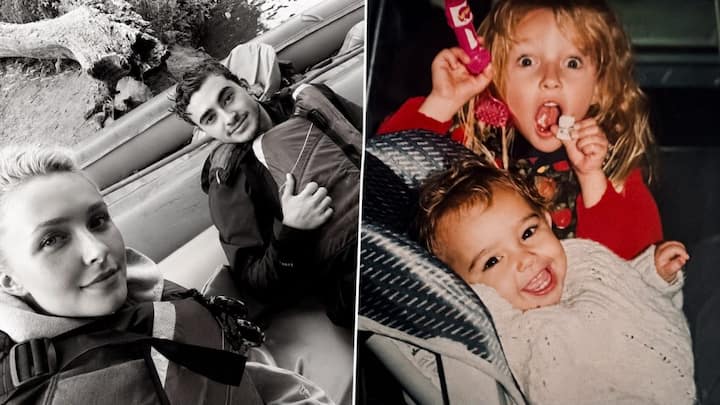
She never claimed the grief had been resolved. Even in the anniversary post, the dominant note was absence and the hope of eventual reunion rather than closure. The physical and social withdrawal she described in the first year was not presented as a temporary phase that had cleanly ended. It was part of the ongoing reality of living without the person who had felt like half of her.
In the broader arc of Hayden Panettiere’s public life, Jansen’s death stands as a distinct chapter. Earlier struggles with mental health and substance use had been framed, by her own choice, as experiences that could be discussed, treated, and partially metabolized into strength or cautionary insight. The loss of her brother resisted that framing. It was simply loss—profound, physical, identity-altering. When she said she felt she had lost half her soul, she was not reaching for metaphor. She was reporting the most accurate description she had found for what remained.