MAGDALENA JABLONSKA — THE VETERAN’S WIFE KILLED ON THE FOX RIVER AS RICHARD M. STEVENSON FACES SERIOUS CHARGES
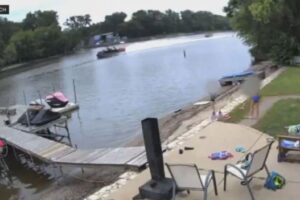
The Fox River is normally associated with boats, summer gatherings and families enjoying the water.
But on July 25, a stretch near McHenry, Illinois, became the scene of a devastating collision that left one family shattered and prosecutors asking how such a tragedy could have happened.
Magdalena Jablonska was aboard a Crownline boat with her husband when prosecutors say a 30-foot pontoon operated by 45-year-old Richard M. Stevenson approached at extraordinary speed.
According to allegations presented in court, Stevenson was travelling at approximately 80 mph before entering a no-wake area and striking the Crownline from behind.
The impact was catastrophic.
Jablonska suffered fatal injuries and died at the scene.
Her husband survived and was transported to hospital.
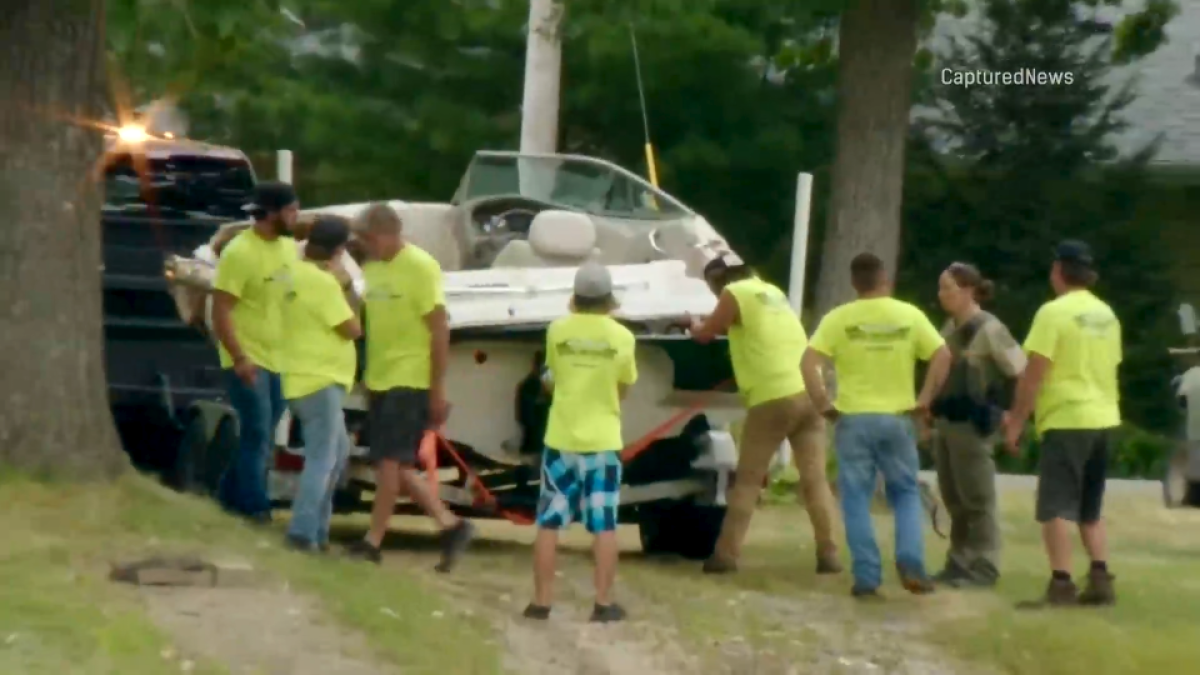
Within moments, what had been an ordinary Saturday on the river became an emergency involving police, paramedics, investigators and traumatized witnesses.
Yet prosecutors say the circumstances leading up to the crash make the case even more disturbing.
Two passengers who had reportedly been aboard Stevenson’s pontoon later told investigators that he had consumed multiple shots of Fireball whiskey during the day.
Following the collision, Stevenson was taken to hospital.
Prosecutors allege that testing showed a blood alcohol concentration of 0.20—roughly two-and-a-half times the legal threshold applicable to operating a boat.

That figure is an allegation central to the prosecution’s case and should not be treated as a final judicial finding until the evidence has been tested in court.
Stevenson now faces felony charges including reckless homicide and aggravated driving under the influence.
A judge ordered him detained as the case proceeds.
But the tragedy has attracted even greater attention because of what prosecutors disclosed about Stevenson’s history.
During the detention proceedings, they pointed to several previous traffic-related offenses dating back decades.
Those reportedly included prior DUI arrests, speeding and reckless-driving offenses, as well as an incident involving fleeing and eluding police.
Prosecutors also cited a more recent 2023 speeding violation.
That history does not prove Stevenson committed the current offenses.
But prosecutors used it in arguing why they believed he represented a continuing danger and should remain detained.
For Jablonska’s loved ones, however, the case is not primarily about legal arguments or statistics.
It is about a woman who was alive moments before the collision and whose family suddenly had to confront an unimaginable loss.
Reports have identified Jablonska as the wife of a veteran, adding another deeply personal dimension to a tragedy that quickly became a major story across McHenry County.
Her husband was not reading about the collision afterward.
He was there.
He survived the crash that killed his wife.
That reality is more devastating than any rumor circulating online.
Witness accounts and security-camera footage could now become important pieces of evidence.
Video from homes near the river reportedly captured Stevenson’s pontoon travelling through the area before the collision.
One witness said the boat was seen passing earlier in the day and then returning later.
Shortly after one of those sightings, the fatal impact was heard.
Investigators will now have to reconstruct the movements of both boats, determine their speeds and examine precisely what happened in the seconds before impact.
The allegation that Stevenson entered a no-wake zone is particularly important.
Such areas require boat operators to dramatically reduce their speed because of the risks posed to other vessels, shorelines and people nearby.
If prosecutors establish that Stevenson entered one at anything approaching the speed alleged, it could become a powerful part of their case.
But another element of the story requires restraint.
Graphic speculation has circulated concerning the exact condition of Jablonska’s body after the collision, including questions about whether remains entered the river.
There is no legitimate public-interest reason to turn those details into entertainment.
The confirmed reality—that Jablonska suffered catastrophic fatal injuries—is already horrific.
Speculating about unverified details concerning her remains risks reducing a victim to the manner of her death rather than remembering the person whose life was taken.
It also risks inflicting additional distress on relatives.
The questions that matter are different.
Was Stevenson impaired?
How fast was the pontoon actually travelling?
What did the passengers aboard his boat observe?
What does video evidence show?
Did he have sufficient opportunity to slow down?
And could the collision have been prevented?
Those are questions investigators can answer through evidence.
The prosecution’s allegation of a 0.20 blood alcohol concentration will undoubtedly receive close scrutiny.
So will the claim that the pontoon reached approximately 80 mph.
Physical evidence from both vessels could help determine speed and direction, while video footage may provide an independent record of the boat’s movements.
Witness testimony could fill in what happened before and immediately after the impact.
Stevenson, meanwhile, is entitled to defend himself against the accusations.
However disturbing the allegations may be, criminal charges are not convictions.
Prosecutors still carry the burden of proving the case beyond a reasonable doubt.
That distinction matters even in a tragedy provoking intense public anger.
The community’s emotional reaction is understandable.
Residents use the Fox River for recreation precisely because it is supposed to provide an escape from everyday life.
A fatal collision involving allegations of intoxication and extreme speed can abruptly destroy that sense of safety.
But describing the entire river as permanently unsafe would also go beyond the available evidence.
This was a specific catastrophic incident now under criminal investigation.
What happens next will unfold not through rumor but through the courts.
Stevenson’s lawyers will be able to challenge the state’s allegations.
Prosecutors will present evidence supporting the charges.
Witnesses may testify.
Experts may reconstruct the collision.
And ultimately, a court will determine criminal responsibility.
For Magdalena Jablonska’s family, however, no verdict can restore what disappeared on the Fox River that afternoon.
Her husband survived.
She did not.
That is the human reality at the centre of the case.
And it should not be lost beneath sensational speculation about the condition of her body.
The most disturbing unanswered question is not where Jablonska’s remains were found. It is whether the evidence will prove that a woman lost her life because someone made a series of choices—drinking, accelerating and entering a restricted stretch of river—that turned an ordinary summer outing into an entirely preventable tragedy.