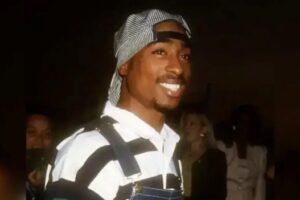
WHAT COULD PROSECUTORS REVEAL ABOUT DUANE “KEFFE D” DAVIS THAT CHANGES THE TUPAC SHAKUR CASE?
Nearly three decades after Tupac Shakur was fatally shot on the Las Vegas Strip, prosecutors are preparing for a courtroom battle that could finally test, under oath and before a jury, one of the most controversial accounts surrounding the legendary rapper’s death.
At the center is Duane “Keffe D” Davis.
Davis has pleaded not guilty to a murder charge connected to Shakur’s September 1996 killing. But as the case moves toward trial, attention is increasingly focused on what prosecutors may use to connect Davis to the events surrounding the shooting—and, crucially, how they will confront his defense.
The most potentially damaging material may not be a mysterious new witness or a piece of evidence secretly preserved for decades.
It may be Davis’s own words.
Over the years, Davis publicly discussed the night Shakur was shot in interviews and other accounts. Prosecutors have long been interested in those statements because they may allow the state to construct a narrative using information attributed directly to the defendant.
That creates an unusual problem for the defense.
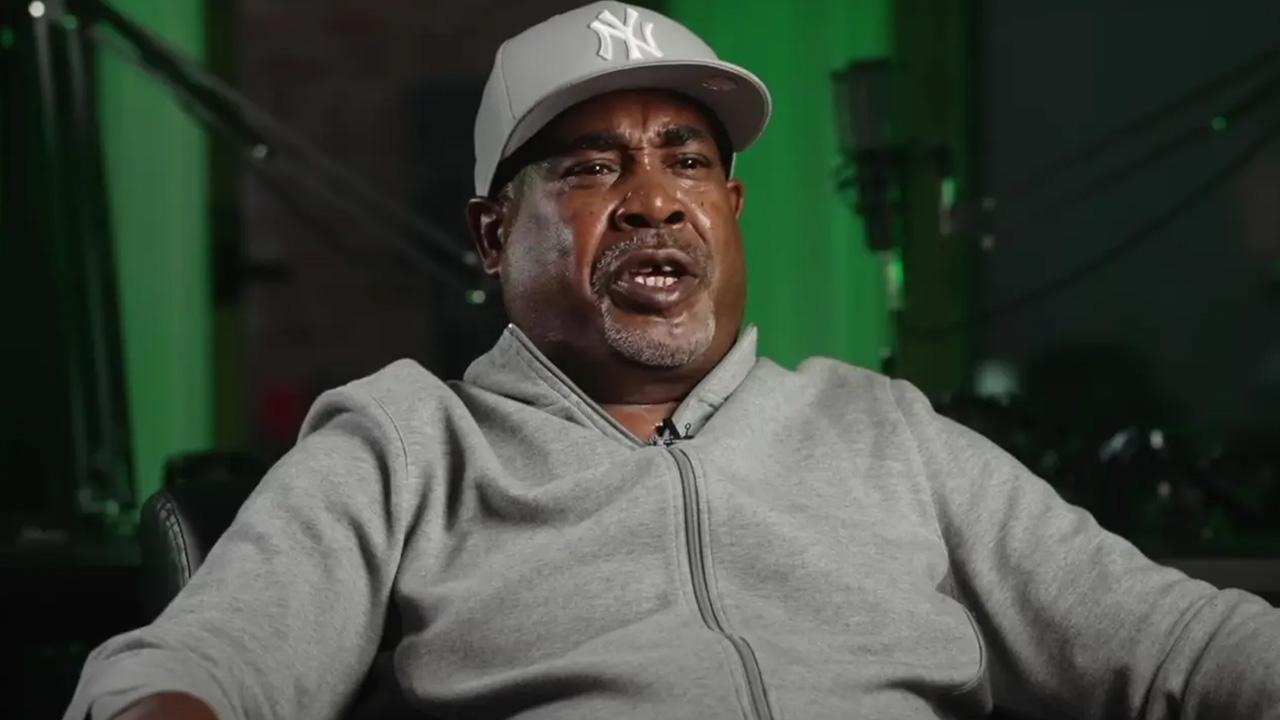
Davis has challenged the prosecution and disputed the state’s case, but prosecutors can potentially compare his current position with statements he made years before he was charged.
The question becomes simple but powerful:
Which version will a jury believe?
Shakur was shot on September 7, 1996, after attending a Mike Tyson boxing match at the MGM Grand in Las Vegas.
Earlier that evening, Shakur, Marion “Suge” Knight and others became involved in an altercation at the casino involving Orlando Anderson, Davis’s nephew.
Hours later, while Shakur was riding in a BMW driven by Knight, a white Cadillac pulled alongside them near the intersection of Flamingo Road and Koval Lane.
Gunfire erupted.
Shakur was struck multiple times and died six days later, on September 13, at only 25 years old.
The identity of the person who actually fired the weapon has been debated for decades.
But prosecutors do not necessarily need to prove that Davis personally pulled the trigger to pursue their theory of criminal liability.
That distinction could become one of the most important parts of the trial.
The state’s case has alleged that Davis was involved in obtaining a firearm and participating in the chain of events that culminated in Shakur’s shooting.
If prosecutors persuade jurors that Davis knowingly participated in a coordinated effort leading to the killing, the question of whose finger physically touched the trigger may not resolve his legal responsibility.
That is why apparently old evidence can suddenly become extremely significant.
A statement made years ago may have seemed like little more than another sensational chapter in hip-hop history.
Inside a murder courtroom, however, the same statement can acquire an entirely different meaning.
Prosecutors could attempt to place Davis’s previous accounts alongside independent evidence: the MGM Grand confrontation, the movements of individuals afterward, the vehicles allegedly involved, witness accounts and the chronology preceding the shooting.
Piece by piece, the state can try to establish whether the details reinforce one another.
The defense has powerful arguments of its own.
Nearly 30 years have passed.
Memories deteriorate.
Witnesses die.
Records disappear.
Stories evolve.
People exposed to decades of media coverage can also become influenced by information they encountered long after an event.
Those problems will give Davis’s attorneys numerous opportunities to attack the reliability of the prosecution’s reconstruction.
They may also challenge the circumstances under which Davis made earlier statements.
One particularly important issue involves Davis’s previous cooperation with authorities.
His defense has argued that certain statements were made under agreements providing protections connected to his cooperation and therefore should not simply be transformed into evidence against him.
Prosecutors and defense attorneys have consequently fought over what material can legally be introduced.
That battle matters enormously.
If jurors hear extensive recordings or accounts in which Davis appears to describe knowledge of the plot from an insider’s perspective, prosecutors could argue that those statements are extraordinarily difficult to reconcile with later attempts to distance himself from criminal responsibility.
But the defense can respond that storytelling is not the same thing as proof.
Public interviews can contain exaggeration.
People can embellish their importance.
Statements can be taken out of context.
And even a defendant’s own words must be evaluated according to the rules of evidence.
This is where expectations of a dramatic “bombshell” require caution.
There is no verified basis for claiming that prosecutors possess a newly leaked, secret piece of evidence that automatically destroys Davis’s defense.
The real danger for Davis could instead come from something far less cinematic: prosecutors connecting old information in a way that gives it new significance.
Imagine the prosecution constructing a timeline.
First comes the MGM Grand confrontation.
Then comes the alleged reaction to that confrontation.
Then the acquisition or movement of a weapon.
Then the white Cadillac.
Then the shooting.
Finally, years later, come Davis’s own descriptions of what allegedly happened.
Individually, defense attorneys may attack each component.
Together, prosecutors will try to persuade jurors that they form one coherent story.
And that may explain why the case emerged after decades without an arrest.

The prosecution does not have the advantages investigators would have enjoyed in 1996.
Instead, it must transform an enormous archive of old statements, investigative records and circumstantial evidence into something a modern jury can evaluate beyond a reasonable doubt.
For Davis, his greatest vulnerability may therefore be the extraordinary amount he has publicly said.
Most murder defendants spend years saying virtually nothing about the allegations against them.
Davis did the opposite.
His public comments became part of the mythology surrounding the Tupac case.
Now prosecutors may attempt to turn that mythology into courtroom evidence.
Still, an indictment is not a conviction.
Davis has pleaded not guilty and is presumed innocent unless prosecutors prove the charge beyond a reasonable doubt. Every contested statement and piece of evidence will be subject to legal challenges, and jurors—not social media—will ultimately decide what is credible.
The upcoming trial therefore presents a fascinating reversal.
For decades, the Tupac Shakur murder existed largely as an unsolved mystery filled with competing theories, interviews, documentaries and speculation.
A courtroom operates differently.
Prosecutors must prove allegations.
The defense can challenge witnesses.
Evidence must satisfy legal standards.
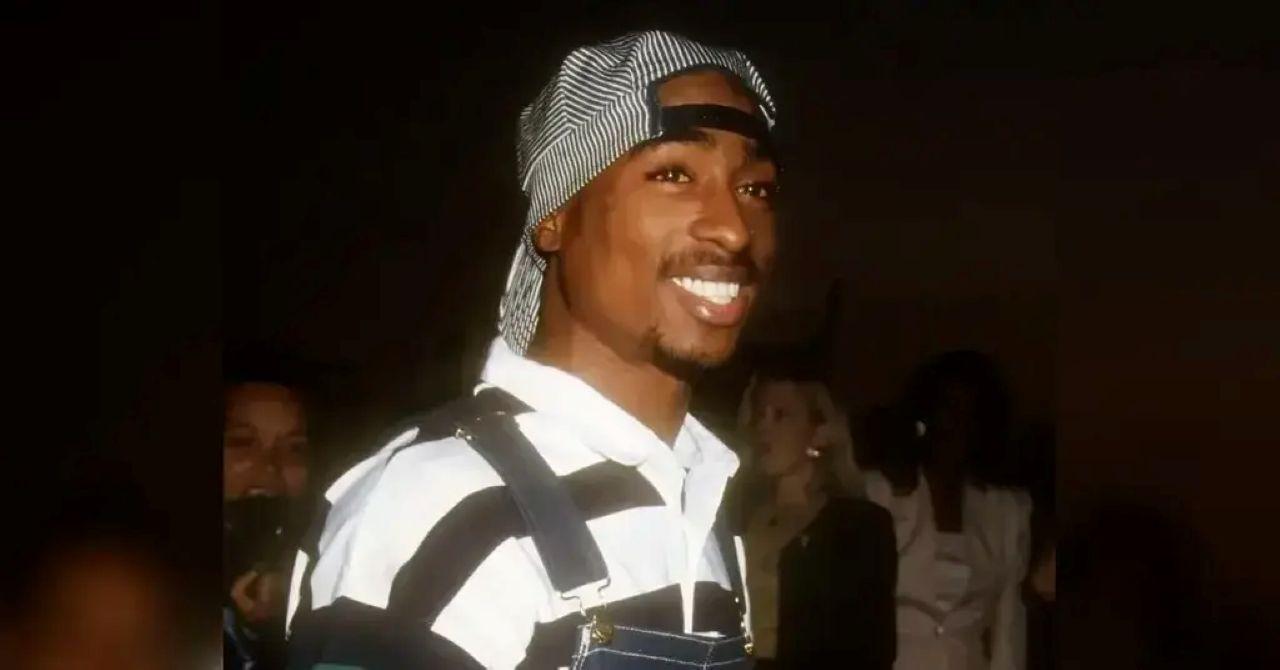
And statements that once generated headlines can be examined word by word.
So the revelation capable of changing the case may not be a forgotten fingerprint, a secret recording or an unknown eyewitness suddenly emerging after 30 years.
It could be the cumulative power of Davis’s own history.
If prosecutors can successfully connect what Davis previously said with independent evidence surrounding the hours before and after Shakur was shot, they may argue that the defendant left behind the roadmap to their case himself.
If the defense can break those connections, undermine the reliability of decades-old evidence and convince jurors that Davis’s public storytelling was not an admission of criminal responsibility, the prosecution could face a much more difficult battle.
That is the confrontation now looming over the Tupac Shakur case.
After almost 30 years of rumors, the most consequential question may no longer be what people believe happened that night.
It will be what prosecutors can actually prove in court.