Six people have now been arrested in connection with the death of a Brazilian student who fell approximately 130 feet after being allowed to attempt a bungee-style jump without being properly secured to safety equipment, according to local media reports and police statements.
Maria Eduarda Rodrigues de Freitas, 21, died on June 13 in Limeira, São Paulo state, after what investigators describe as a catastrophic failure of basic safety procedures during an organized rope-jumping activity at an abandoned railway bridge widely known as the “Skeleton Bridge.” The incident, which was captured on video and widely circulated online, has triggered a rapidly expanding criminal investigation and renewed scrutiny of unregulated adventure tourism in Brazil.

Authorities confirmed that a total of six individuals are now in custody or under investigation in connection with the fatal jump. The most recent arrests include a 29-year-old woman from Rio de Janeiro, a 25-year-old man from Limeira, and a 27-year-old man from Indaiatuba, according to CNN Brazil. Police have not clarified the exact timeline of the arrests but said they are part of a broader effort to determine who was responsible for safety checks and operational control at the site.
Investigators allege that the group played roles in planning, assisting, or facilitating the jump that ended in Rodrigues de Freitas’ death. While formal charges vary between suspects, authorities say the central question remains unchanged: how a participant was allowed to be launched off a bridge without being attached to a safety cord.
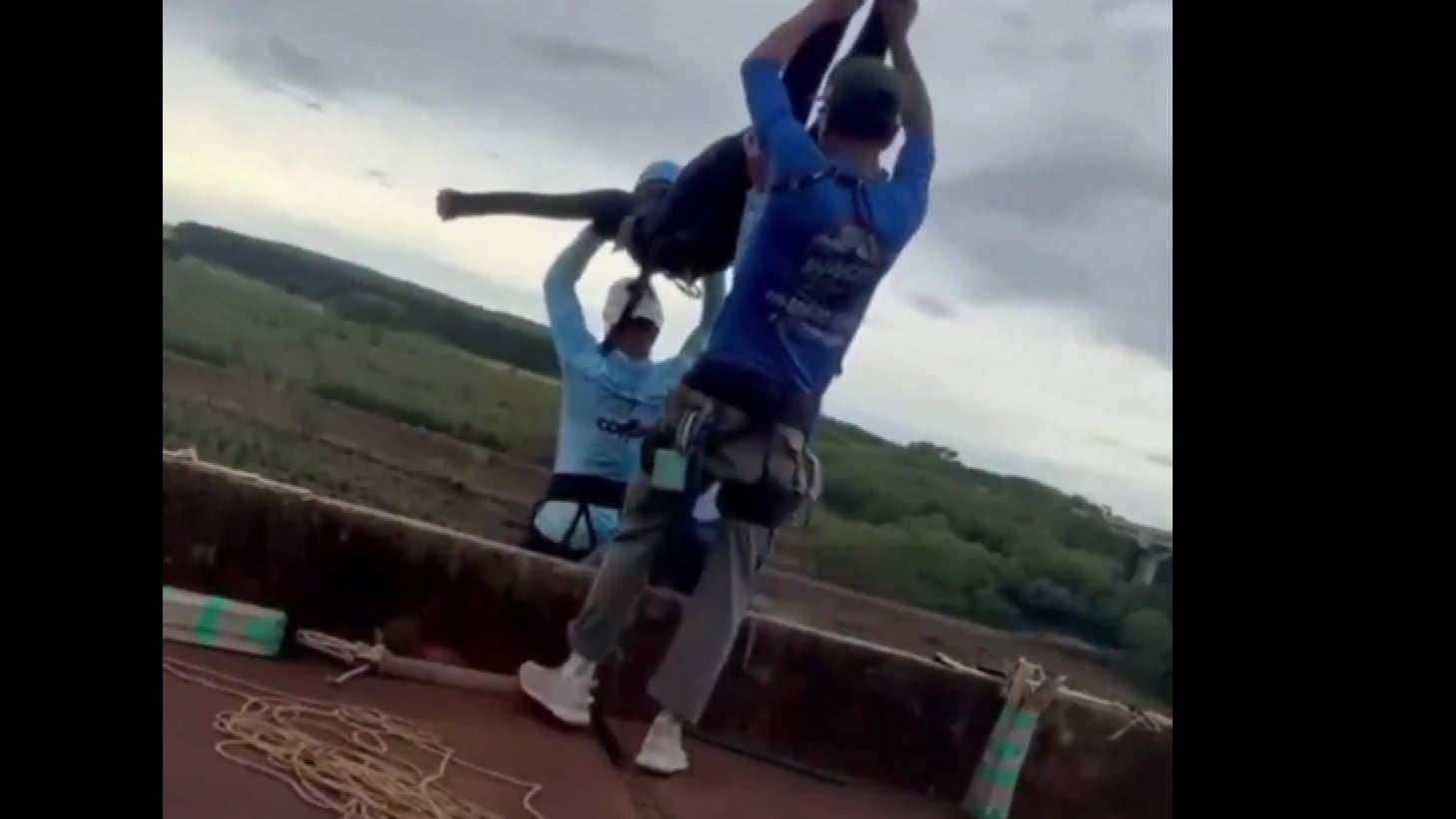
The victim was seen in footage being lifted and carried in what witnesses described as an “airplane-style” position before being thrown from the bridge. Seconds later, onlookers realized that no safety rope had been attached to her harness. A witness filming the scene can be heard screaming “guys, the rope!” while pointing toward equipment left unused on the structure.
The video has become a key piece of evidence in the investigation, both for its documentation of the sequence of events and for what it appears to show about procedural breakdowns among staff present at the time.
Following the tragedy, authorities confirmed that the bridge will be demolished to prevent future deaths, with officials describing it as an inherently dangerous structure that has already been associated with illegal activity and prior safety concerns.
In addition to the three most recent arrests, three other men—Luis Felipe Feliciano Egoroff, 32; Vitor de Freitas Goncalves, 27; and Maicon Fernandes Cintra, 42—were previously taken into custody on June 14 and charged with homicide with eventual intent. Under Brazilian law, this charge applies when individuals are aware of a substantial risk of death but proceed regardless.

Local courts have authorized search warrants for the homes and associated properties of all six suspects as investigators attempt to recover missing equipment and digital evidence believed to be critical to the case.
One of the central missing items is a GoPro camera that Rodrigues de Freitas was reportedly wearing at the time of the jump. According to police, she paid extra for the device to record her experience, but it has not yet been recovered.
Investigators believe the footage could clarify exactly what occurred in the final moments before her fall, including whether any last-minute safety checks were attempted or ignored.
A witness identified as Rafael Goulard told Brazilian broadcaster EPTV that he observed a staff member removing the camera immediately after the fall.
“I remember … seeing one of the employees taking the [camera] handle off the neck, from the body that was already on the floor, the GoPro camera,” he said, suggesting that the device was taken from the scene shortly after the incident.
Authorities have since emphasized that locating the camera is now a priority. In a statement, Brazil’s Public Security Secretariat said investigators are working to reconstruct the full sequence of events and determine all criminal responsibilities.
“The Civil Police are continuing their investigations to fully clarify the dynamics of the events, identify all criminal responsibilities, and locate the camera used by the victim at the time of the jump, considered an important element for reconstructing what happened,” the statement said.
Police also believe there may have been attempts to destroy or conceal digital evidence linked to the activity at the site.
As the investigation deepens, attention has also turned to the operational conduct of those involved in organizing the jump. According to investigators, several suspects claimed they could not recall who was responsible for attaching the safety cord or verifying equipment before each jump.
One of the detained instructors, Egoroff, reportedly told investigators that responsibility for attaching the rope was shared and unclear at the time of the incident.
“Either it’s me or [Cintra] who does it,” he said in a statement to EPTV. “So I went ahead first, and after that it’s all erased from my mind… I don’t remember.”
Investigators have not publicly commented on the credibility of those statements but have noted inconsistencies between witness accounts and suspect testimonies.
Following the incident, some of the suspects allegedly attempted to flee the area before being located by authorities. Reports indicate that a military helicopter was used during the search effort that ultimately led to their detention.
The case has also drawn attention due to past behavior associated with individuals linked to the site. Investigators confirmed that Egoroff and other participants had previously filmed a disturbing video several years ago showing a black bag being thrown off the same bridge in a staged scene titled “Hiding the body.”
While authorities have not confirmed whether all current suspects were involved in that earlier video, its resurfacing has intensified public concern about a pattern of reckless behavior associated with the location and those operating there.
The Skeleton Bridge itself has long been described as structurally abandoned but frequently accessed for illegal or unsanctioned extreme sports activities. Local officials have acknowledged ongoing difficulties in preventing unauthorized access to the site despite prior safety warnings and restrictions.
In the wake of Rodrigues de Freitas’ death, officials have pledged to strengthen enforcement and physically dismantle the structure once legal and logistical approvals are finalized.
For investigators, however, the immediate priority remains establishing accountability for the moment the safety system failed—or was never properly implemented at all.
The absence of the GoPro footage continues to complicate efforts to reconstruct the final seconds of the jump, leaving key questions unanswered about who made critical decisions and whether proper safety protocols were followed.
As the six suspects remain under investigation, prosecutors are expected to examine communications, equipment logs, and witness statements in an effort to determine the exact chain of responsibility.
For now, the death of Maria Eduarda Rodrigues de Freitas stands as both a tragic accident and a widening criminal case, one that investigators say could have been prevented if even the most basic safety procedures had been followed.