The deadly shooting at a San Diego mosque that left three men dead has renewed concerns among investigators and extremism researchers who warn that modern hate-fueled violence increasingly spreads through imitation — with attackers studying previous mass killers, adopting extremist ideas online and viewing violence as part of a broader mission designed to create fear, chaos and division.
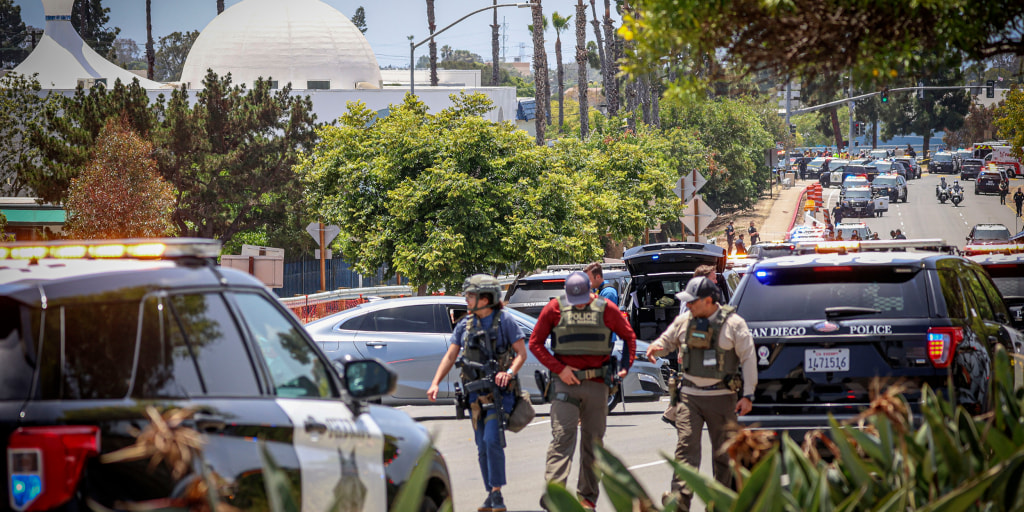
Authorities continue investigating Monday’s attack at the Islamic Center of San Diego, where officials say two teenage gunmen opened fire outside the mosque before later dying from apparent self-inflicted gunshot wounds.
The victims have been identified as 51-year-old Amin Abdullah, a security guard and father of eight; 78-year-old Mansour Kaziha, a founding member and longtime elder at the Islamic Center; and 57-year-old Nadir Awad, a nearby resident whose wife worked at the mosque’s school.
Police say all three men died trying to protect others.
Investigators believe the violence could have been significantly worse had those victims not intervened.
But beyond the immediate tragedy, experts say the case highlights a broader pattern that has increasingly alarmed federal authorities and researchers studying violent extremism.
They point to a troubling phenomenon: individuals becoming radicalized online, absorbing hateful ideologies and drawing inspiration from previous attackers.
Investigators examining the San Diego shooting say evidence suggests the two teenage suspects may have been deeply immersed in extremist digital spaces.
Authorities have said writings connected to extremist beliefs, hateful language and ideological grievances are being examined as investigators work to determine motive.

Experts who study online extremism say that pattern is becoming increasingly familiar.
Matthew Kriner, executive director of the Institute for Countering Digital Extremism, said preliminary evidence suggests the teenagers may have influenced each other while becoming increasingly immersed in extremist online communities.
“Preliminarily, we’re seeing two individuals who jointly radicalized into this digital space and then jointly radicalized into this moment of violence,” Kriner said.
Investigators say online environments can create dangerous feedback loops.
Algorithms, extremist forums, encrypted messaging spaces and violent propaganda communities may expose vulnerable individuals to increasingly radical material over time.
Researchers say modern extremists frequently borrow language, symbolism and tactics from previous attacks.
That process has raised growing concern among law enforcement agencies.
Federal officials have increasingly warned that violent ideologies no longer fit neatly into traditional political categories.
Instead, experts say some attackers build worldviews from multiple sources.
Racial hatred.
Misogyny.
Conspiracy theories.
Anti-government beliefs.
Hatred toward religious communities.
Hostility toward LGBTQ+ people.
Violence itself becomes central.
Investigators examining extremist movements say some offenders become fixated not simply on beliefs, but on the act of violence itself.
Researchers describe that process as particularly dangerous because it creates an environment where attackers view previous killers as examples to study or imitate.
The concern is not new.

Investigators have spent decades documenting instances where perpetrators explicitly referenced earlier mass shooters.
One of the earliest modern examples emerged after the 1999 Columbine High School massacre.
Authorities later discovered that multiple future attackers studied the Columbine shooters.
The 2007 Virginia Tech gunman, who killed 32 people, drew inspiration from prior school shootings.
Years later, investigators in Germany found materials connected to Columbine and Virginia Tech during the investigation into a 2016 Munich mall shooting that left nine people dead.
Researchers say those examples illustrate a dangerous cycle.
Violence becomes normalized within extremist circles.
Attackers study methods.
Manifestos circulate.
Videos spread.
Symbols repeat.
Experts warn that digital platforms can accelerate that process dramatically.
Unlike previous generations, modern extremists may access large online communities instantly.
Some researchers say those spaces create environments where violent beliefs become reinforced.
Federal agencies have increasingly focused attention on emerging extremist trends.
Among growing concerns is what officials describe as nihilistic violent extremism.
Federal authorities characterize that ideology as violence driven not necessarily by a single political objective, but by a desire to create collapse, disorder or widespread destruction.
Experts say some individuals tied to those ideologies appear motivated by generalized hatred toward society itself.
Violence becomes the goal.
Chaos becomes the objective.
Researchers say that mindset differs from older extremist models focused primarily on singular political causes.
The FBI has repeatedly warned about online radicalization targeting young people.
Federal investigators have described networks that exploit vulnerable adolescents through manipulation, coercion and extremist content.
Authorities say online communities sometimes deliberately seek out isolated or struggling young people.
Researchers warn adolescents may face heightened vulnerability due to developmental factors combined with heavy internet exposure.
Experts say extremist recruitment strategies increasingly rely on digital communication rather than in-person organizing.
Private chat platforms.
Social media channels.
Gaming communities.
Encrypted spaces.
Message boards.
Investigators say extremist influence now crosses multiple online environments.
The San Diego case has intensified those conversations.
Authorities say investigators are examining evidence recovered after Monday’s shooting.
Police have previously indicated hateful language connected to religion and race formed part of evidence being reviewed.
Federal authorities continue working alongside local investigators.
Law enforcement officials have not finalized all conclusions regarding motive.
Experts caution that radicalization often develops gradually.
Researchers say many individuals who commit extremist violence display warning signs beforehand.
Increasing social isolation.
Obsession with violent content.
Escalating hateful rhetoric.
Fascination with prior attackers.
Sudden ideological shifts.
Experts emphasize those behaviors alone do not predict violence.
But investigators often identify combinations of factors during post-incident reviews.
The San Diego attack also renewed discussions about how previous attackers continue influencing future violence.
Researchers say extremist perpetrators sometimes intentionally attempt to create legacies.
Manifestos.
Livestreams.
Symbolic references.
Specific language.
Investigators say such tactics may seek to ensure future attackers notice and imitate prior violence.
Experts warn public discussion surrounding mass violence must carefully balance informing communities without inadvertently glorifying perpetrators.
Researchers frequently advise limiting attention placed on attackers themselves.
Instead, many recommend focusing on victims, resilience and prevention.
Monday’s attack left a profound impact on San Diego’s Muslim community.
The Islamic Center of San Diego has long served as a religious and community gathering space.
Families pray there.
Children attend classes there.
Community events bring people together there.
Authorities say approximately 140 children were inside areas near the attack.
Investigators believe actions taken by victims likely prevented additional deaths.
Security guard Amin Abdullah has been repeatedly described by police as heroic.
Officials say he recognized danger immediately.
Investigators say he helped delay attackers and initiated protective measures that kept children safer.
“He undoubtedly saved lives,” San Diego Police Chief Scott Wahl said earlier this week.
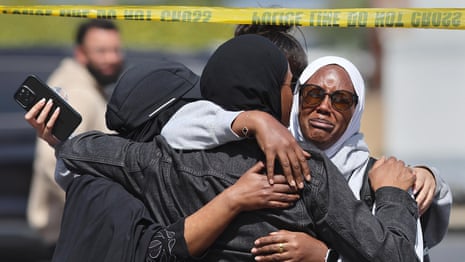
Community members continue mourning Abdullah alongside Kaziha and Awad.
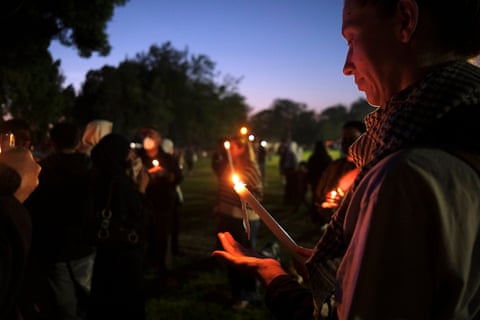
Vigils have been held.
Prayer gatherings continue.
Support efforts for affected families have expanded.
Meanwhile, law enforcement agencies continue reviewing evidence connected to the attack.
Officials say the investigation remains active.
Experts studying violent extremism say the broader challenge will remain long after headlines fade.
Researchers warn digital radicalization continues evolving.
Online ecosystems change rapidly.
New platforms emerge.
Extremist communities adapt.
Law enforcement officials say prevention efforts increasingly require cooperation between technology companies, educators, families, researchers and public safety agencies.
Experts stress early intervention remains critical.
Recognizing warning signs.
Creating support systems.
Addressing social isolation.
Improving digital literacy.
Encouraging healthy community connections.
Researchers say no single solution exists.
But many believe understanding how extremist violence spreads — particularly through imitation and online influence — remains one of the most important steps toward preventing future tragedies.
For San Diego families now grieving three lives lost, those broader conversations arrive alongside unimaginable loss.
Three men died.
A community changed.
And investigators continue searching for answers not only about what happened — but how hatred increasingly finds pathways from digital spaces into real-world violence.