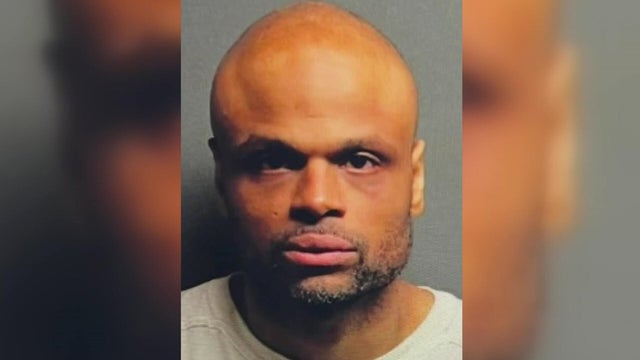
The man accused of unleashing a barrage of gunfire on a busy Cambridge roadway, critically injuring two motorists in a broad-daylight attack along Memorial Drive, was arraigned Thursday from a hospital bed as investigators continued to piece together how a violent chain of mental health crises, parole supervision, and easy access to firearms culminated in chaos just steps from some of the nation’s most prestigious universities.
Tyler Brown, 46, of Boston, appeared remotely from a hospital where he is recovering after being shot by both a Massachusetts State Police trooper and a legally armed former Marine who intervened during Monday’s shooting. Brown pleaded not guilty to multiple charges, including two counts of armed assault with intent to murder, as a judge ordered him held pending a dangerousness hearing scheduled for next week.
Authorities say Brown fired dozens of rounds from an assault-style rifle while walking along Memorial Drive beside the Charles River, a heavily trafficked corridor used daily by commuters, joggers, cyclists, and students from nearby Harvard University and the Massachusetts Institute of Technology. Prosecutors allege he fired indiscriminately at passing vehicles, striking at least two drivers and sending others scrambling for cover as bullets tore through windshields and body panels.
According to court filings, Brown had only recently been released from a psychiatric hospital days before the attack. Prosecutors said he was under parole supervision at the time and had been flagged by a parole officer as potentially unstable after reports of relapse and escalating mental health concerns. On the morning of the shooting, Brown allegedly contacted his parole officer via video call and expressed suicidal thoughts, telling him he had relapsed.

Investigators say the situation escalated rapidly. During the Facetime call, Brown was seen holding a large firearm, prompting immediate concern from supervising officers. Authorities began tracking his cellphone location in real time, narrowing his position to the Cambridge area. Minutes later, Brown allegedly called his parole officer again, referencing a “shooter name,” shortly before gunfire erupted along Memorial Drive.
Prosecutors said evidence recovered from the scene included a multi-caliber BCI-Defense Model FF-15 rifle and approximately 70 spent shell casings scattered along the roadway, underscoring what officials described as a sustained and erratic firing sequence in a densely populated area. Authorities also confirmed Brown did not possess a valid license to carry firearms.
The attack ended when a Massachusetts State Police trooper engaged Brown, exchanging gunfire in the middle of traffic. A former Marine, who was legally carrying a handgun and happened to be passing through the area, also intervened, firing multiple rounds as pedestrians fled and vehicles came to a stop. Brown was struck multiple times and taken into custody after being disarmed at the scene.
Officials said the rapid intervention likely prevented further casualties in what they described as an active shooter situation unfolding in real time. Law enforcement later confirmed that both responding individuals acted within legal parameters, with investigators noting the Marine veteran had retrieved his firearm from a secured case in his vehicle only after witnessing the unfolding attack.
The two victims struck by gunfire were both motorists caught in the crossfire. One man, identified by family members as Felix, an MBTA The Ride driver and father of eight, suffered a gunshot wound to the head but has since been released from the hospital. His family said he is now recovering at home after what they described as a “miraculous survival.”
The second victim, a DoorDash driver supporting his family, remains hospitalized after being shot multiple times in the leg. Relatives said he had been on his way to a car wash when bullets suddenly struck his vehicle during the chaotic scene. Both victims are expected to survive, though officials say recovery will be lengthy.
Court records and prior case history show Brown has long been known to the criminal justice system. In 2020, he was arrested after firing at Boston police officers during a confrontation in broad daylight. At the time, prosecutors pushed for a sentence of 10 to 12 years, citing his escalating violence and prior probation status tied to a 2014 stabbing case. However, a judge imposed a significantly shorter sentence of five to six years.
That decision has since come under renewed scrutiny following Monday’s shooting. Then-Suffolk County District Attorney Rachael Rollins previously expressed concern over leniency in Brown’s sentencing, while police officials have repeatedly pointed to his documented history of violent behavior and repeated weapons offenses.
During Brown’s 2021 sentencing hearing, a Boston police officer delivered a stark warning to the court, describing Brown as someone who showed little regard for public safety. The officer told the judge that Brown’s prior actions demonstrated a clear pattern of disregard for human life and warned that he would likely reoffend if released.
Despite those warnings, Brown was eventually released and placed back under supervision. Prosecutors now say that combination of parole status, mental health instability, and prior firearms offenses created a high-risk situation that ultimately culminated in Monday’s attack.
Officials also revealed that Brown had recently been diagnosed with multiple mental health conditions, including post-traumatic stress disorder, depression, and anxiety. While he had received psychiatric treatment, including a recent hospital stay, authorities said it remains unclear whether he was compliant with prescribed care or medication at the time of the shooting.
The case has reignited debate in Massachusetts over sentencing decisions, parole supervision, and the management of individuals with violent histories who cycle between incarceration and psychiatric treatment. Law enforcement officials have pointed to gaps in coordination between mental health providers and probation systems, arguing that Brown’s case reflects broader systemic failures.
In court Thursday, Brown remained silent as he appeared via video link from his hospital bed. A public defender was assigned to represent him, though no detailed defense arguments were presented at this early stage of proceedings. Prosecutors indicated they will seek to hold him without bail, citing what they described as an ongoing danger to the public.
Outside the courthouse, officials emphasized that the investigation remains active, with detectives continuing to analyze ballistic evidence, witness statements, and surveillance footage from nearby businesses and residences along Memorial Drive. Authorities are also reviewing communication logs between Brown and his parole officer in the hours leading up to the attack.
For residents of Cambridge, the shooting has left a lasting sense of shock. Memorial Drive, normally filled with cyclists and families along the riverfront, became the scene of a mass panic as vehicles swerved, pedestrians fled, and bullets ripped through traffic in seconds that witnesses described as surreal and terrifying.
While both victims are expected to survive, officials say the emotional impact of the attack will linger far longer than the physical damage. Brown’s next court appearance will determine whether he remains held without bail as prosecutors prepare what is expected to be a lengthy and complex prosecution involving prior convictions, mental health records, and extensive forensic evidence from the scene.